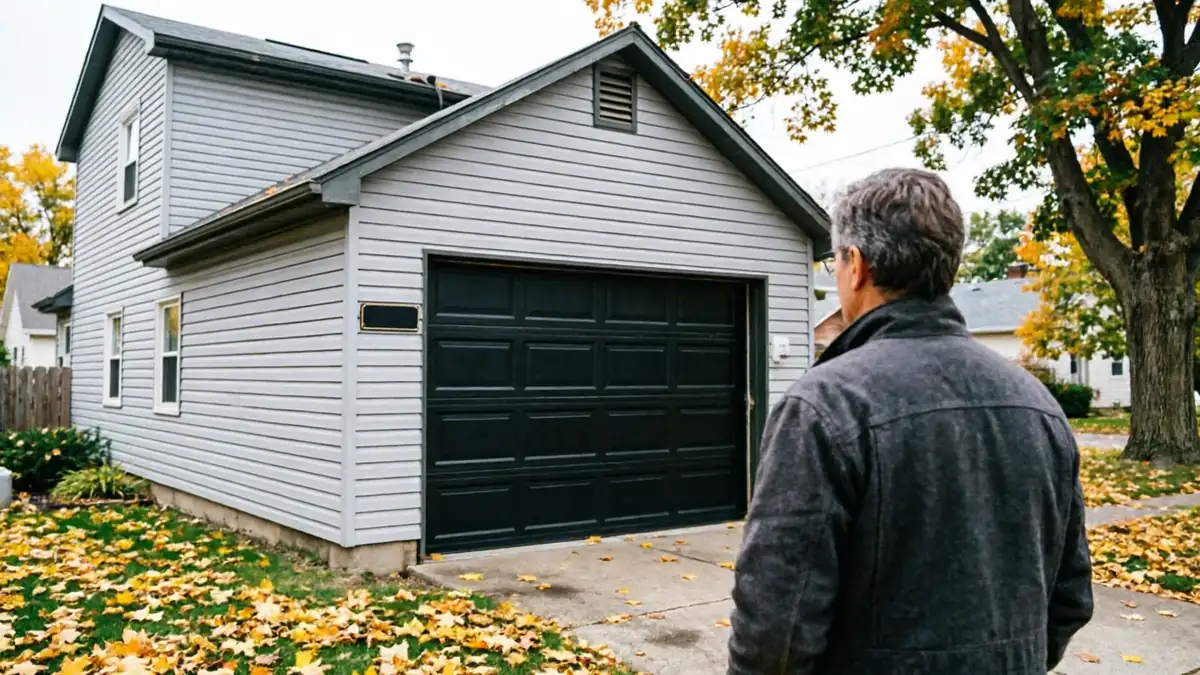
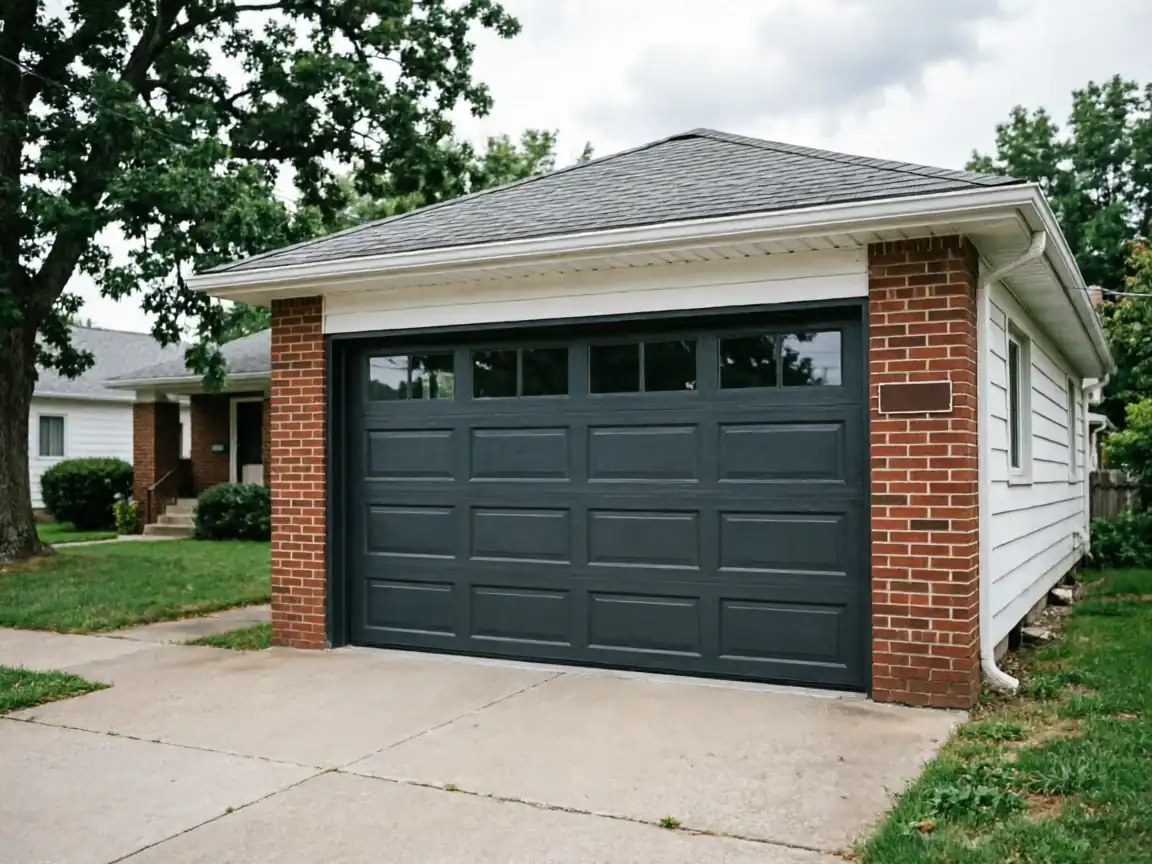
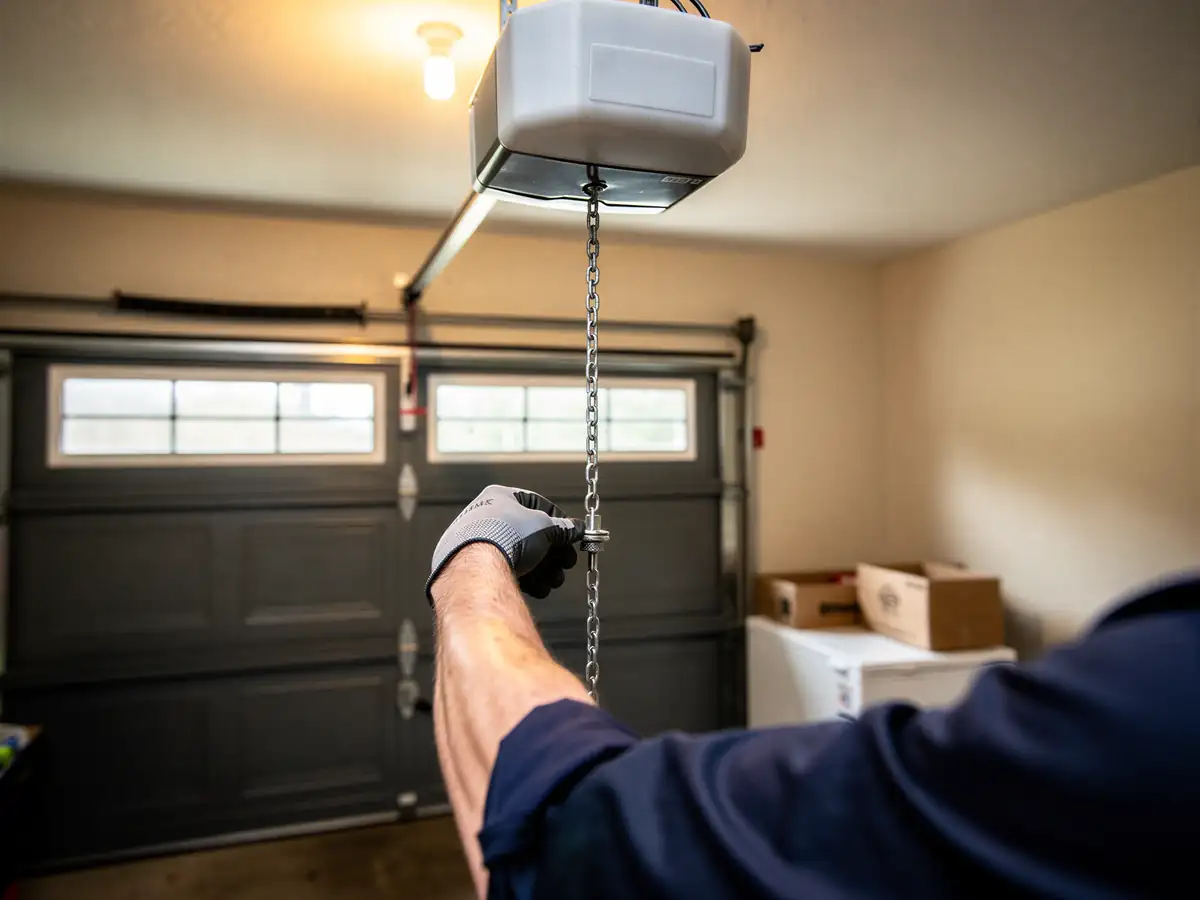
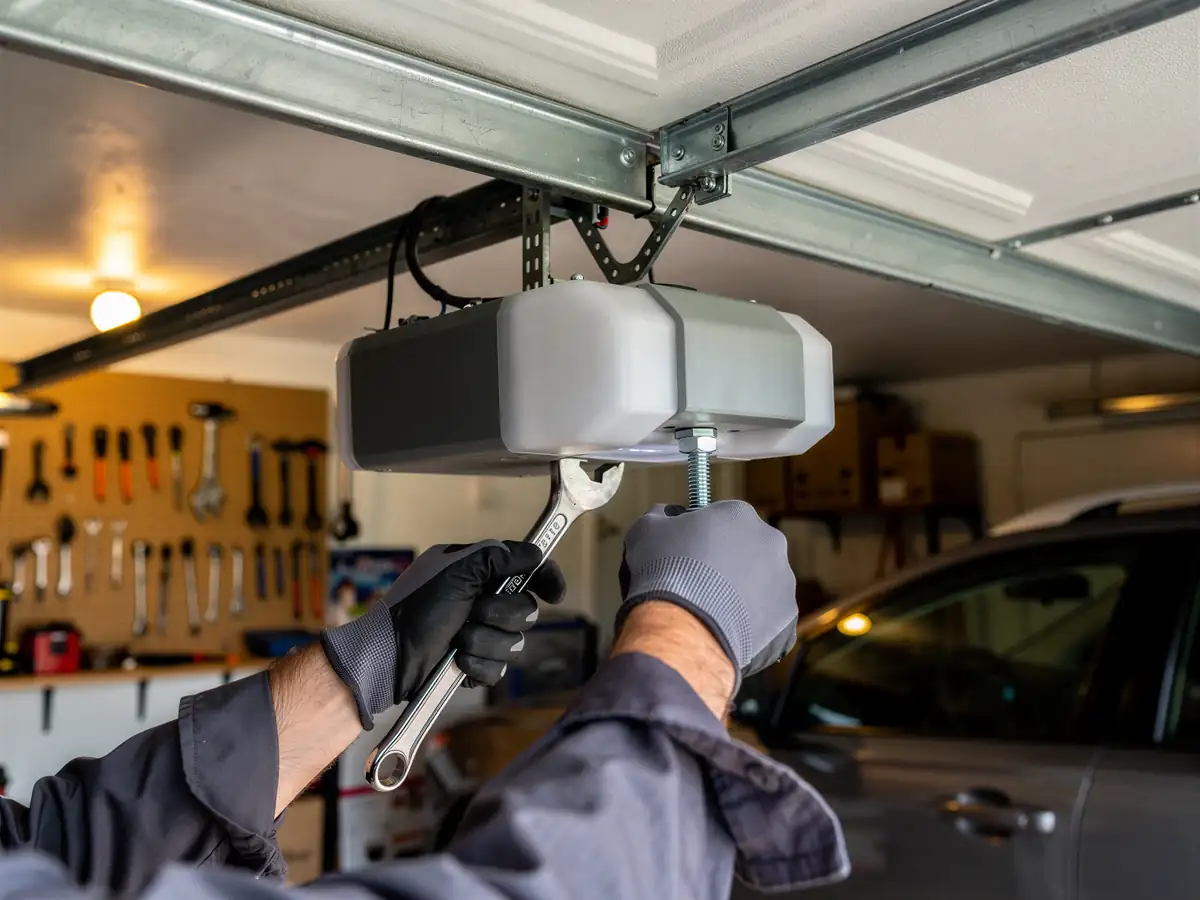
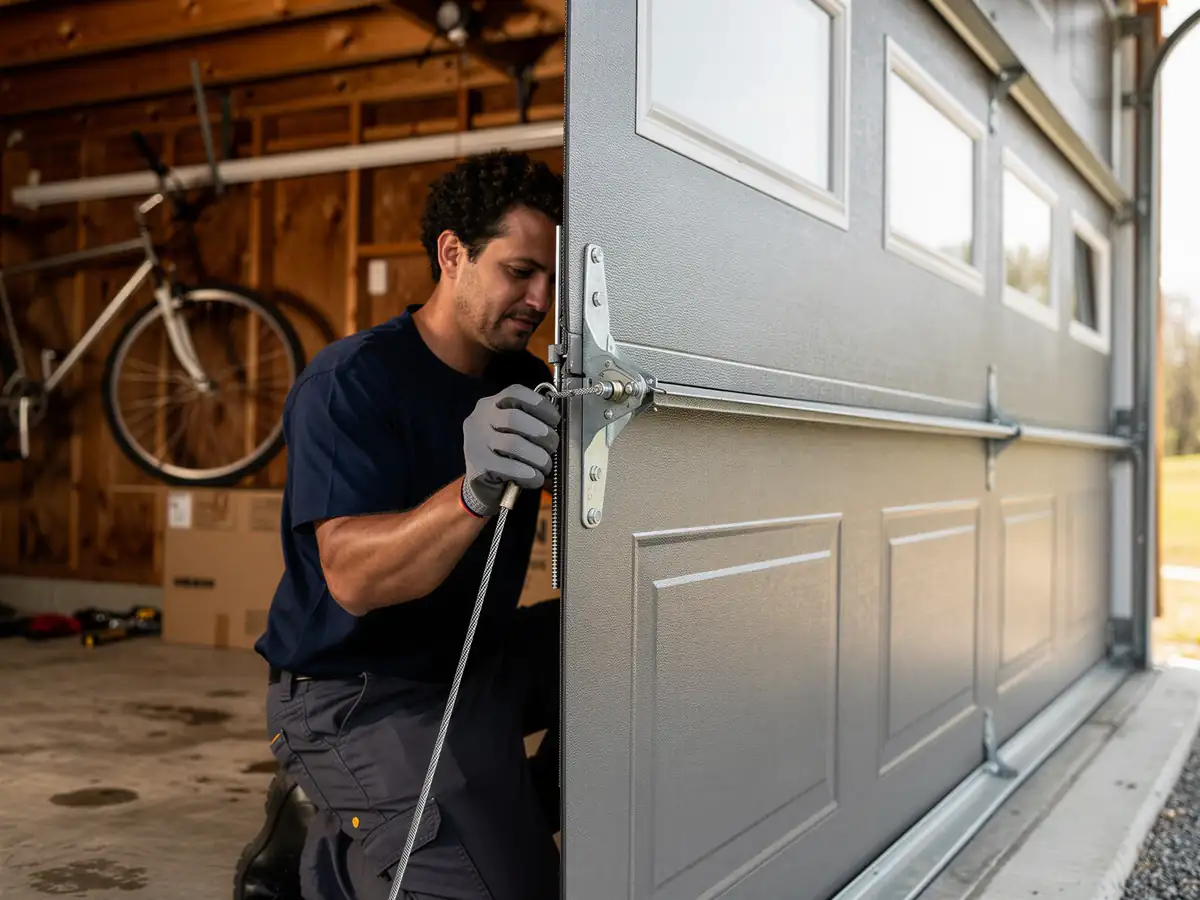
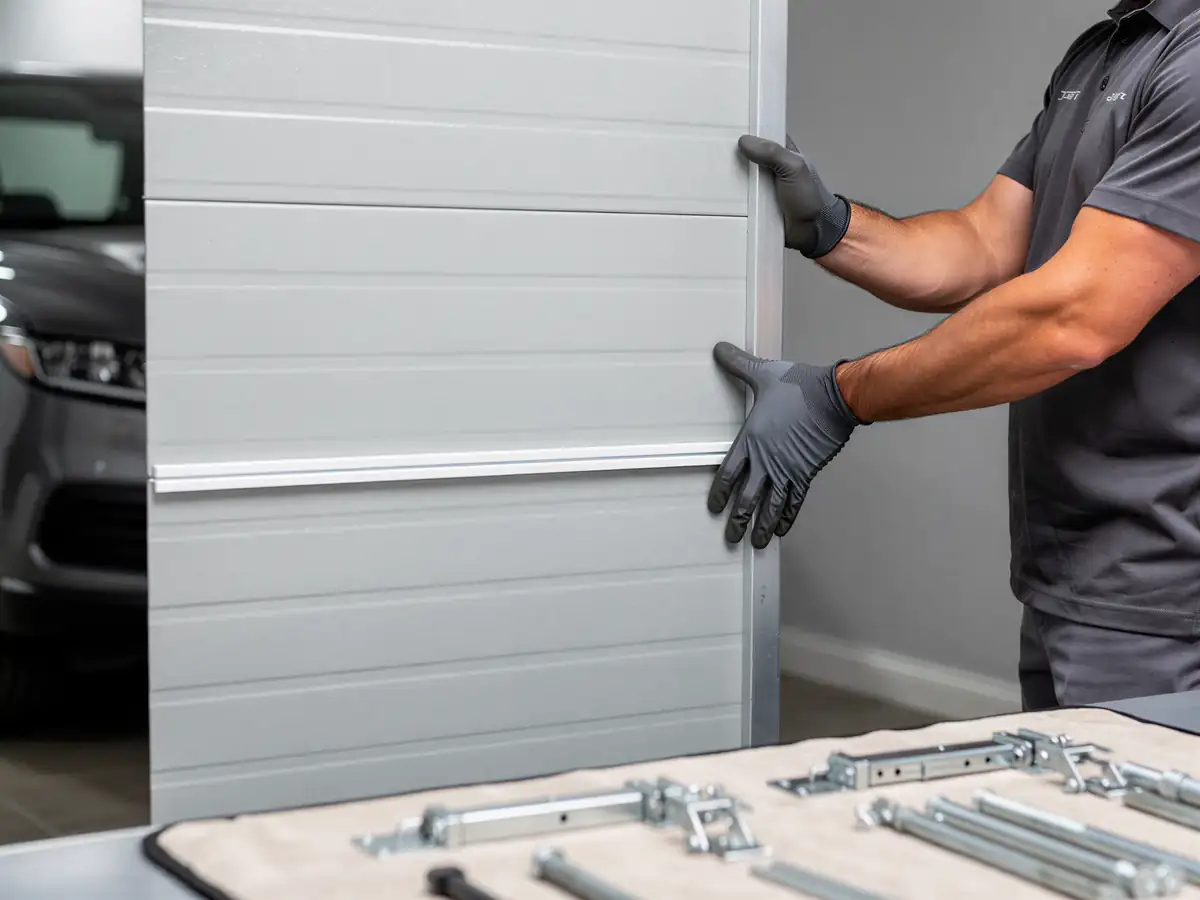
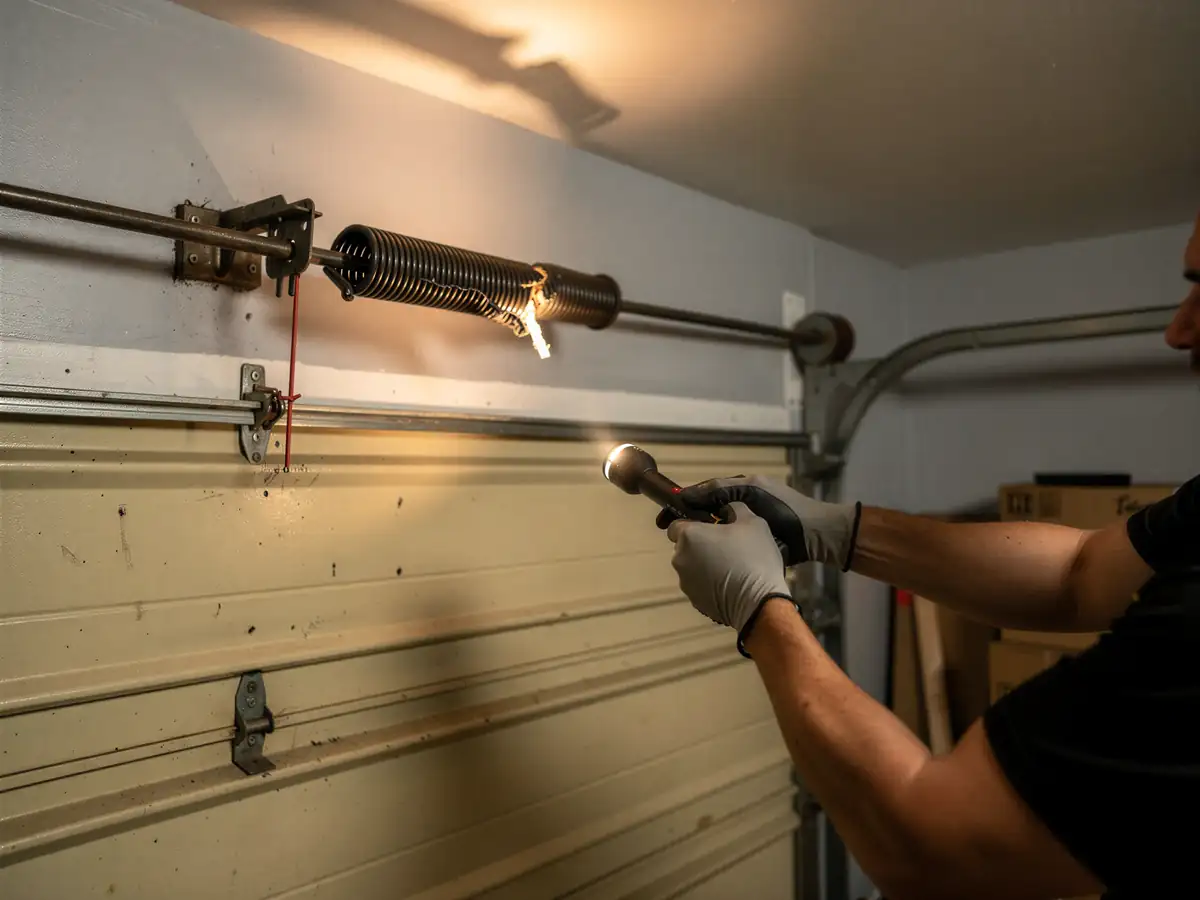
Sterling Heights sits in a cold-severe climate band, and that matters more for a garage door than most owners think. A lot of the housing stock here went up between 1938 and 2002, with the typical build year landing around 1958. Doors from that era, and a surprising number of replacements installed since without much thought, are single-layer steel or old wood panels with no insulation value at all. In a cold winter the steel skin on an uninsulated door contracts and expands all season, which loosens hinge screws, stresses the seams at the corners, and lets condensation form on the inside face. On the older wood doors still hanging on some of these 1958-vintage houses, that condensation is what starts the rot at the bottom rail. None of this is dramatic - it's slow. By the time a door won't seal flush at the floor, the gap has usually been growing for two or three winters. The fix isn't always a new door. Sometimes it's weatherstripping and a bottom seal. But on a door that's already flexing at the seams from age, insulation retrofit is a patch, not a solution, and that's the honest call to make before you spend money on either.
What It Costs
I'm not going to hand you a number here, because a straight quote without seeing the opening is a guess, and a bad one. What I can tell you is what actually moves the price on a job in this area. Houses built in the 1950s and 60s around here sometimes have openings framed a few inches off today's standard widths, which can push you into a special-order door instead of a stock size - that's a cost and a lead-time difference, not a markup. Insulation level is the other big lever: given the cold-severe climate here, a double-layer or polyurethane-core door costs more up front but does real work keeping the garage above freezing, which matters if the garage shares a wall with living space, common in this housing stock. Median household income in this service area runs around $97,027, and at that income level most owners I talk to choose to replace rather than keep patching a door past year fifteen or sixteen, once spring and hardware repairs start stacking up. That's a judgment call specific to the math on an aging door, not a sales pitch.
The Common Mistake
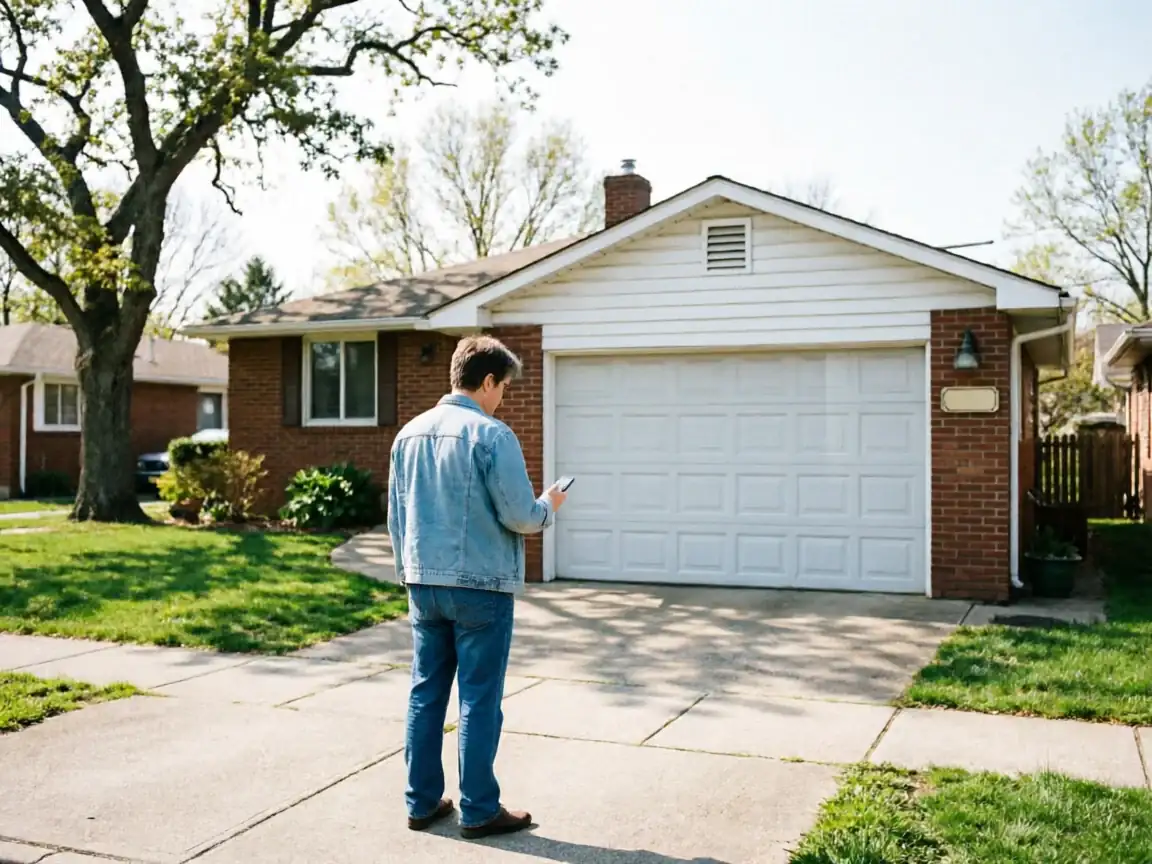
The mistake I see most often with buying a replacement door here is picking on style and price alone and skipping the insulation spec entirely. Given the cold-severe winters this area gets, a door with no insulation or a thin single layer is going to underperform from the first January it's installed, no matter how good it looks from the driveway. The second version of this mistake is sizing: because so much of the local housing stock dates to the late 1950s and 60s, some openings were framed before today's standard door widths were common, and an owner measures once, orders a stock-size door, and finds out at install that it doesn't fit clean. Both of these get caught with a proper measure and a conversation about the climate before you order, not after. It costs nothing to check the opening against the house's build era before you pick a door off a showroom floor.
What Is Going On
Put the pieces together and the picture here is pretty consistent. Housing in this area was mostly built from 1938 through 2002, with the bulk of it dating from before 1960 across the 39 named communities in this part of the county, and that means a lot of original or first-replacement doors are now decades past their design life. Layer the cold-severe climate on top of that, and the failure points are predictable: seams, bottom seals, and uninsulated steel skins that take a beating every winter. With roughly 156,317 owner-occupied houses among the 275,838 households in this service area, that's a lot of garages built to a standard that predates modern insulation codes. None of this means every door needs replacing tomorrow. It means that when you are replacing one, the decision should be driven by the age and construction of the house behind it, not just by what's on sale.
How it works
From “it’s stuck” to “it’s fixed”
A quick, honest process - no guesswork and no surprises.
1
Tell us what’s wrong
Describe the symptom - won’t open, loud bang, opener runs but the door won’t move.
2
On-site diagnosis
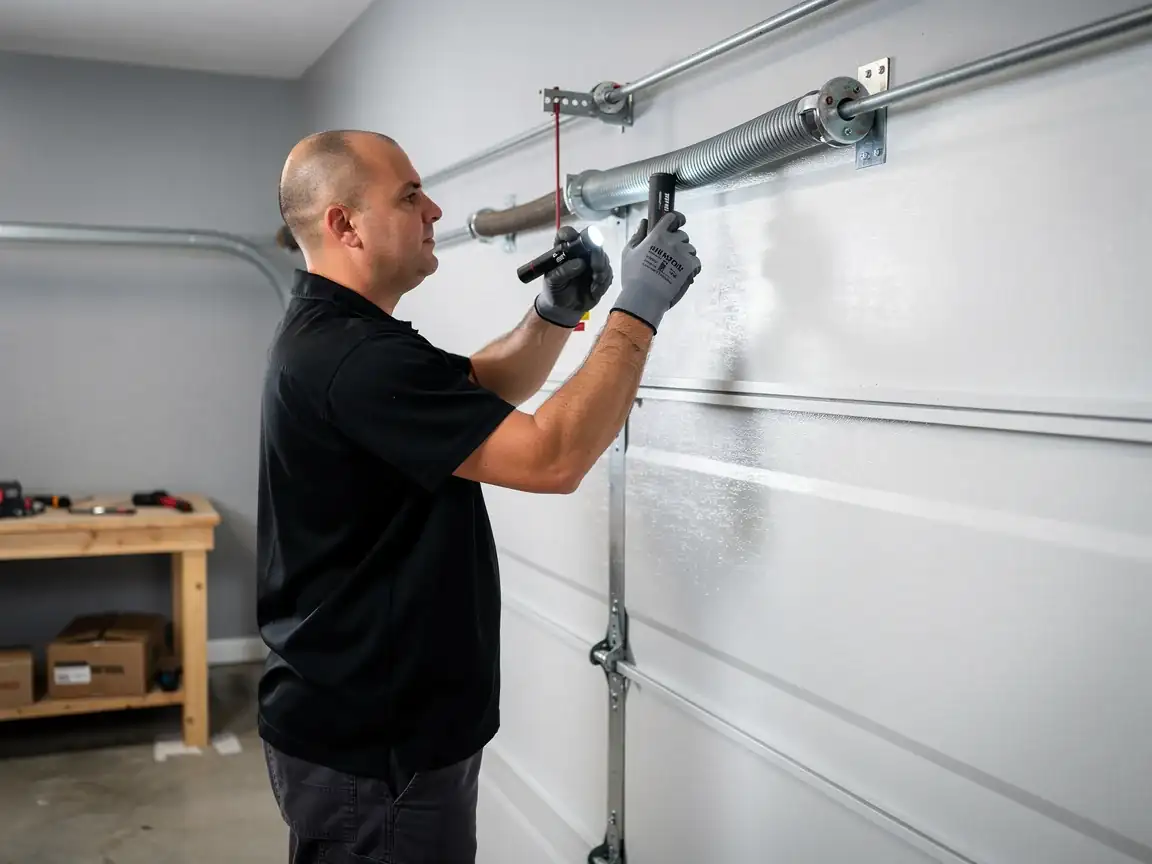
A technician tests the door under power and by hand and finds what actually failed.
3
Clear, up-front plan
You get the fix that’s needed and what drives the cost - before any work starts.
4
Repaired & tested
The repair is done, the door is set true and tested, and the work area left clean.
Next step
Not sure which repair your door needs in Sterling Heights, MI? Describe what it’s doing - every job starts with a diagnosis.
How do I know if my garage door is actually original to the house?
If your house was built in the 1950s or 60s, which a lot of homes in this area were, check for a single layer of steel or old wood panels with no visible insulation backing and simple strap hinges. That construction is consistent with the original door for a house from that era. A later replacement usually has a foam-backed panel, even if it's not a high-end insulated model.
Is it worth insulating an old door instead of replacing it?
Sometimes. If the panels and seams are still tight and it's just cold to the touch, adding a bottom seal and foam board kit can help. But given the cold-severe winters here, if the door is already flexing or the seams have gapped, insulating it is money spent on a door that's near the end of its life anyway.
Why does my new door not fit my old opening?
Houses built around the 1950s and 60s in this area were sometimes framed to openings a few inches off today's standard widths. If you order a stock-size door without checking the actual opening against the house's age, it can come up short on a clean fit.