What the Weather Here Does to It
Sterling Heights sits in a cold-severe climate band
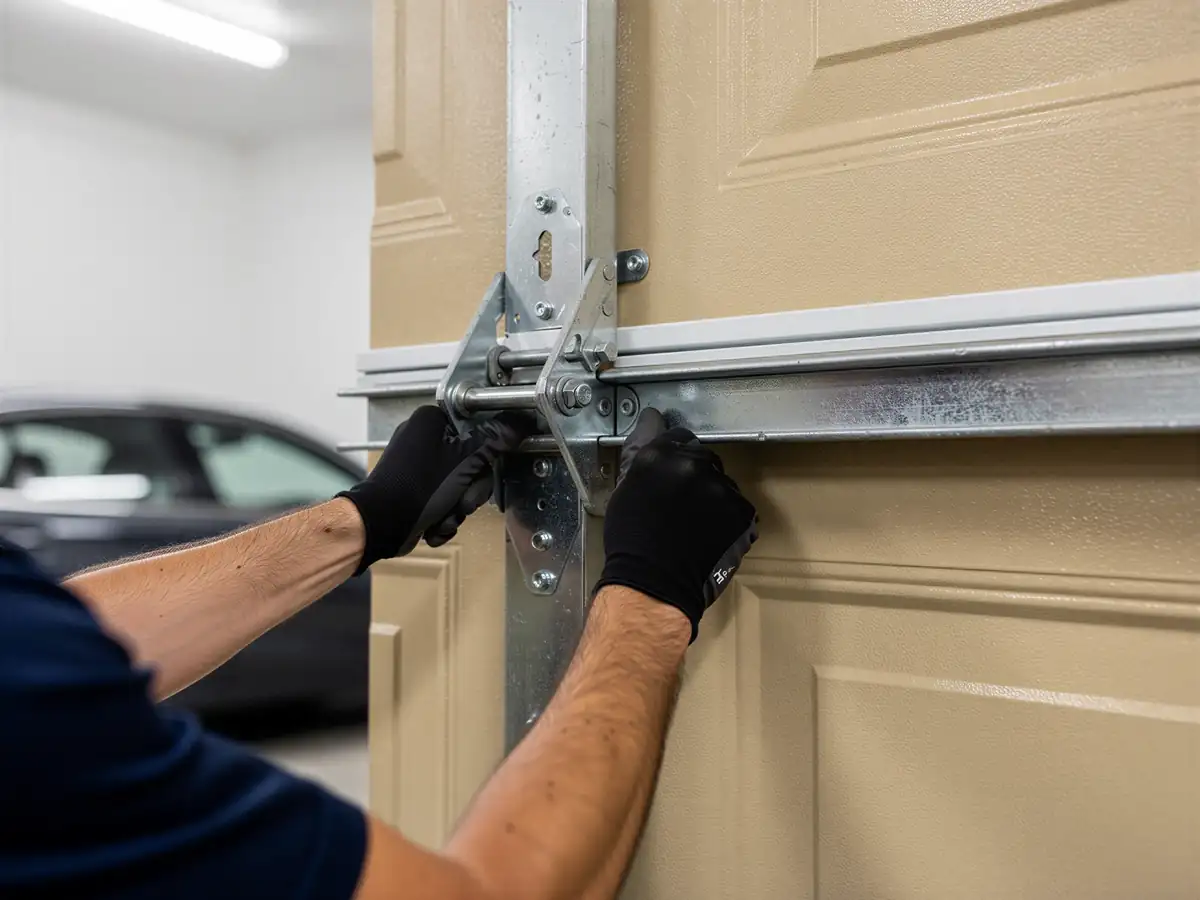
And that matters more to your garage door than most homeowners think about until a panel is hanging at an angle. The freeze-thaw cycle every winter works on the slab under your track, and even a slab that looks flat can heave a fraction of an inch as the ground underneath freezes and lets go, freezes and lets go, month after month. That small shift is enough to pull one track bracket out of line with the others. Once one bracket is off, the rollers riding inside the track start binding instead of rolling smooth, and the door walks itself sideways a little more every time it opens.
Cold also shrinks the metal itself
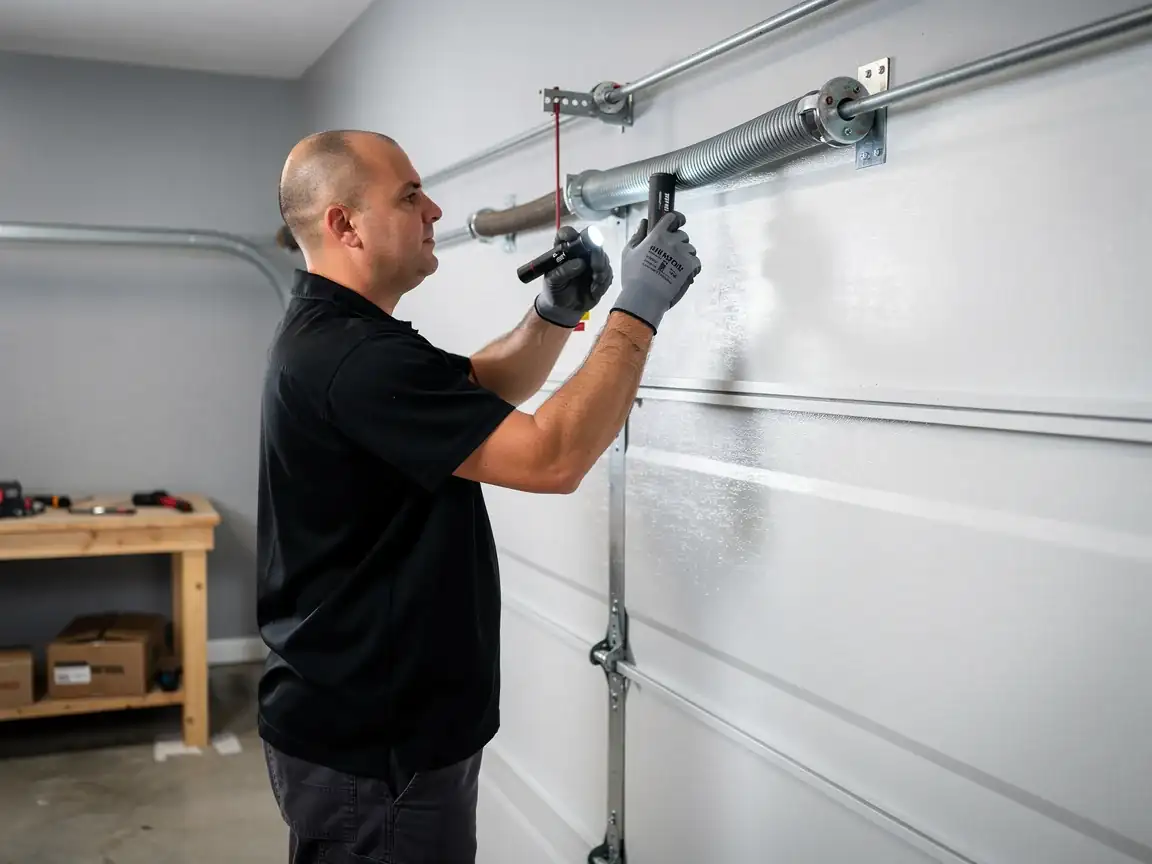
Steel track contracts in deep cold, and if a bracket lag bolt was already a little loose from age, that contraction is what finally lets it slip. You'll usually hear it before you see it: a grind or a knock partway through the door's travel, right where the slab transition sits. That's not the opener. That's the track trying to hold a straight line against ground that isn't staying put.
This is also why a door that's run fine for years can suddenly start jumping track the first hard cold snap of the season
With nothing else in the garage having changed.
What It Costs
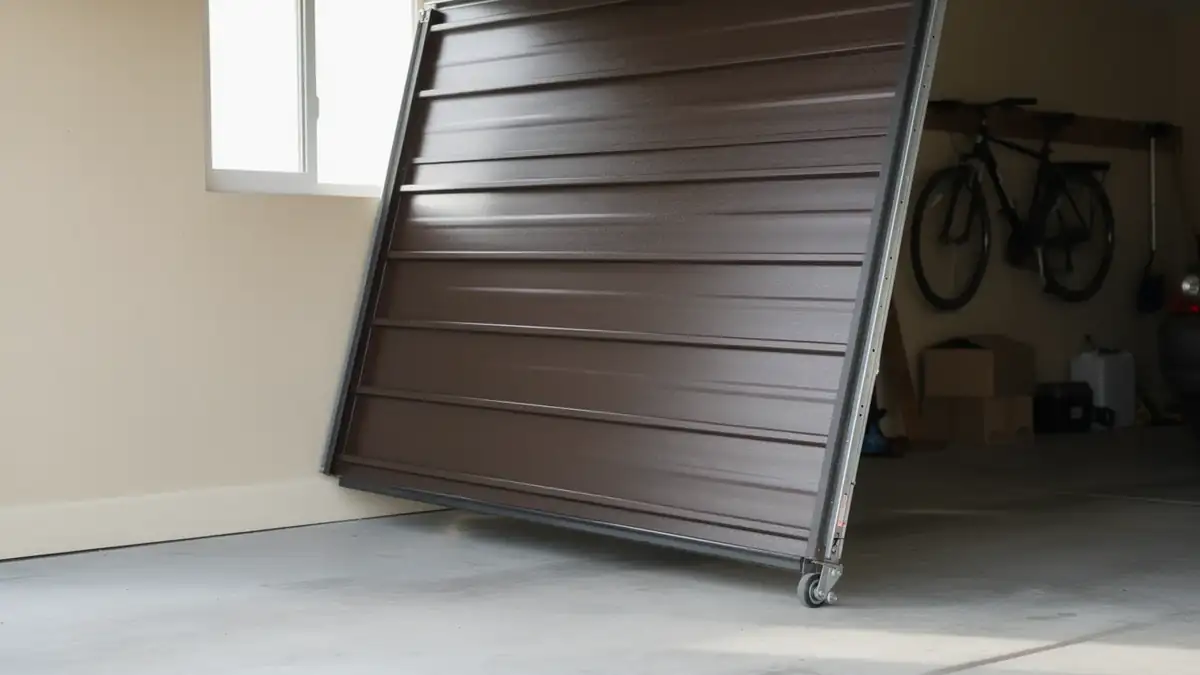
I'm not going to put a number here, because I don't have one to give you honestly without seeing the door. A track that's slightly bent from a bracket pull is a different job than one where the roller has chewed up the inside of the channel, and both are different again from a door that's come off the track entirely and dropped a cable with it. Any of those can look the same from across the garage - a door sitting crooked - and they are not the same repair.
What I can tell you is what drives the cost up or down: how many brackets have shifted, whether the track itself needs straightening or full replacement, and whether the rollers and hardware around the bent section are original to a house built mid-century or have already been swapped once. On the older stock around here, that last part matters, because original hardware sizes don't always match what's stocked on the truck, and that can mean a second trip.
The honest answer is that a track repair quoted over the phone, before anyone's looked at the bracket pattern and the slab line, is a guess. I'd rather tell you that than make one up.
The Common Mistake
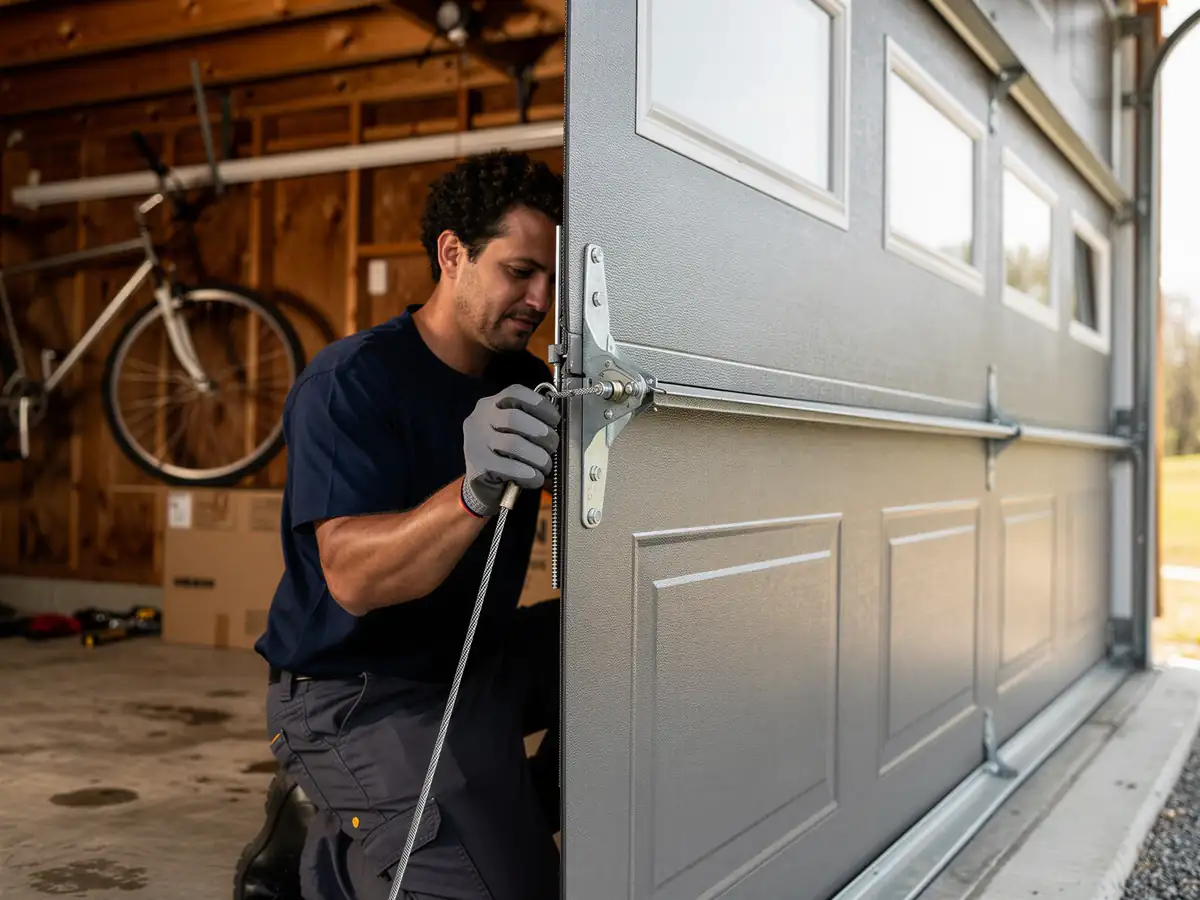
The mistake I see most is someone noticing the door is a little crooked, muscling it back onto the track by hand, and calling it fixed. It'll roll again, for a while. But forcing a panel back into a bent channel doesn't straighten the channel - it just moves the bind to a different spot along the run, and now you've got a door that's fighting itself every single cycle instead of just at the one bad bracket.
The second version of this mistake is tightening the loose bracket without checking the ones next to it. On houses built in the 1938 to 2002 range that make up most of this area, with a lot of that stock sitting around a 1958 median build year, track hardware has had six, seven decades in some cases to work on its own schedule. If one lag bolt pulled loose from slab movement, the two beside it are usually most of the way there too. Tightening one and walking away just means you're back out here in a few months for the next one.
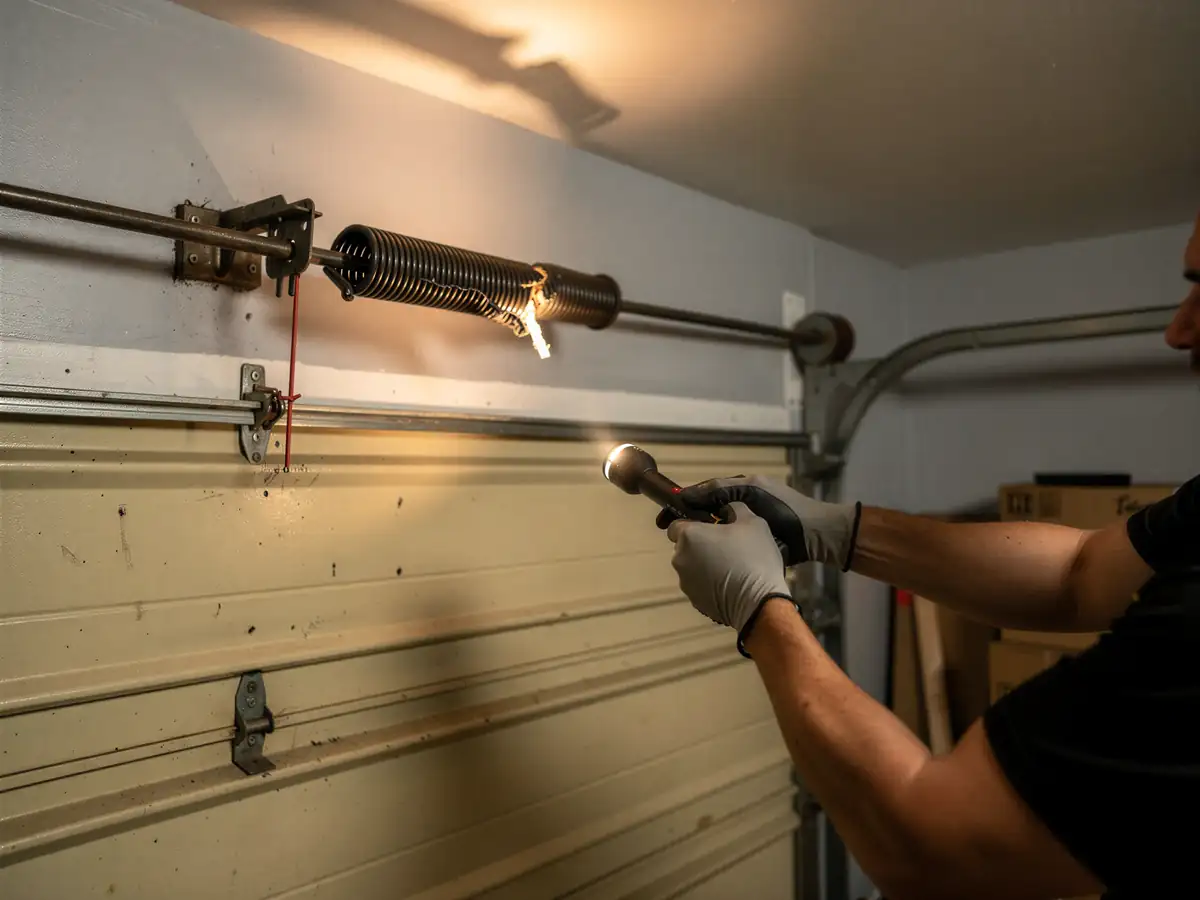
A door that's jumped track once and been pushed back by hand is also carrying a cable and a spring under load that weren't designed to flex sideways. That's the part that turns a track problem into a finger or a face getting in the way of a cable that lets go.
What Is Going On
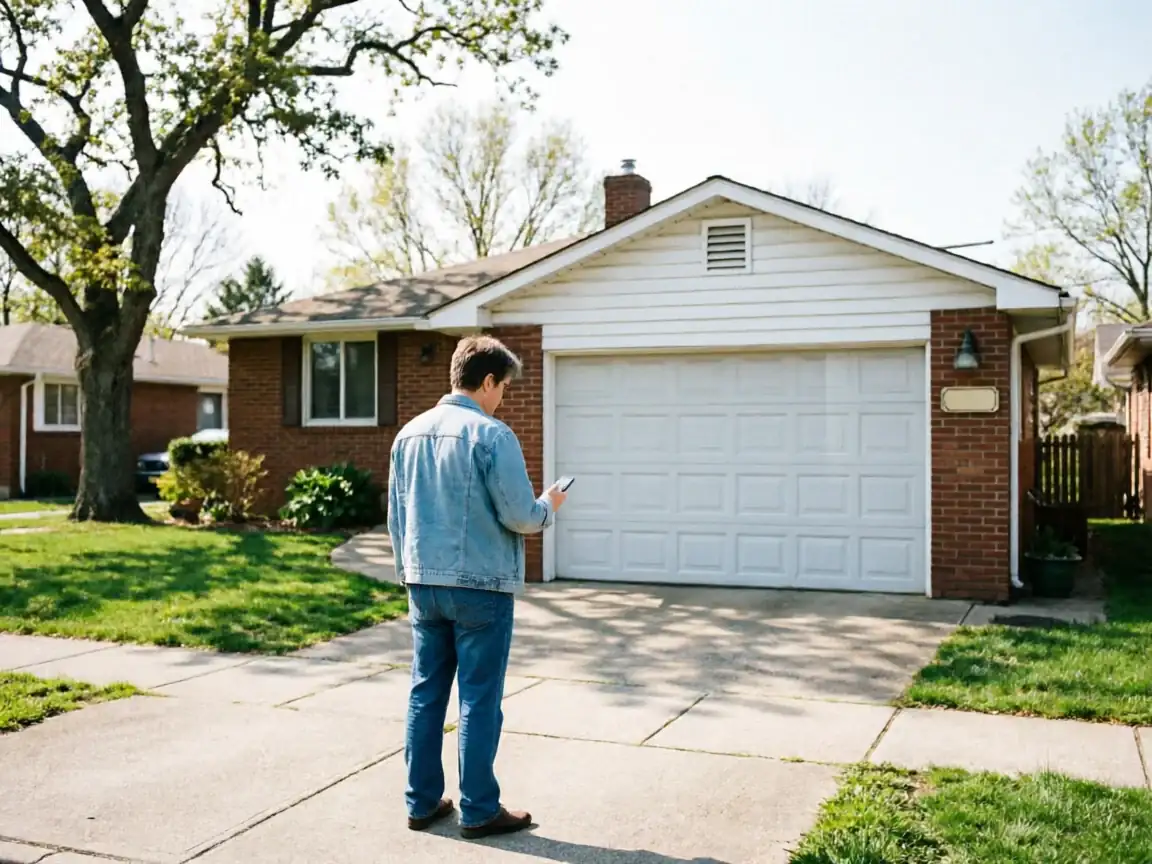
Across the Sterling Heights area, the housing stock runs mostly pre-1960
Part of a wider pattern across the roughly three dozen areas we see this in, and that age is the root of most track failures we get called out for. A garage built in the 1950s wasn't built for a quarter-horse opener slamming the door open twice a day for seventy years. The track hardware, the bracket spacing, the lag bolts into a slab that's had decades of freeze-thaw - none of it was sized for that duty cycle, and none of it gets lighter with age.
Add the cold-severe climate on top of that and you get a slow, steady drift
Slab moves a little, bracket loosens a little, roller binds a little more, and one day the door comes off the rail on one side. It's rarely one dramatic event. It's usually six years of small movement that finally crossed a line.
If you're closer in toward Utica or Fraser
Or further out toward Rochester or Auburn Hills, the pattern repeats because the build era repeats - this part of Michigan went up in roughly the same stretch of decades, with roughly the same materials. That's not a guess about your specific house. It's what the track looks like when we open the panel on most of them.