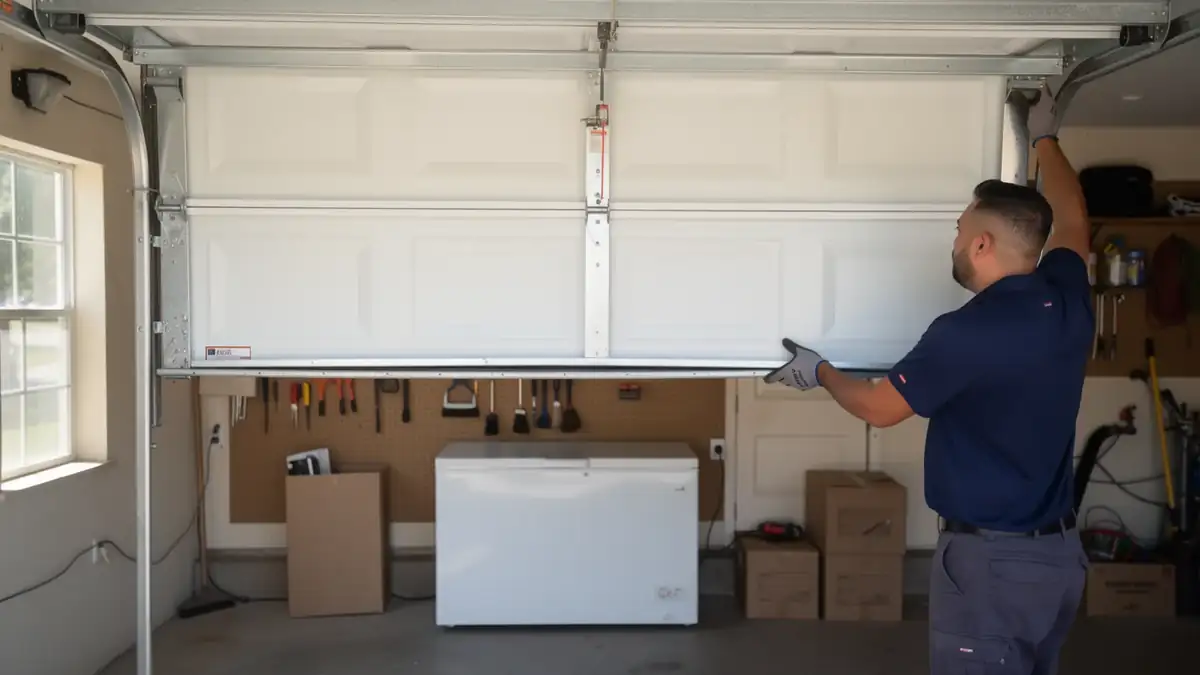
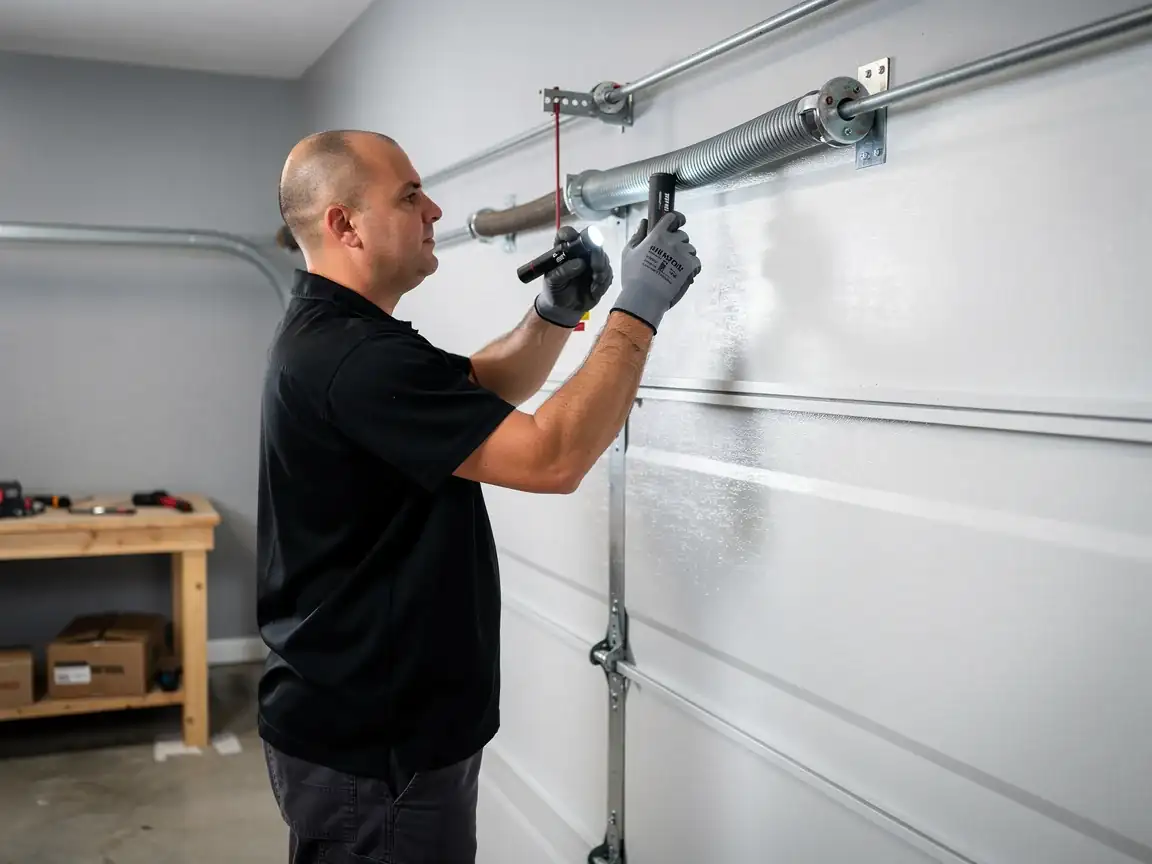
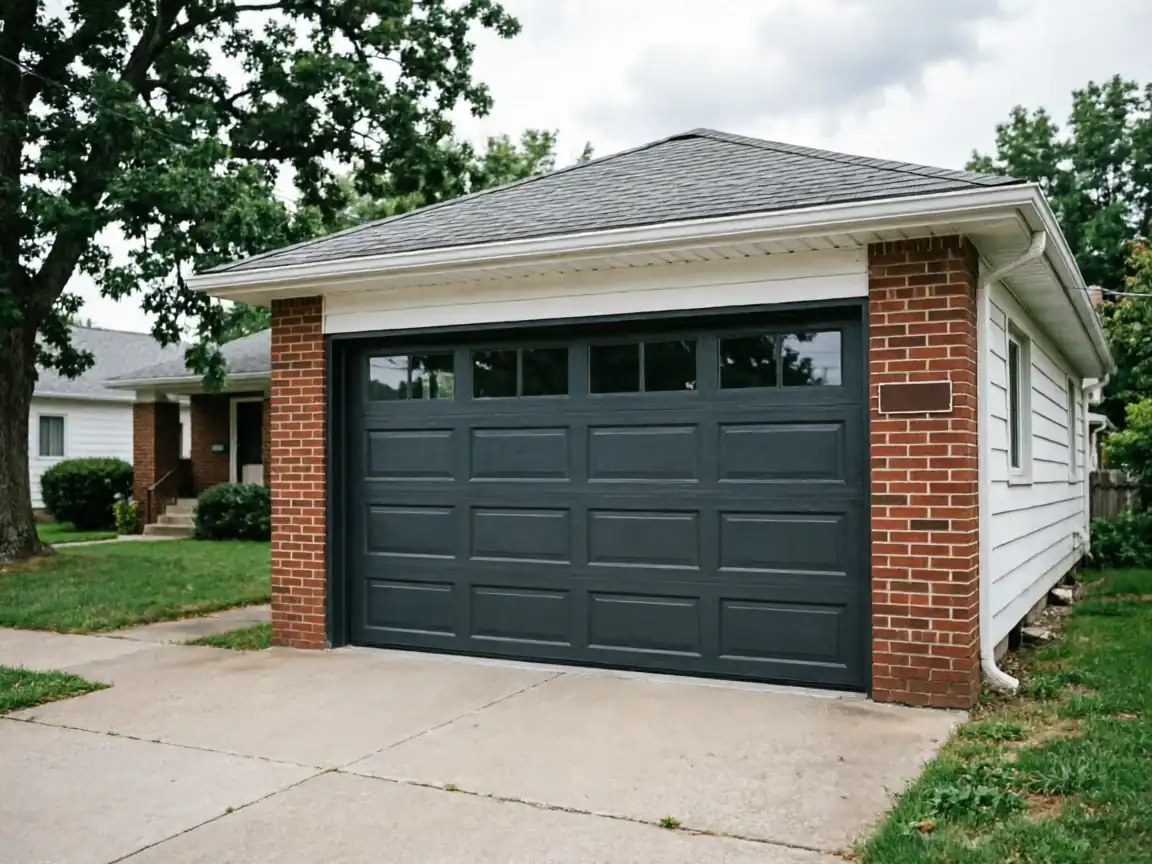
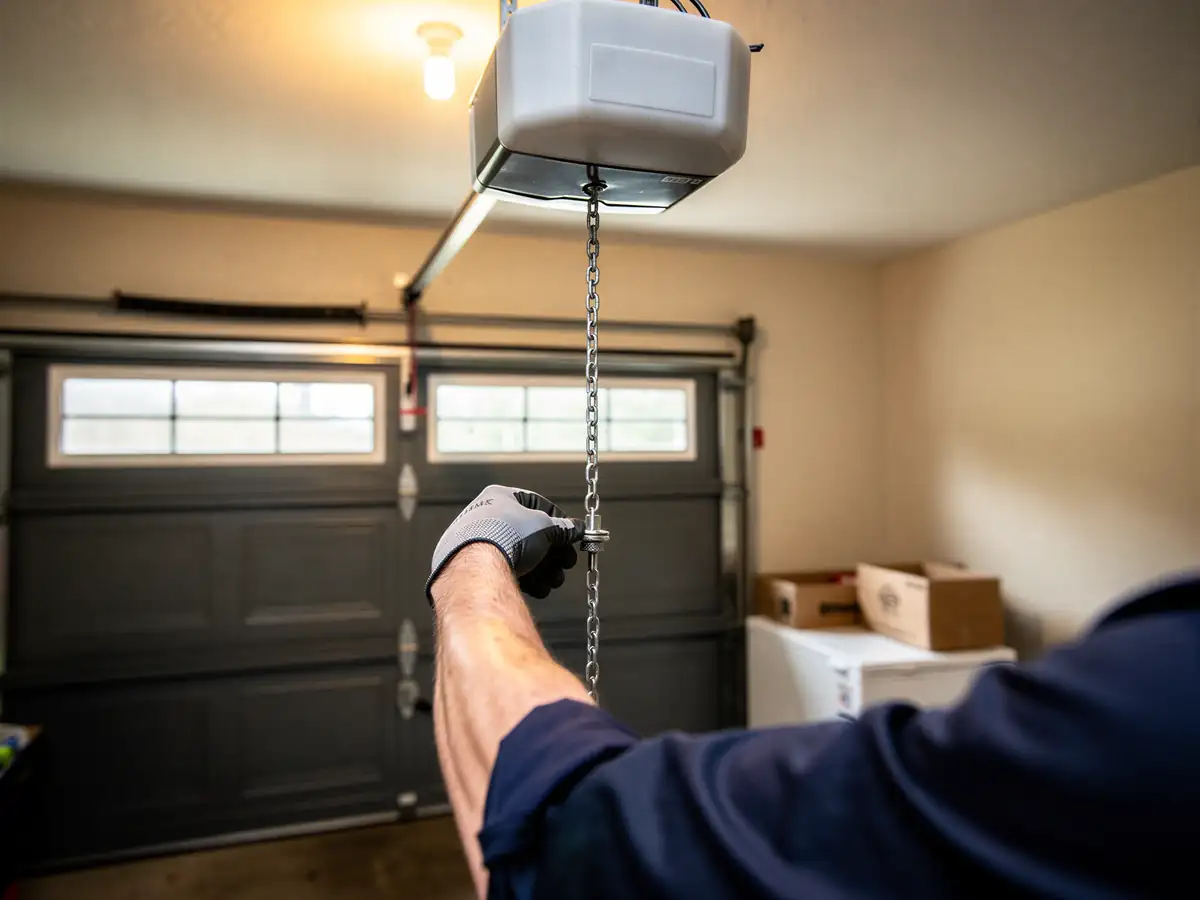
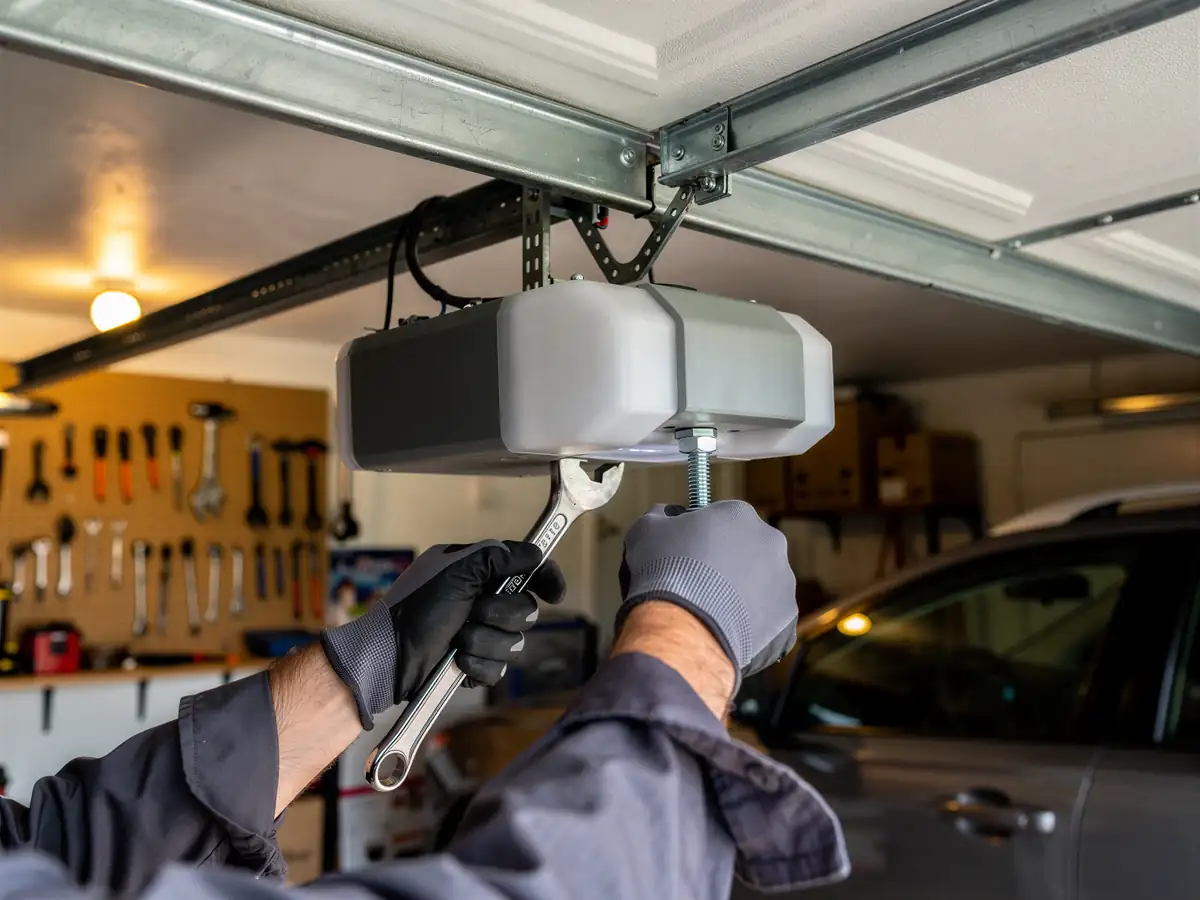
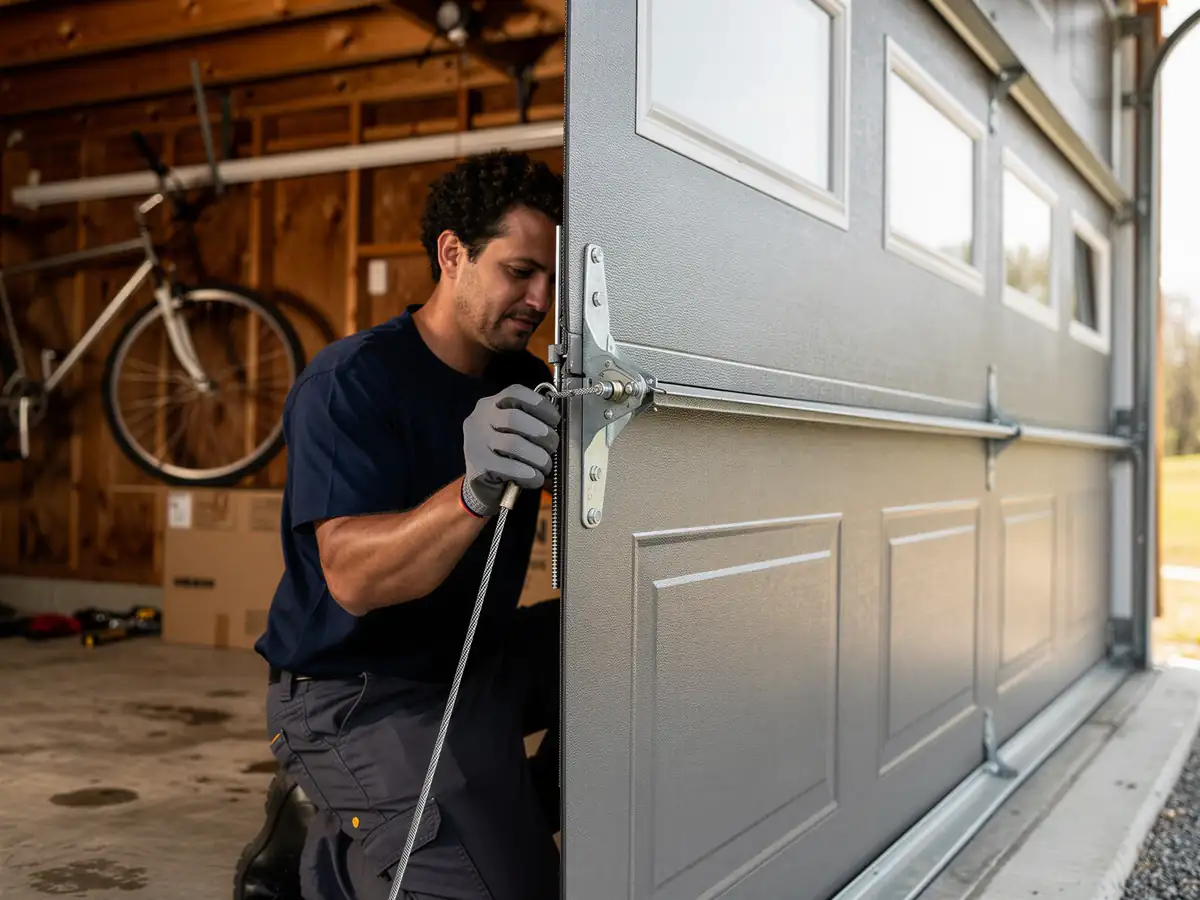
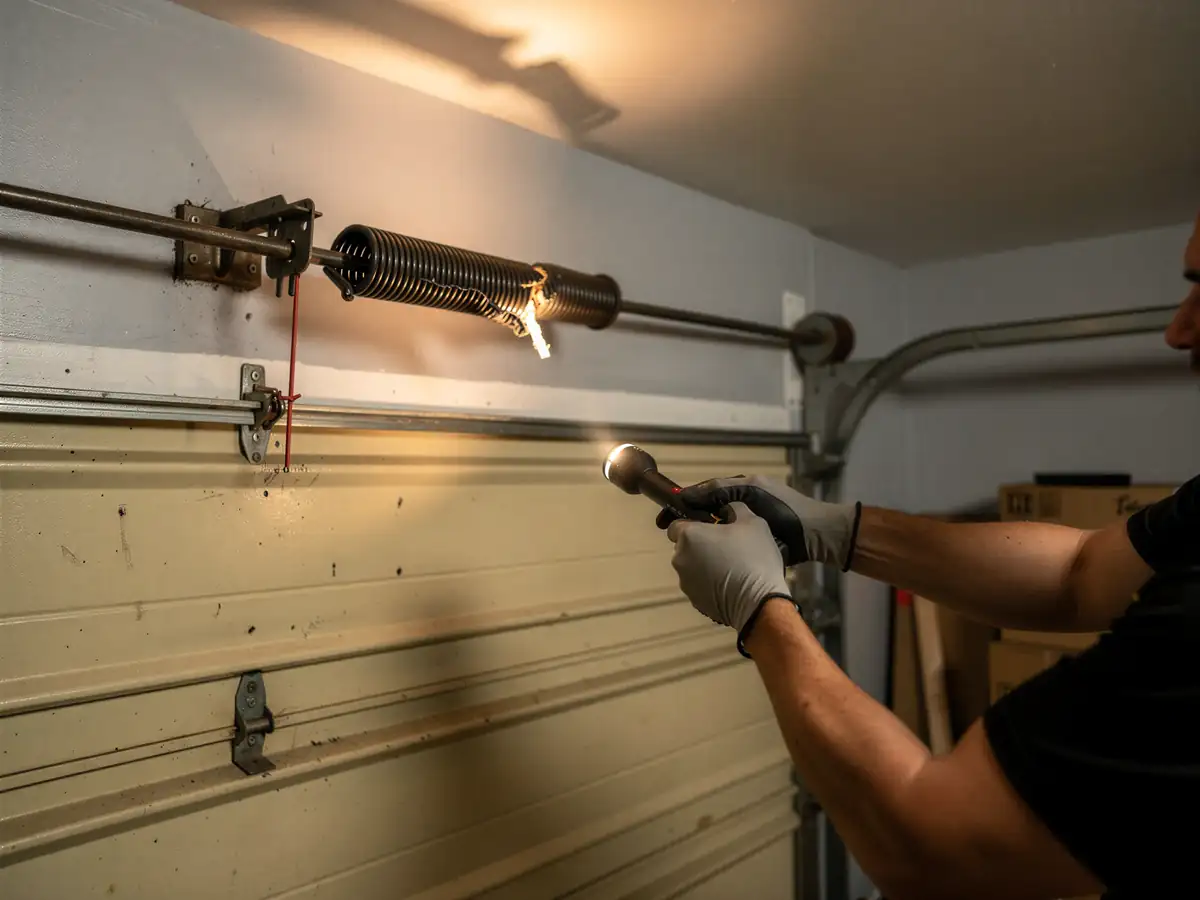
This area sits in a cold, severe-winter climate band, and that shapes the first thing a technician looks at: the spring and the track, in that order. Steel contracts in the cold, and a torsion spring that was already near the end of its cycle count will often give out on the first hard freeze of the season, not in July. Tracks that are a fraction out of plumb matter more here too, because ice buildup at the bottom panel adds weight right where the rollers have the least room to flex. A door that worked fine in October and started binding in January isn't coincidence - it's the metal doing what cold steel does. We check spring tension and roller alignment before we touch the opener, because in this climate those two are almost always where the real problem starts. Humidity swings between seasons also work on wood jamb trim and weatherstripping, which is a separate issue from the moving hardware but shows up at the same service call. None of this is unique to one brand of door - it's what severe cold does to any steel torsion system, and it's why a spring check comes before anything electronic.
What It Costs
We don't post a flat number here because what a job costs depends heavily on what's actually on the house, and in this area that varies more than people expect. Housing in the region runs from 1938 through 2002, with a median around 1958, which means a tech might find a modern extension-spring setup on one call and an older torsion system with obsolete hardware on the next, a few streets over. Median household income across the service area sits around $97,027, and most of the homes we see are owner-occupied rather than rental, which tends to mean owners want a repair done right the first time rather than the cheapest patch - that shapes what we recommend more than it shapes the price itself. The honest limitation: if a door is original to a house built in the 1950s, the replacement parts for that specific track or hinge pattern may not be something we can get overnight. In that case repair isn't always the cheaper path once you count a second visit for a backordered part, and we'll tell you that upfront instead of guessing at a number on the phone.
The Common Mistake
The mistake we see most in this area isn't neglect - it's over-lubricating with the wrong product on an older door. A lot of the housing stock here predates 1960, and those original torsion setups used hardware that doesn't respond well to heavy grease in cold weather; it thickens and actually slows the spring instead of protecting it. Owners spray the whole assembly with whatever's in the garage, and the door gets stiffer through the winter, not smoother. The second version of this mistake is ignoring a slightly off-balance door because the opener still forces it open. An opener will keep straining against a bad spring until it burns out the motor or the drive gear, and then you're paying for two repairs instead of one. On a pre-1960 door especially, a quick balance check - does it hold position halfway up with the opener disconnected - tells you more than listening for noise. That's a five-minute check most people never do, and it's the one that would have caught the problem months earlier.
What Is Going On
When a call comes in from Sterling Heights or one of the closer towns we reach - Utica is about three miles out, Fraser around five, Madison Heights six - the diagnostic order doesn't change: spring tension first, track alignment second, opener logic last. Given the age spread of housing here, 1938 to 2002, a tech walks in without assuming which generation of hardware they'll find, which is different from newer-build suburbs where everything on the street was installed the same year. We look at cable fray at the drum, roller wear in the track, and whether the bottom bracket shows rust consistent with age rather than a recent event. For colder months specifically, we check whether the spring is cycling fully or hanging up partway, since that's the symptom that shows up first in this climate before a full failure. None of this requires guessing - it's a short, consistent sequence, and it's the same sequence whether the call is a Tuesday morning rattle or a Saturday night door that won't budge.
How it works
From “it’s stuck” to “it’s fixed”
A quick, honest process - no guesswork and no surprises.
1
Tell us what’s wrong
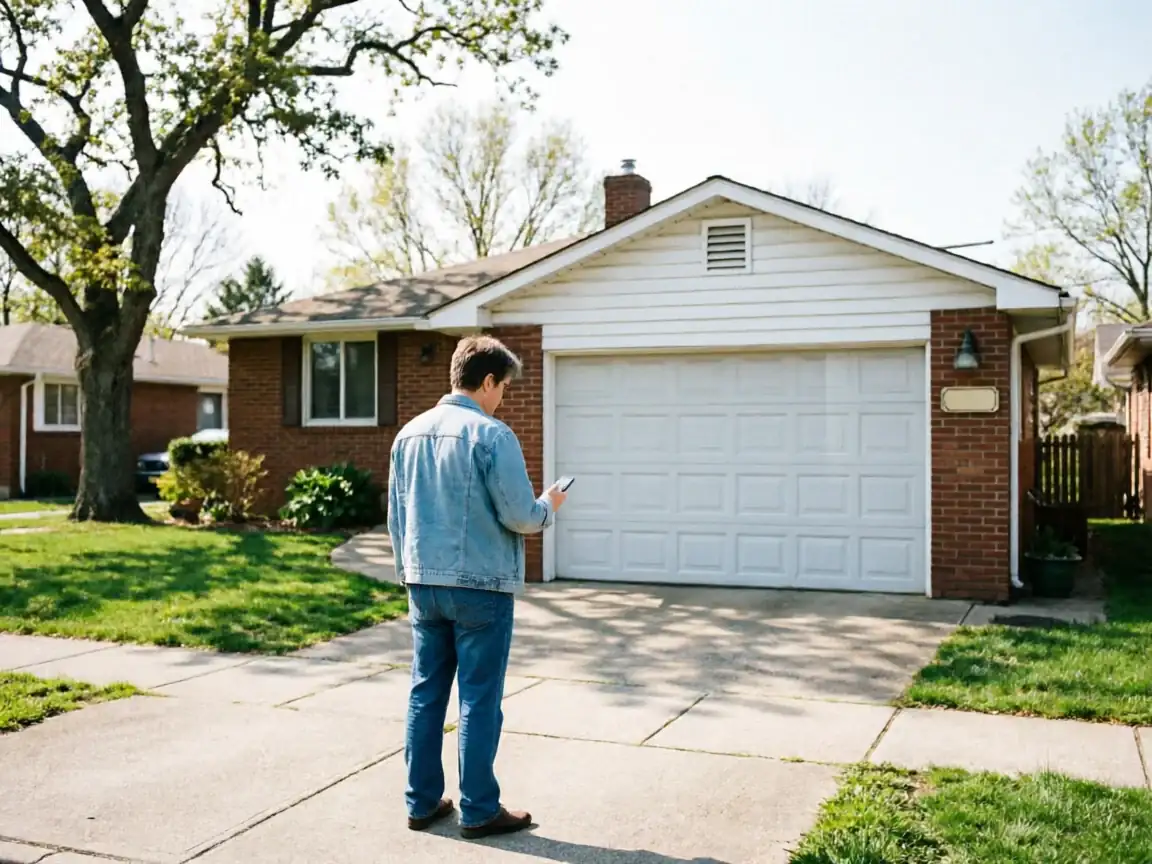
Describe the symptom - won’t open, loud bang, opener runs but the door won’t move.
2
On-site diagnosis
A technician tests the door under power and by hand and finds what actually failed.
3
Clear, up-front plan
You get the fix that’s needed and what drives the cost - before any work starts.
4
Repaired & tested
The repair is done, the door is set true and tested, and the work area left clean.
Next step
Not sure which repair your door needs in Sterling Heights, MI? Describe what it’s doing - every job starts with a diagnosis.
Why did my garage door suddenly get hard to lift after it got cold out?
Steel springs lose a little tension as temperatures drop, and in a cold-climate area like this, that drop is enough to turn a marginal spring into one that can't hold the door's weight. If it got noticeably harder to lift once winter set in, the spring is the first thing worth checking, not the opener.
Is my garage door old enough that parts might be hard to find?
Housing in this area was mostly built between 1938 and 2002, with a lot of it going up before 1960, so yes - some original torsion hardware on older homes isn't something we can source same-day. We'll tell you at the visit if that's the case rather than quoting a timeline we can't meet.
Do you serve areas outside Sterling Heights?
We reach towns nearby including Utica, Fraser, Madison Heights, Center Line, and Roseville, among others within about ten miles. Distance affects how quickly we can get a truck there, so it's worth mentioning your town when you call.