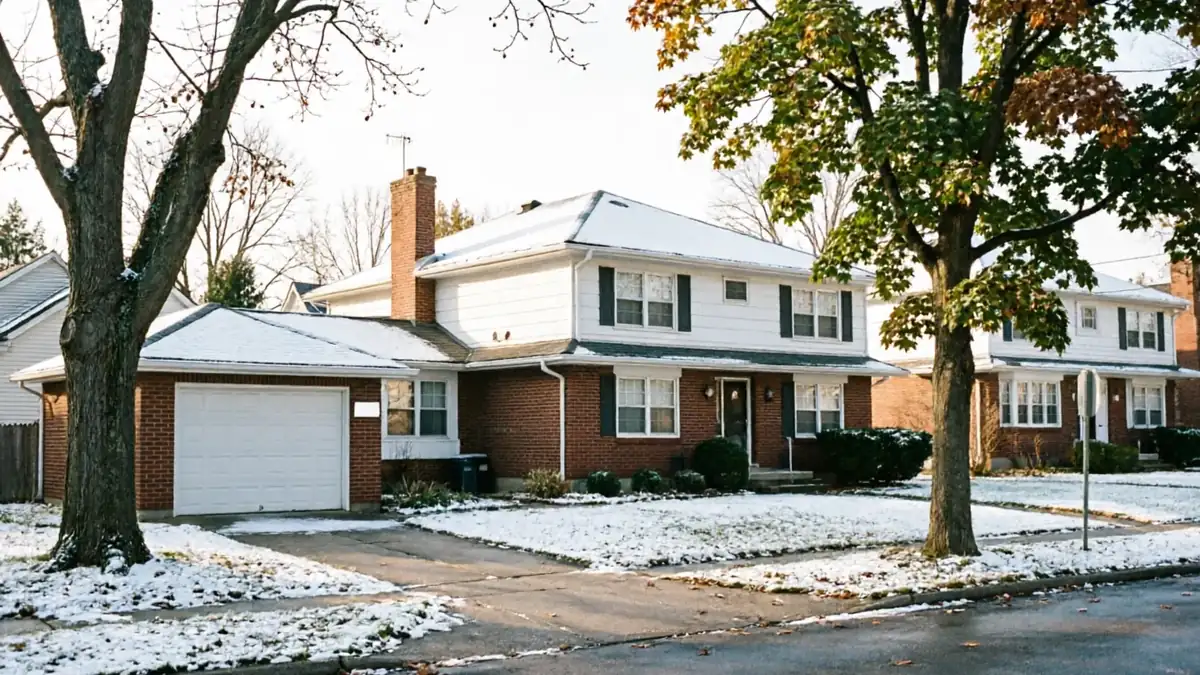
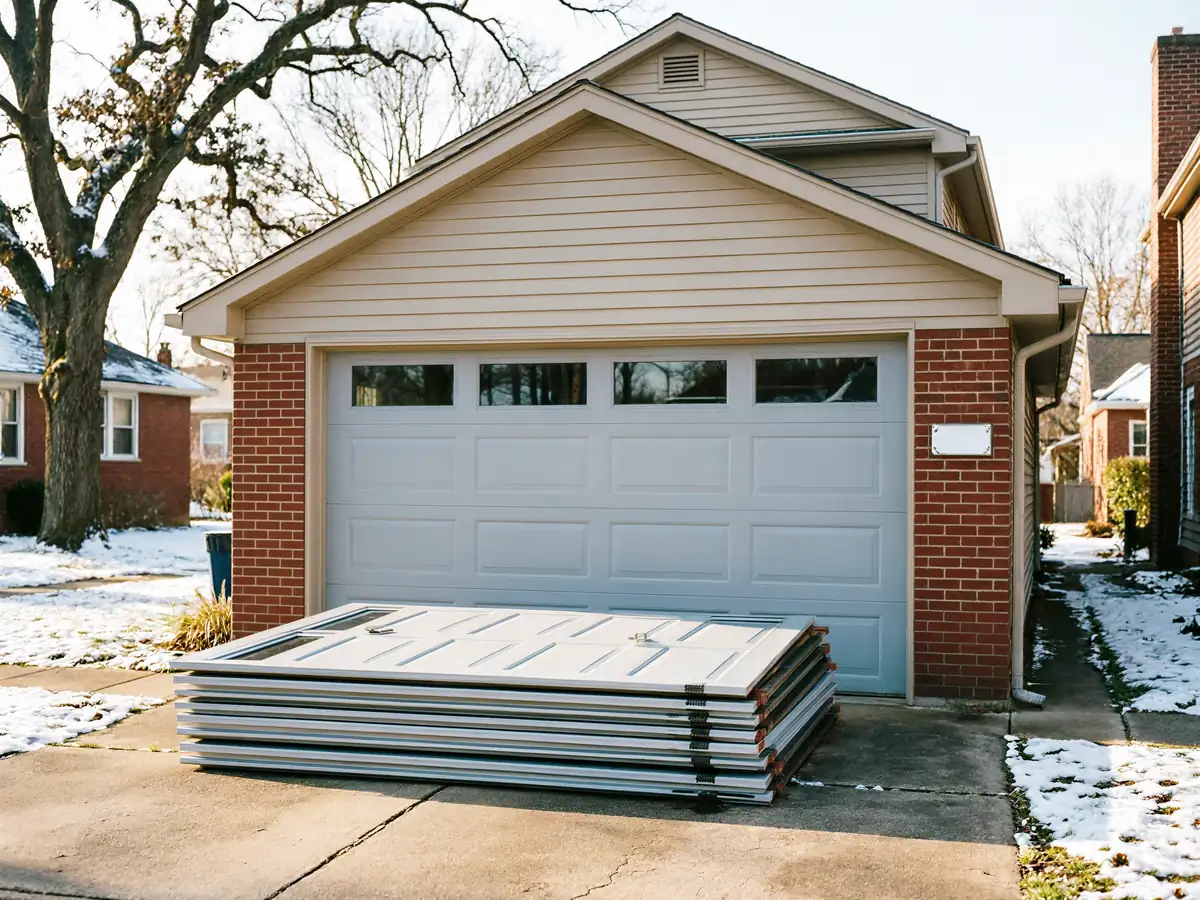
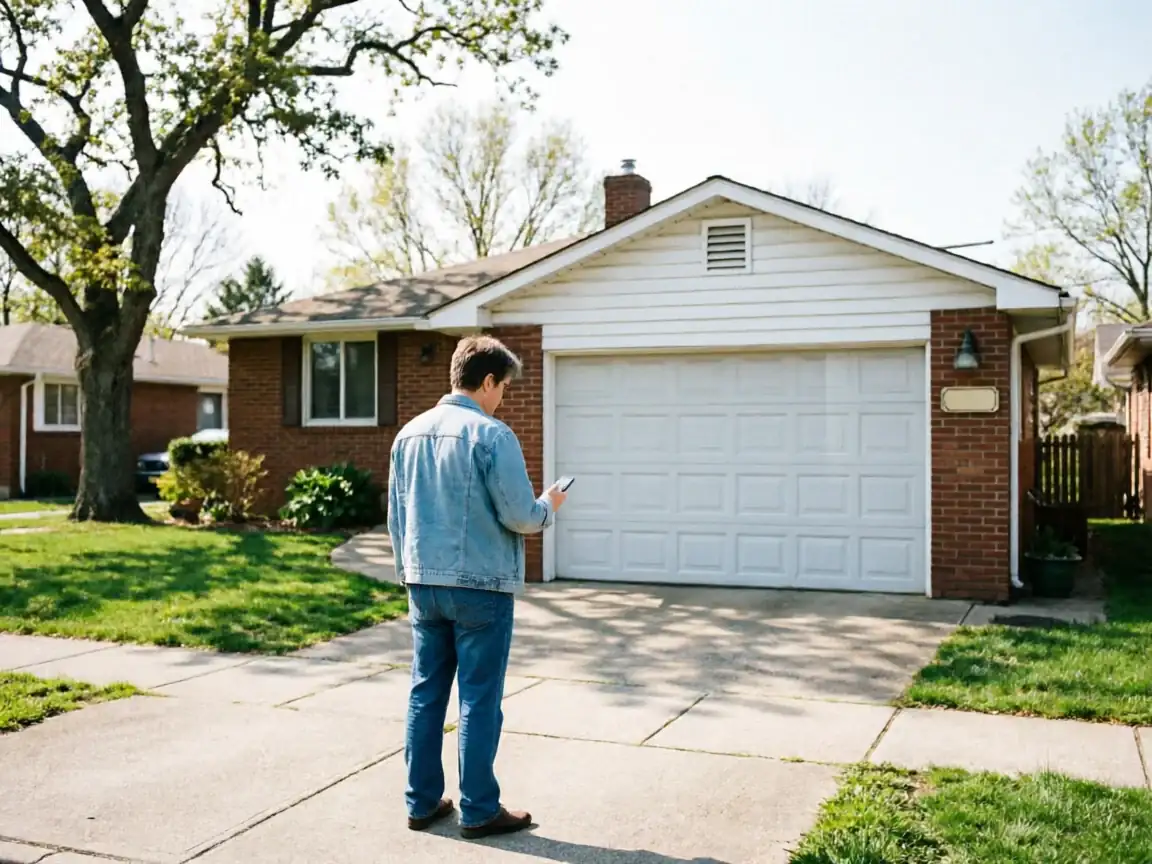
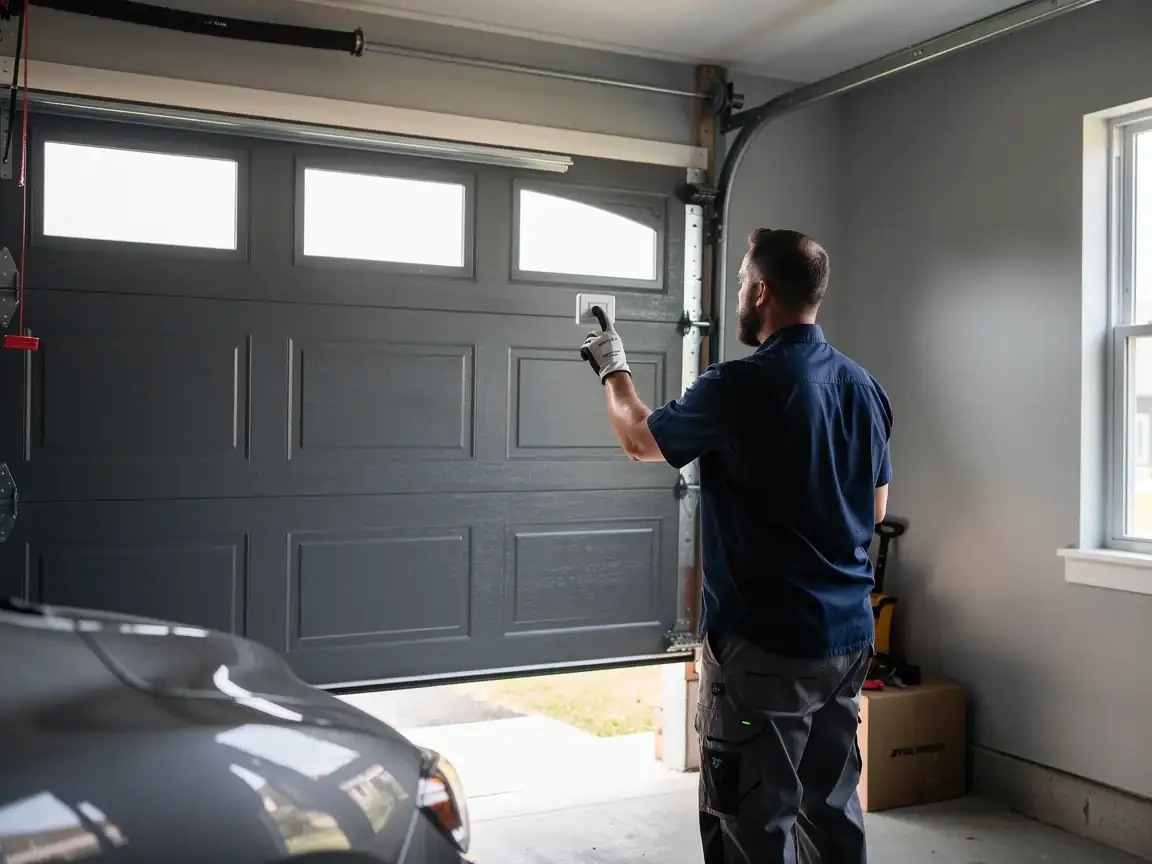
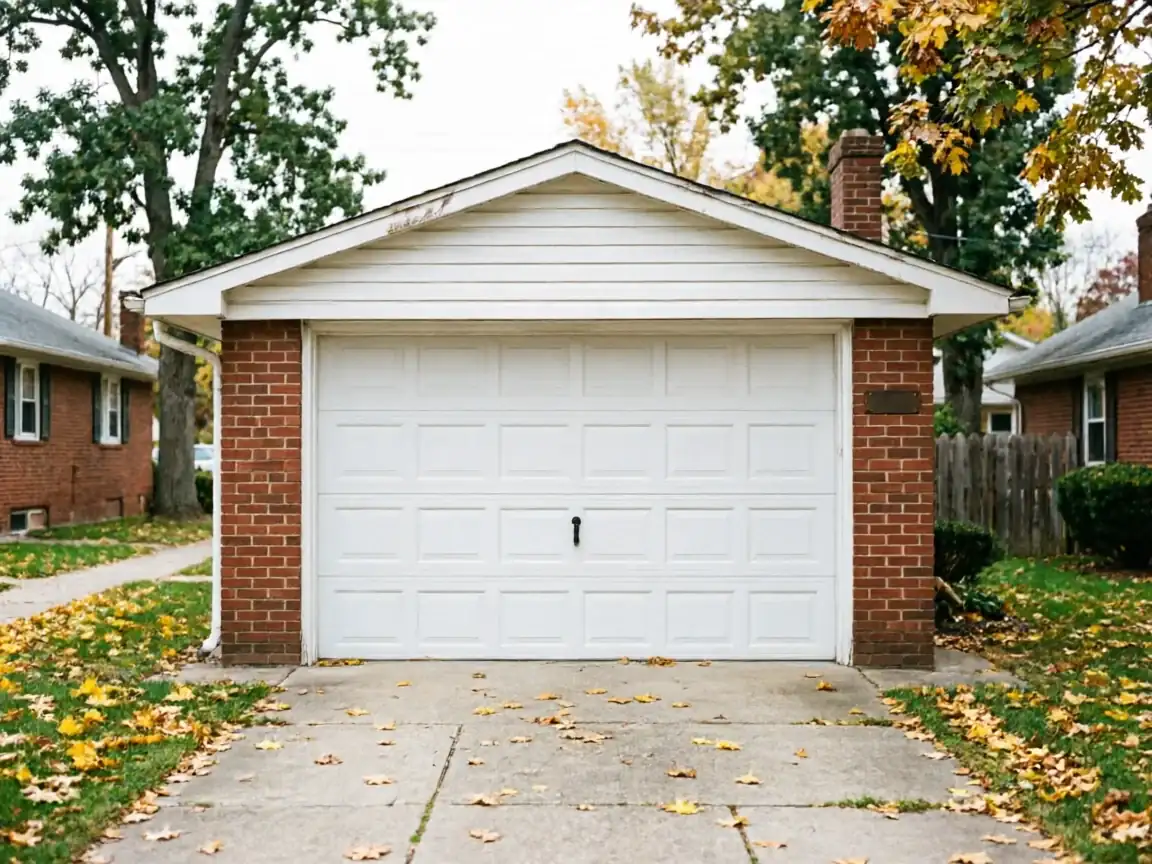
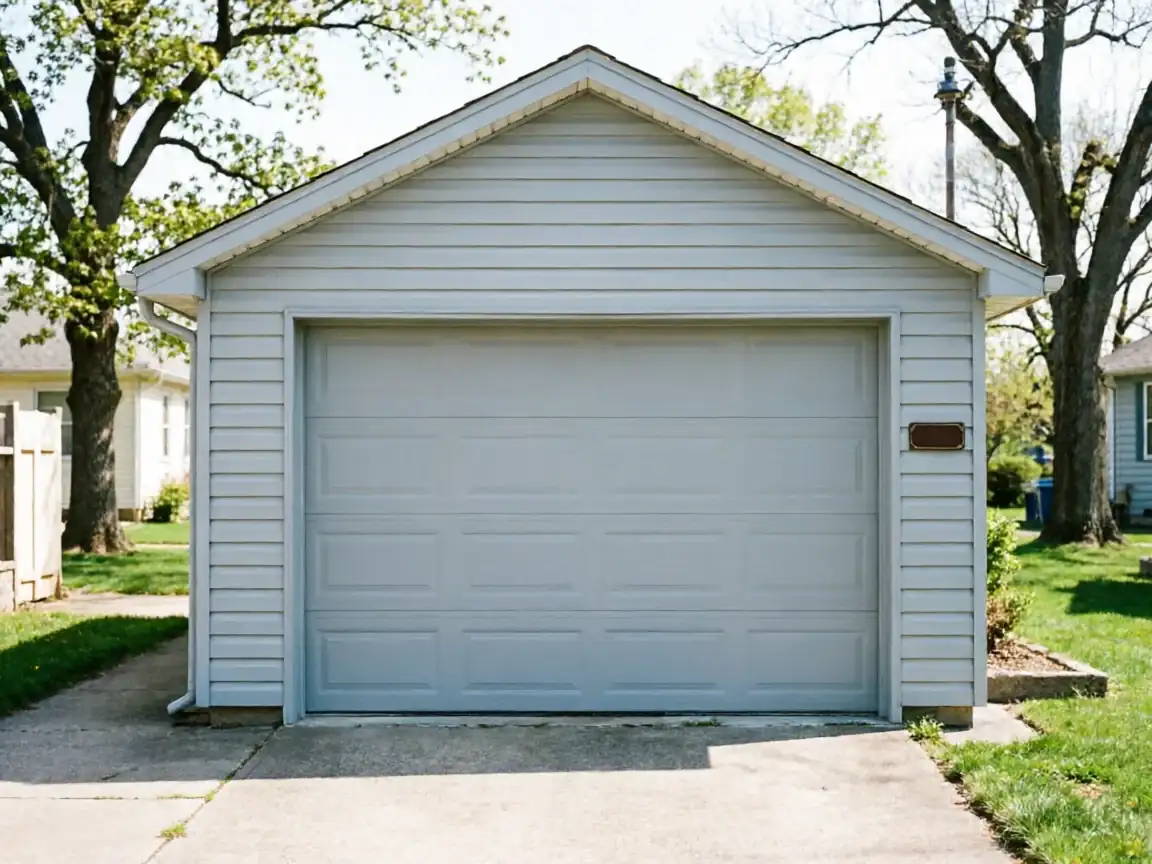
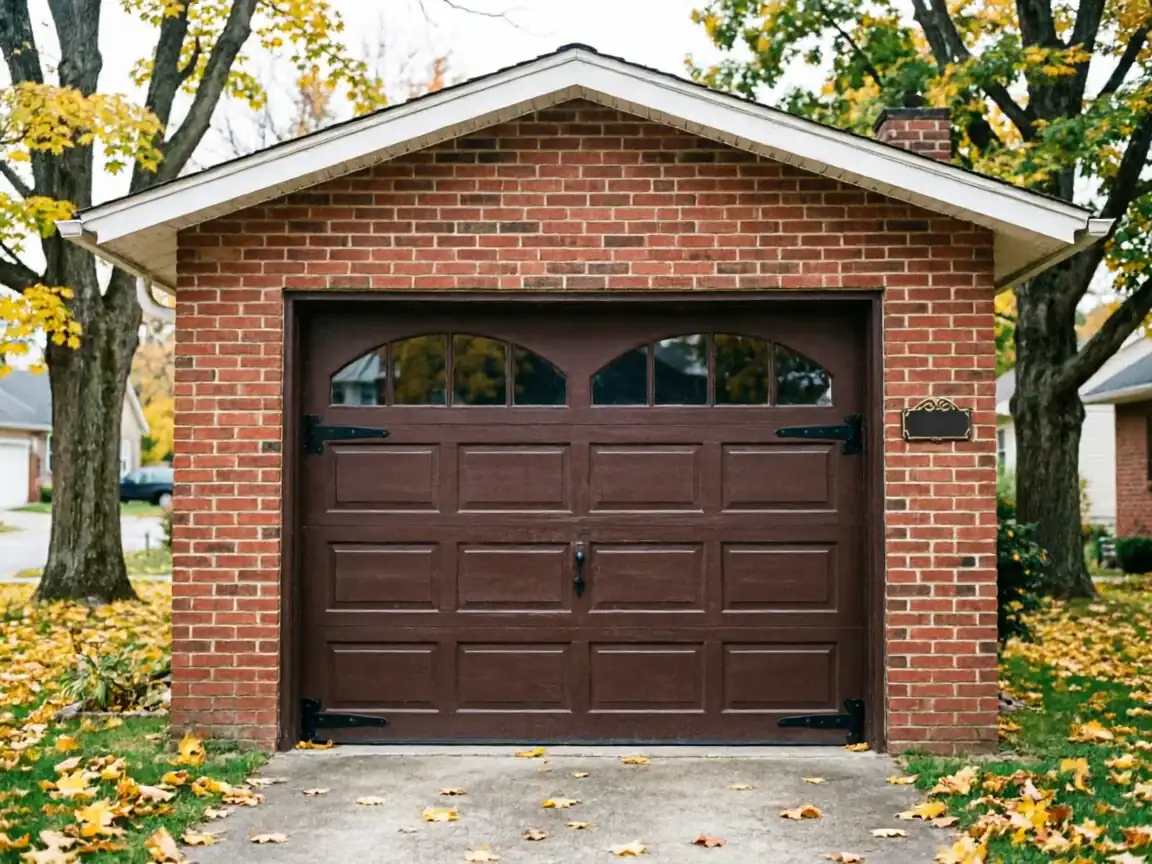
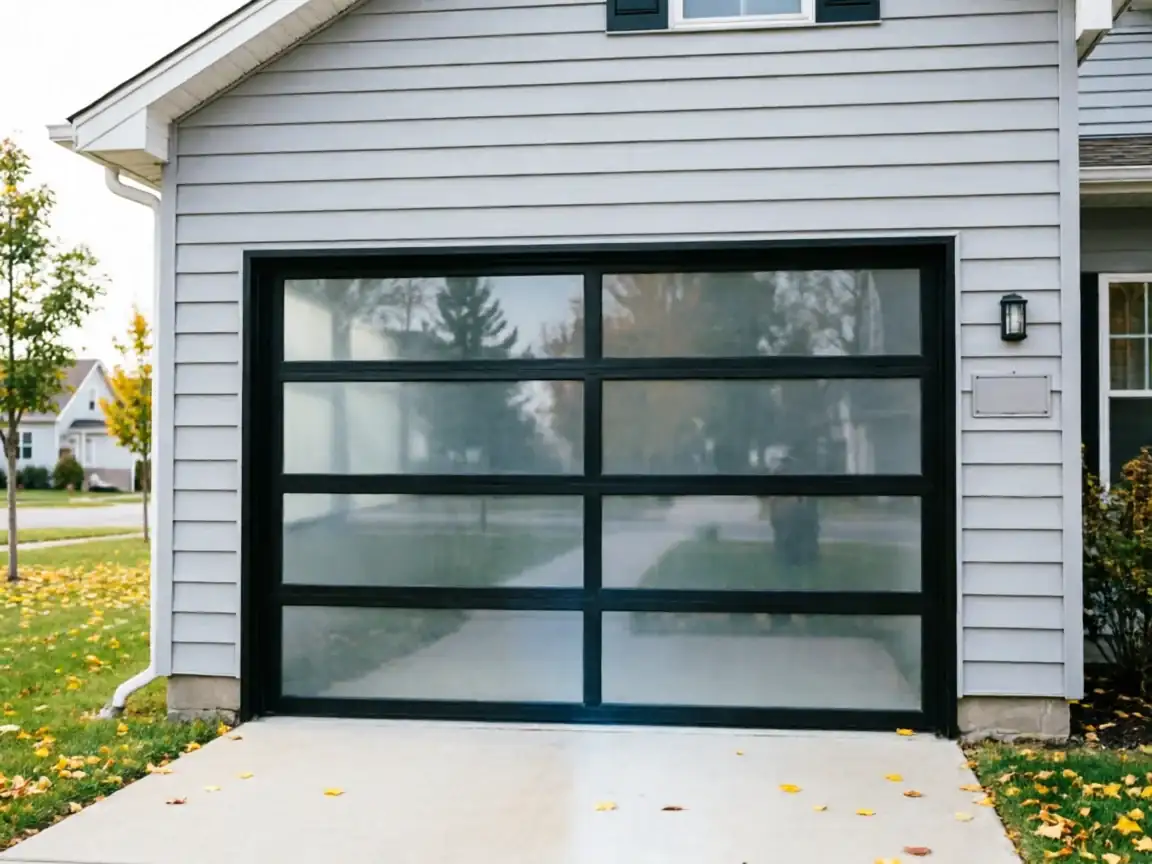
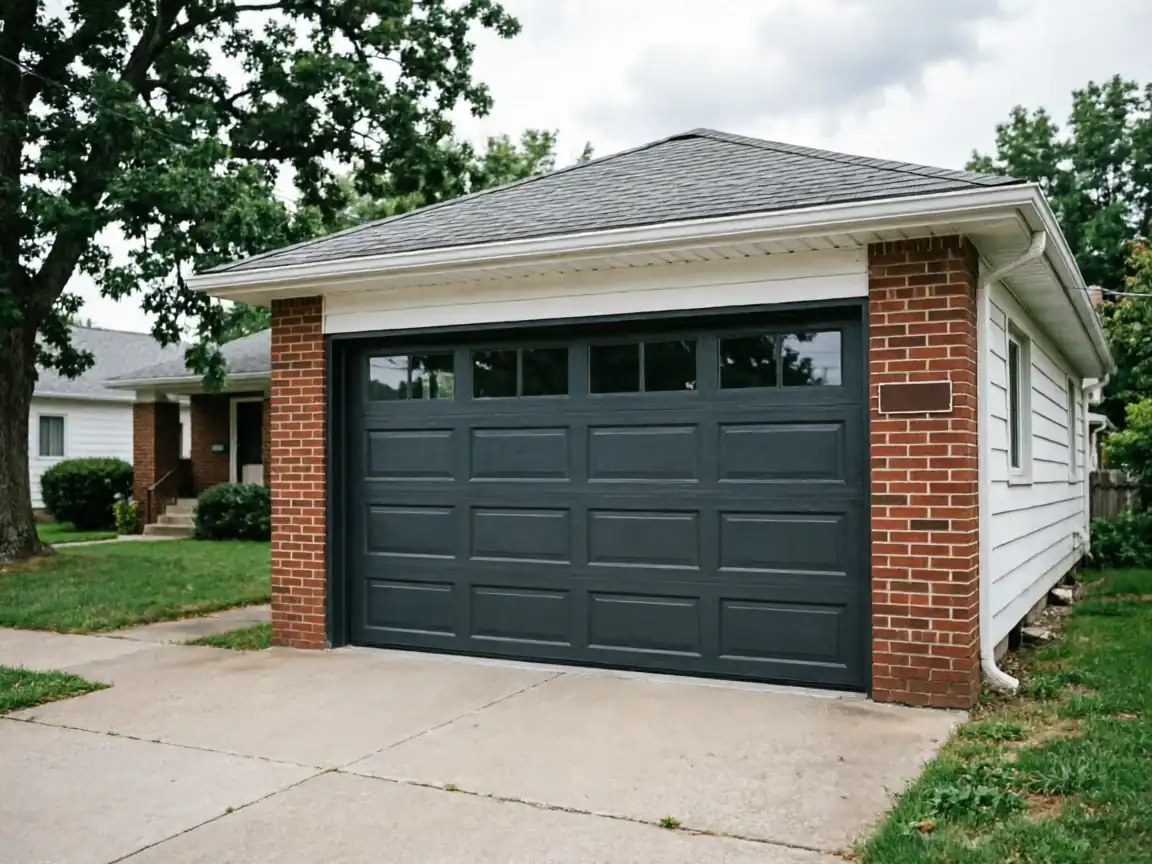
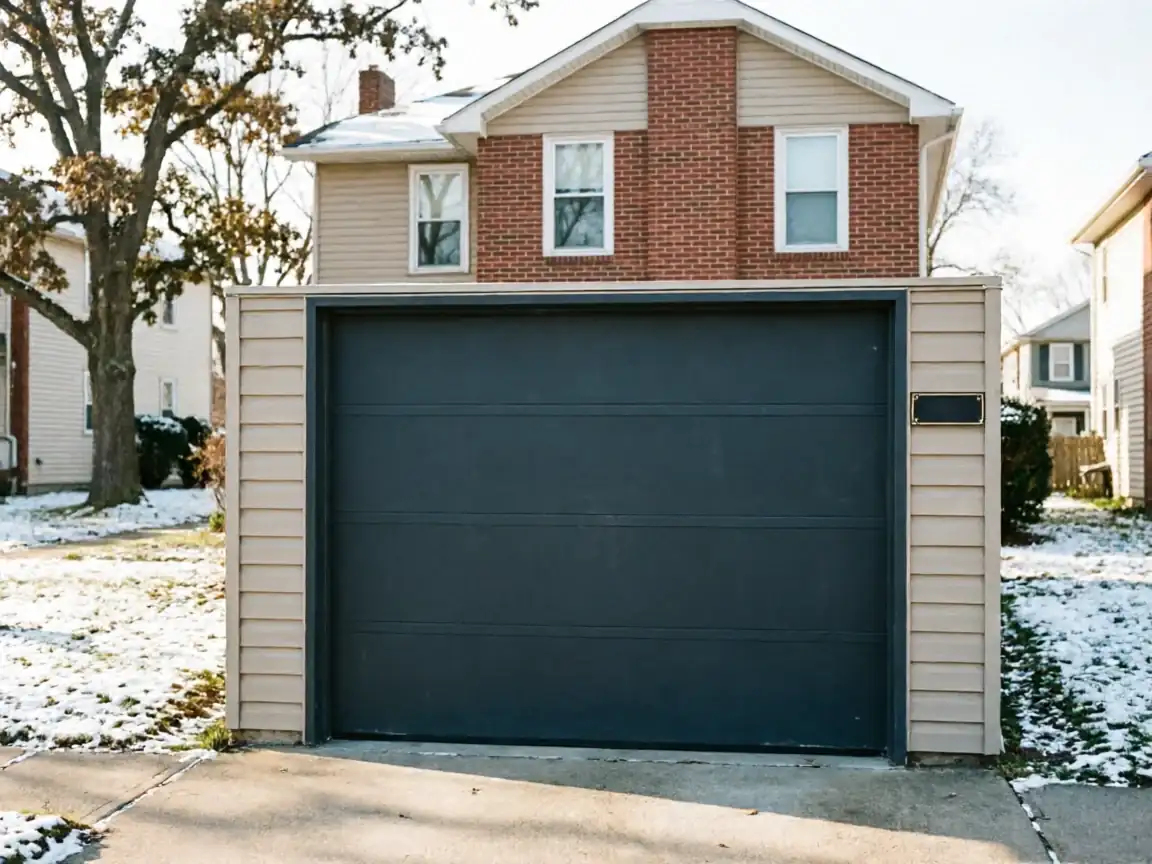
Macomb looks different on a housing survey than most of the towns we cover out of Sterling Heights. The median year built here sits around 2000, which puts most of the neighborhood inside the last few decades of construction rather than the mid-century wave. That matters because across the wider service area, the housing stock runs from 1938 to 2002 with a median closer to 1958, and most of the 39 named communities we work in are still mostly pre-1960 stock. Macomb is the exception, not the rule. With roughly 31,520 households and a median income near $118,340, this is one of the newer-build, higher-income pockets on our route, and the doors reflect it. You're not dealing with the same wood jamb retrofits or original one-piece doors that show up on the older side of the territory. You're dealing with factory-installed steel sectional doors on standard hardware, usually still carrying their first or second opener.
What That Means for Doors
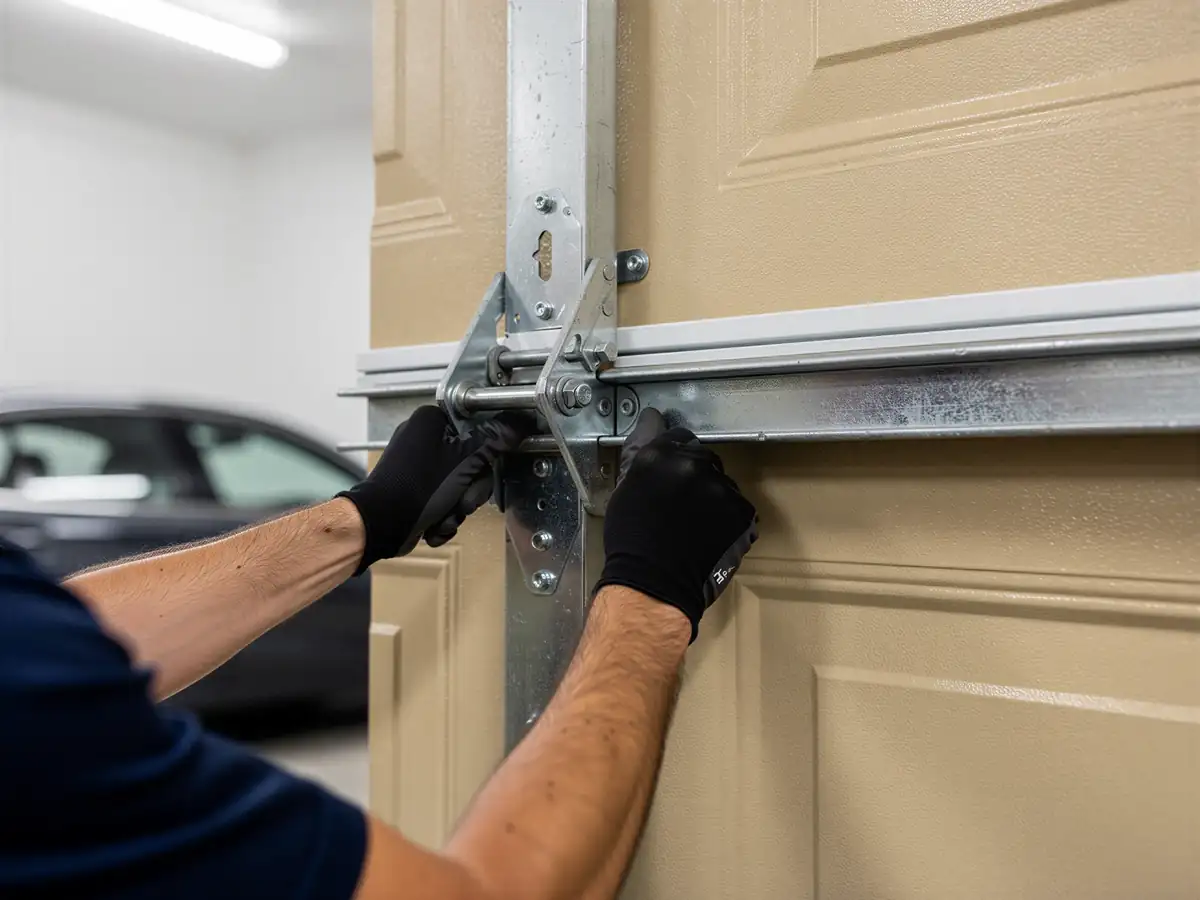
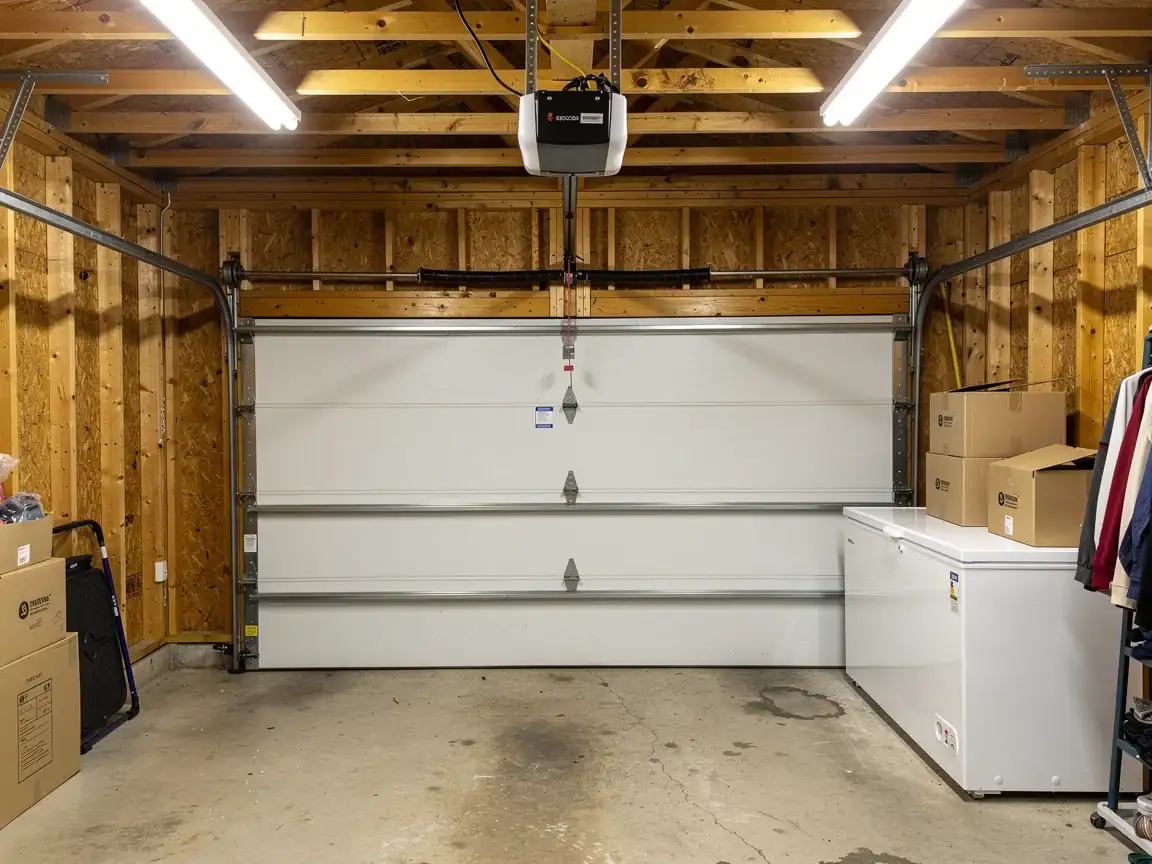
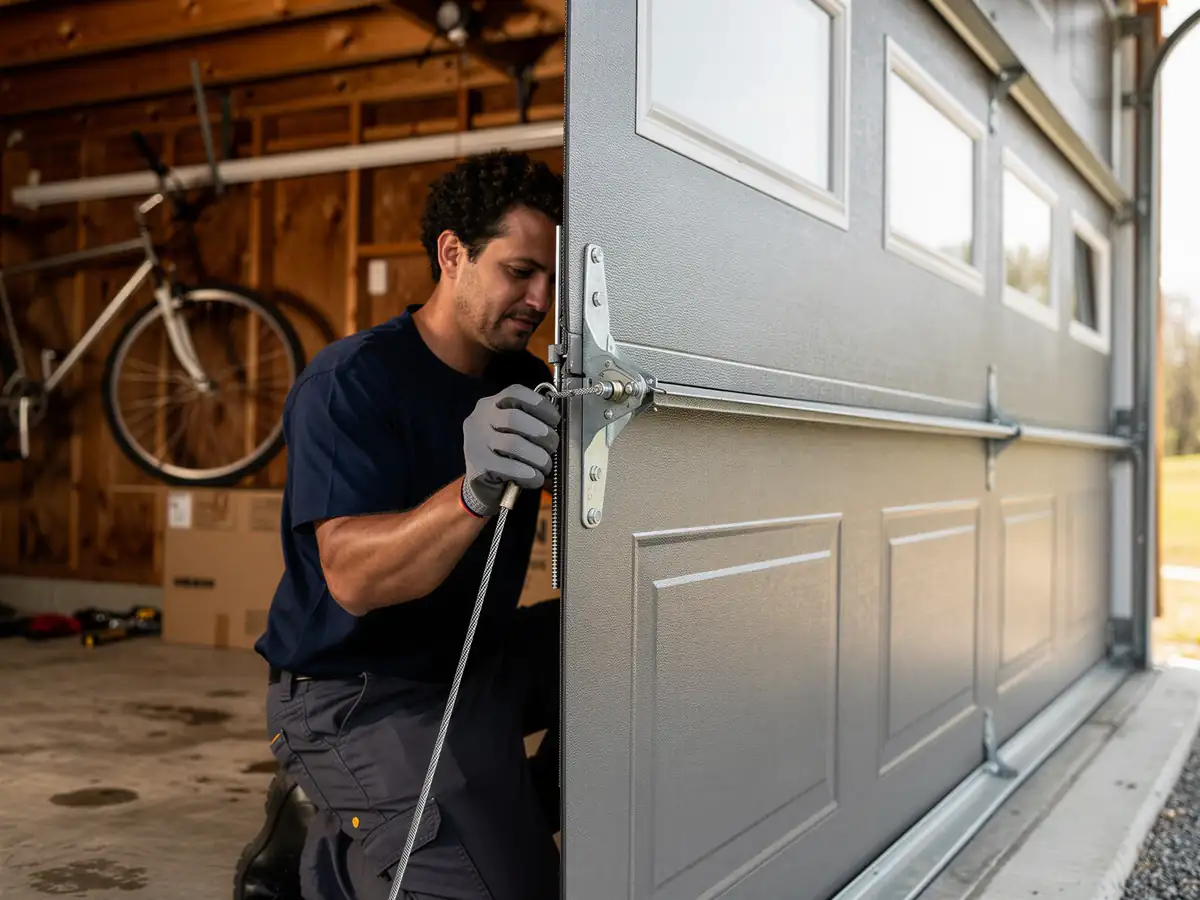
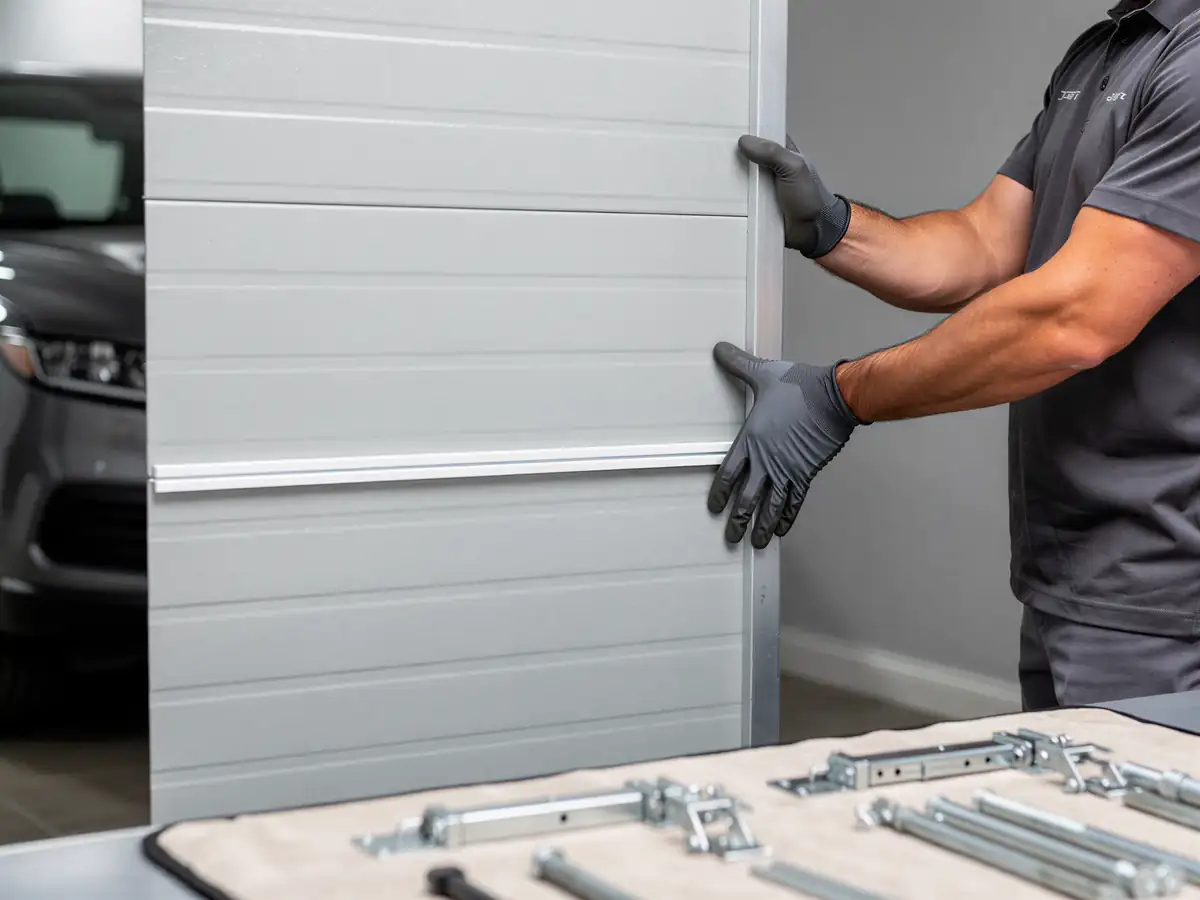
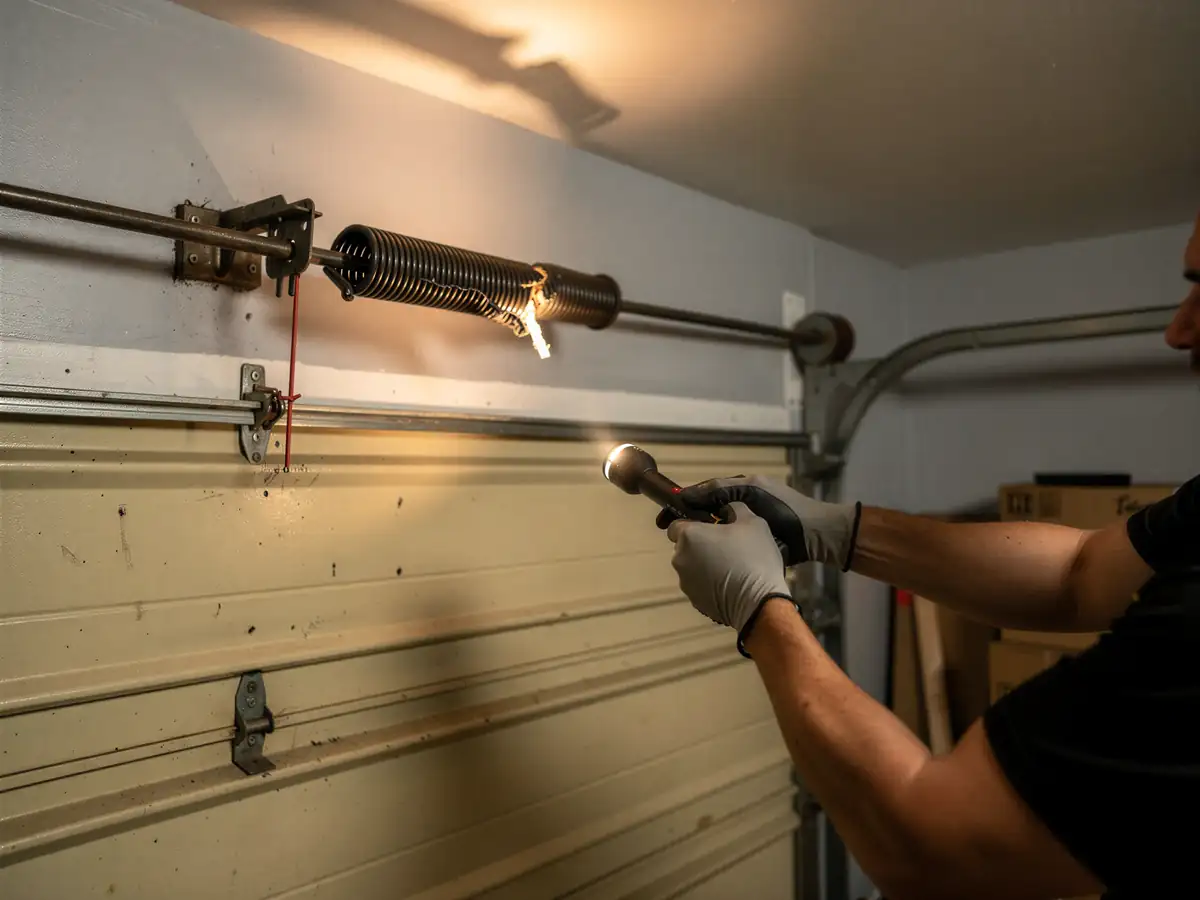
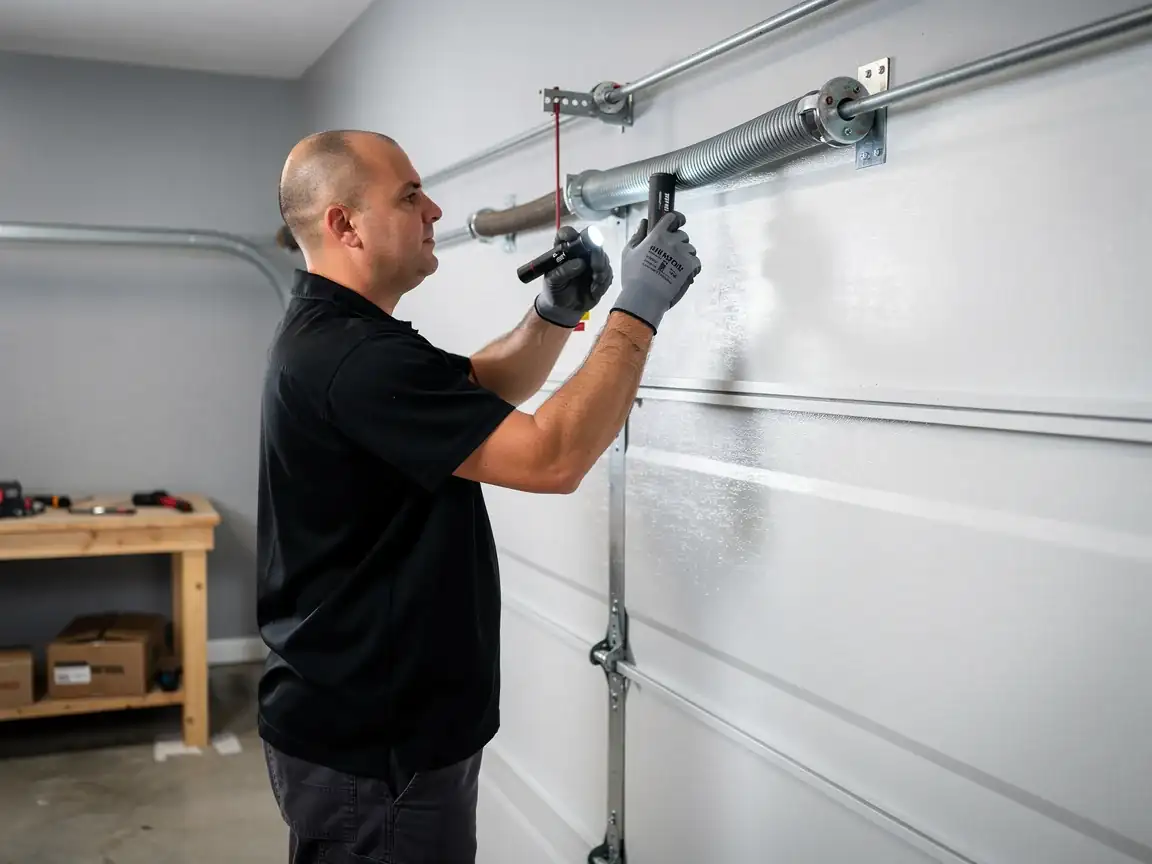
A door built in 2000 comes with a different set of problems than one built in 1958. Builders at that point were putting in steel raised-panel sections on standard torsion springs, mounted centered over the opening rather than the old side-mount torsion setups you find on pre-1960 houses. Openers from that era are chain or belt drive with photo-eye safety sensors, which were already required by code. So the failures we see in Macomb skew toward wear-and-cycle problems rather than obsolete-parts problems: a torsion spring that's done its 10,000 cycles, a cable starting to fray, a sensor knocked out of alignment, a circuit board on an opener that's old enough to be flaky but not old enough to need a full hardware swap. It's a cleaner repair picture than the older stock, honestly. We're rarely hunting for a part that stopped being made twenty years ago here - the harder parts hunts are the houses from the 1940s and 50s elsewhere in the territory, not this one.
How We Get to You
Macomb sits about 9 miles out from our Sterling Heights base, which puts it on the farther end of our usual run - in the same rough band as Hazel Park, Eastpointe, St. Clair Shores, and Grosse Pointe Woods. We don't keep a second location or a drop point in Macomb; every truck comes from Sterling Heights, so the drive is built into how we schedule the day rather than something we can shortcut. Closer stops like Utica at 3 miles and Fraser at 5 miles sit on the way out, which sometimes lets us stack jobs on the same route. We're not going to promise a same-day slot here the way we might for something 3 miles away - we'll give you a real window when you call, based on where the truck already is that day.
What We Do Most in This Area
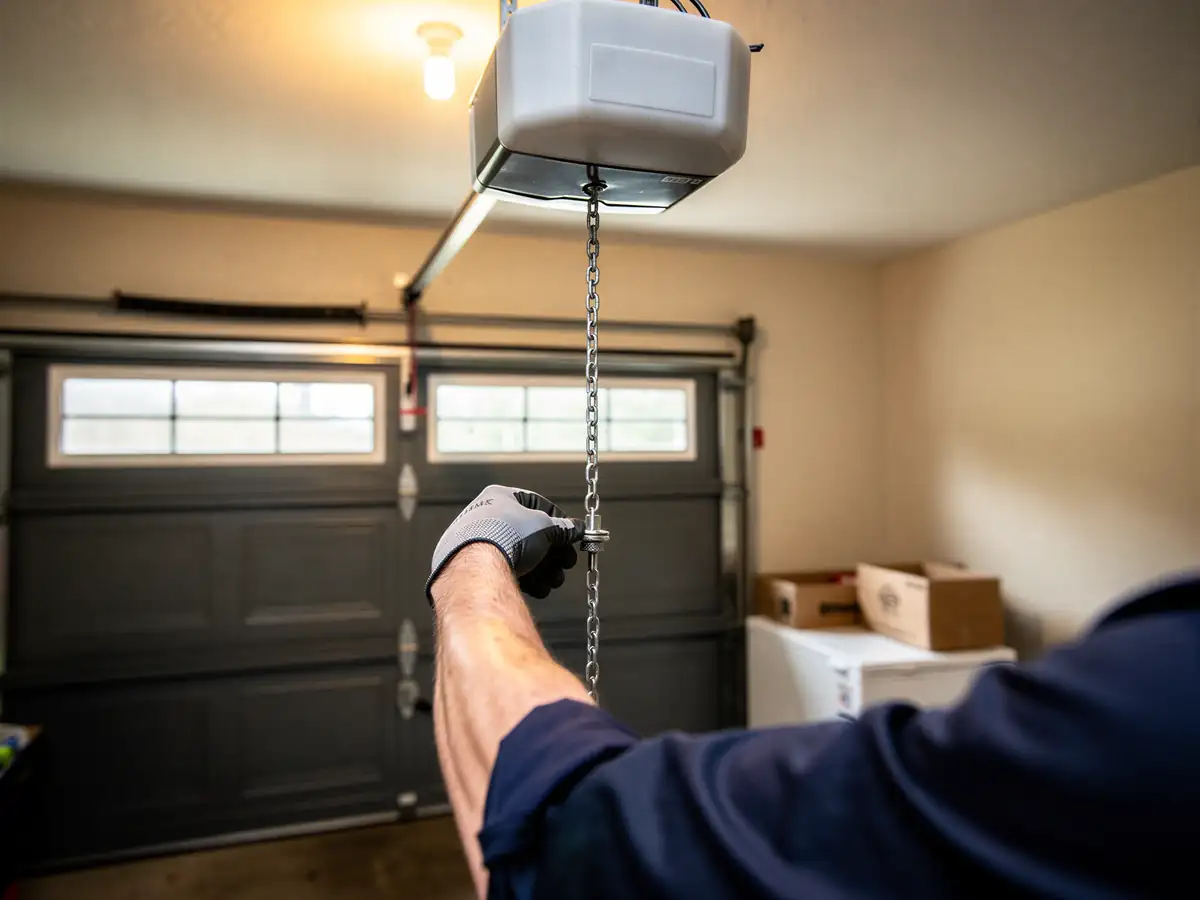
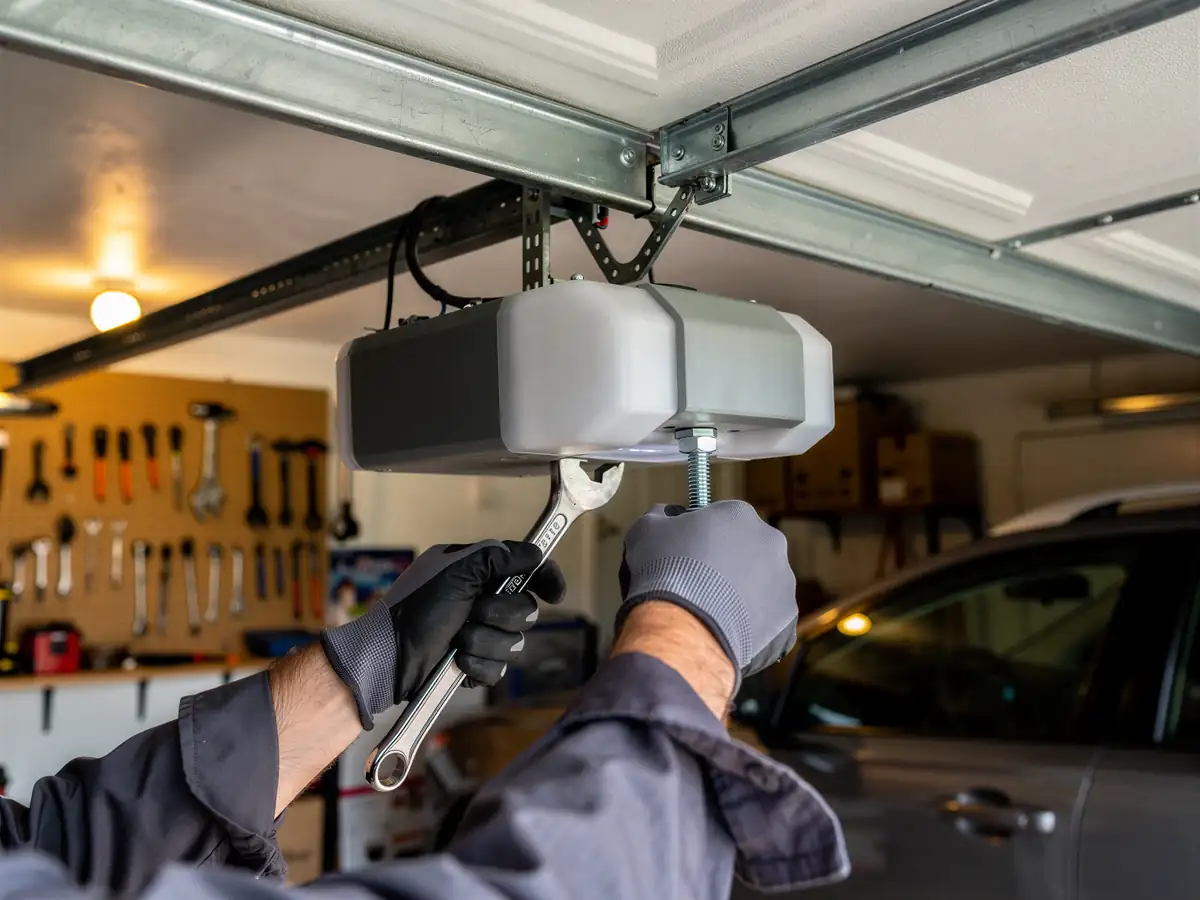
Given the age of the housing stock here, most of our Macomb calls are opener calls: a unit that's stopped responding to the remote, a sensor pair that's drifted out of alignment after a bump from a bike or a ladder, a logic board that's aged out. Springs still break - even a 20-year-old torsion spring reaches the end of its cycle count eventually, and the severe cold winters here add stress that shortens that life a bit further. Cable fray and roller wear show up too, mostly on doors that get a lot of daily use. One honest limitation: if your opener is a less common model or a smart-home-integrated unit, the control board or wall console sometimes has to be special-ordered, and that can add a few days to the job. We'll tell you upfront if that's the case rather than guessing.
How it works
From “it’s stuck” to “it’s fixed”
A quick, honest process - no guesswork and no surprises.
1
Tell us what’s wrong
Describe the symptom - won’t open, loud bang, opener runs but the door won’t move.
2
On-site diagnosis
A technician tests the door under power and by hand and finds what actually failed.
3
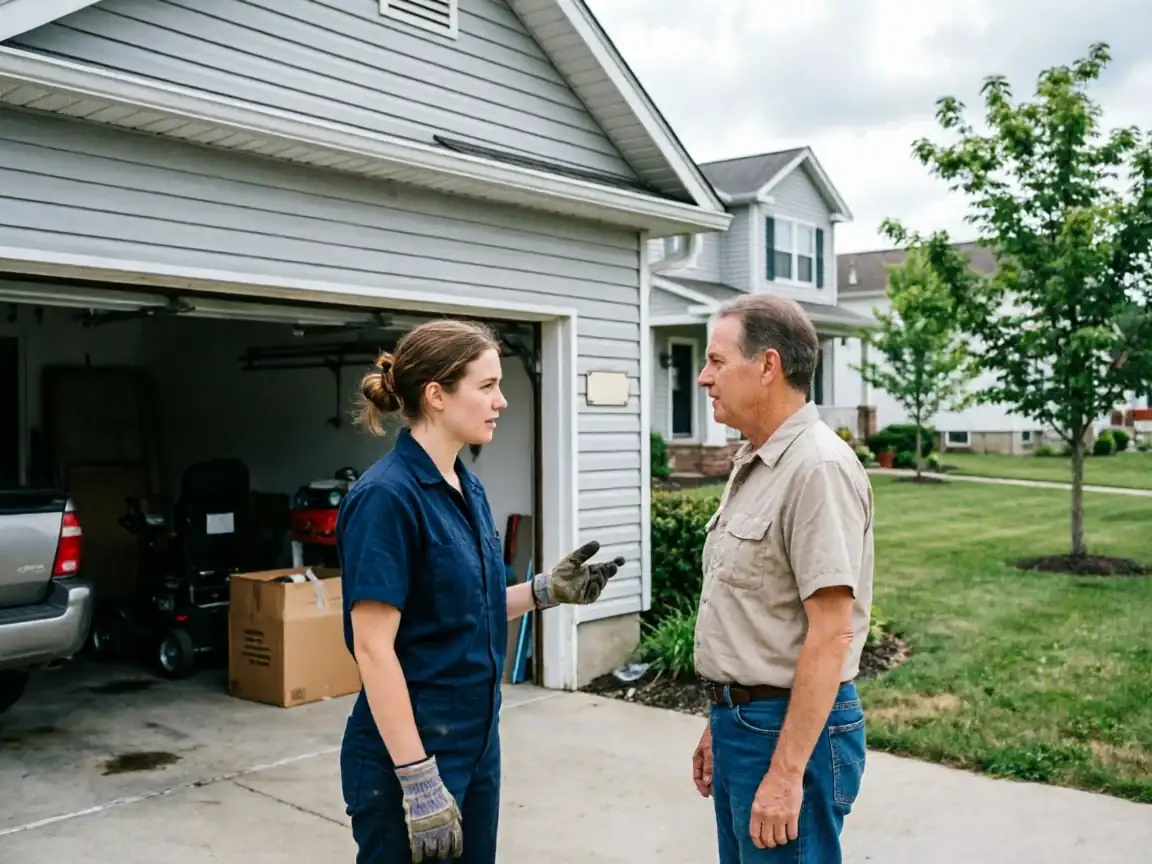
Clear, up-front plan
You get the fix that’s needed and what drives the cost - before any work starts.
4
Repaired & tested
The repair is done, the door is set true and tested, and the work area left clean.
Next step
Not sure which repair your door needs in Sterling Heights, MI? Describe what it’s doing - every job starts with a diagnosis.
How far is Macomb from your base in Sterling Heights?
About 9 miles. We travel from Sterling Heights for every job here - there's no separate Macomb location - so we build the drive into scheduling rather than promising a fixed arrival window before we've seen where the truck is that day.
Are the garage doors in Macomb different from older parts of the service area?
Yes. Macomb's housing stock runs younger, centered around the year 2000, compared to a lot of the territory where the median build year is closer to 1958. That means standard centered torsion springs and steel sectional doors rather than the older side-mount hardware and one-piece doors found on pre-1960 houses elsewhere.
What repair calls do you get most often in Macomb?
Mostly opener issues - misaligned sensors, aging circuit boards, remotes that stop syncing - plus the occasional torsion spring or cable that's worn out from cycle count and cold-weather stress. The older-parts headaches common elsewhere in the service area are rare here.
Can you always get parts same day for a Macomb opener?
Not always. Most standard components we carry on the truck, but a less common opener model or a smart-integrated control board sometimes needs to be special-ordered, which can add a few days. We'll tell you at the time of diagnosis if that applies to your unit.