What the Weather Here Does to It
Sterling Heights sits in a cold-severe climate band
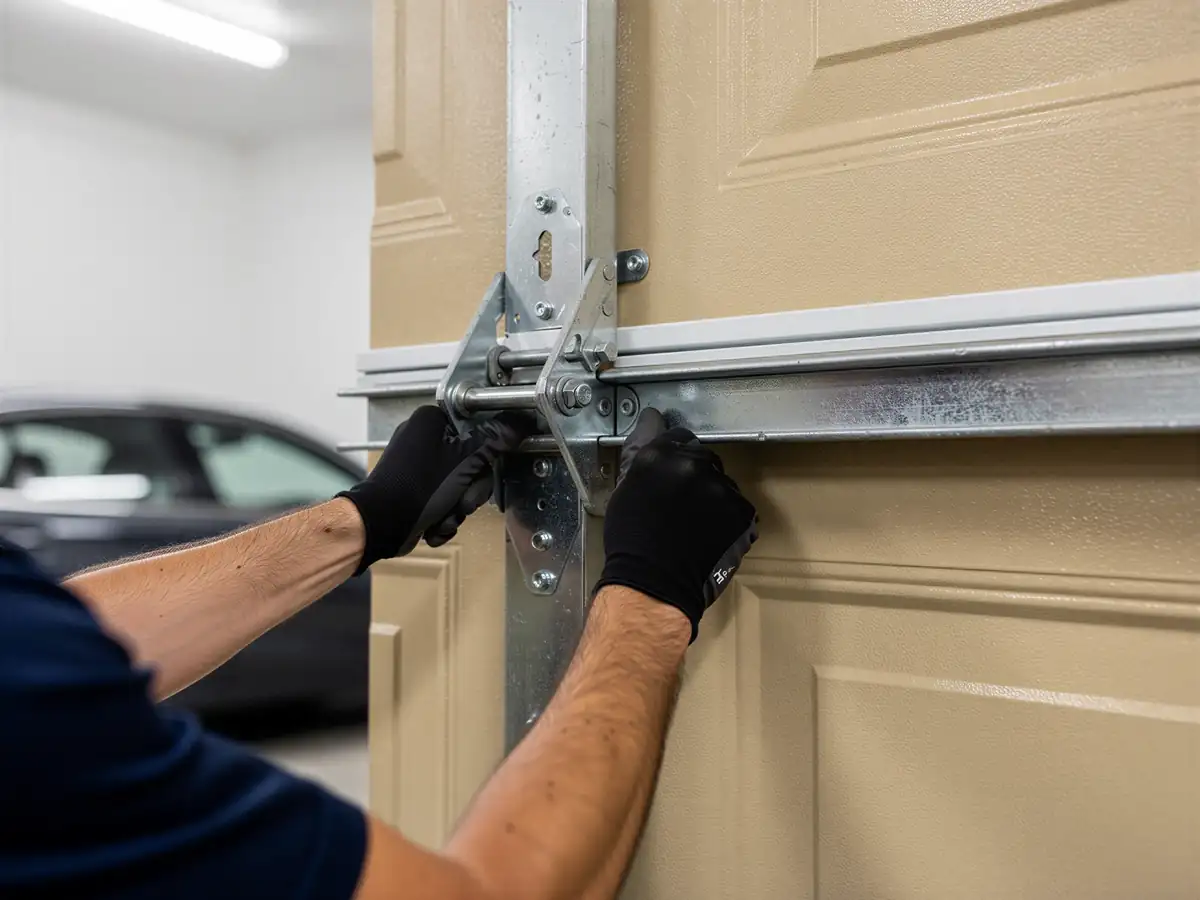
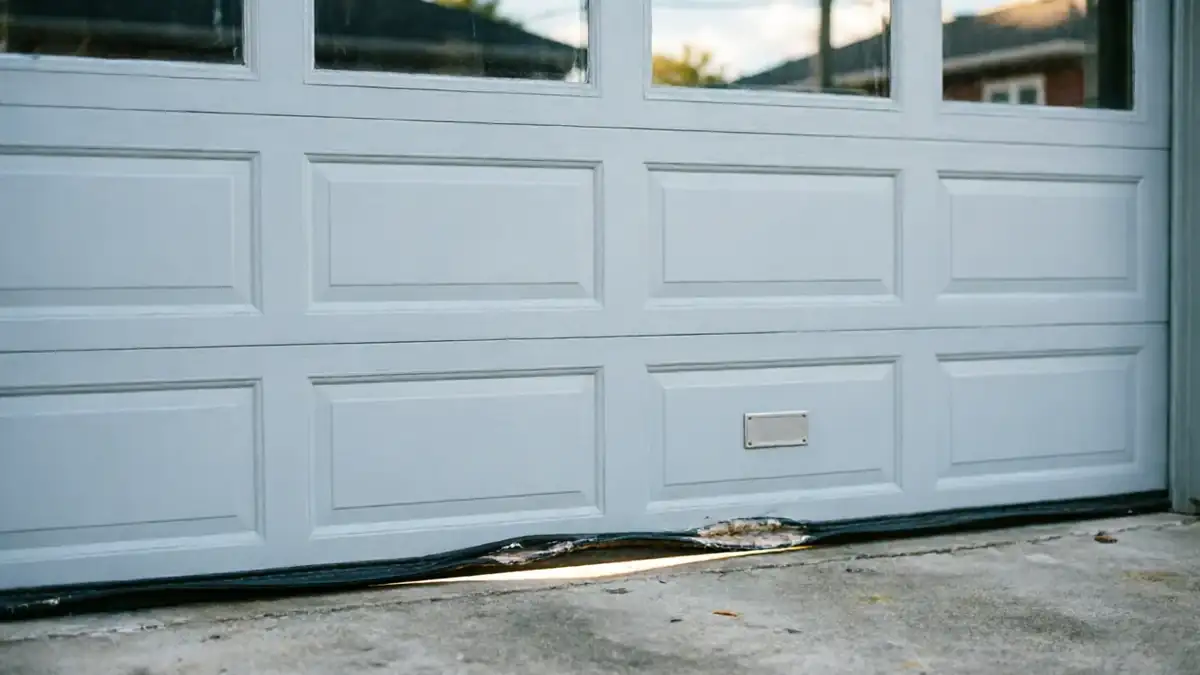
And that matters more at the garage door than almost anywhere else in the house. The bottom seal and the side weather seals are rubber or vinyl, and rubber doesn't handle repeated hard freezes well. It hardens, shrinks a little at a time, and eventually pulls away from the track or cracks at the corners where it bends around the jamb. Once that happens, you get a visible gap, and a visible gap means wind-driven cold air moving straight into the garage.
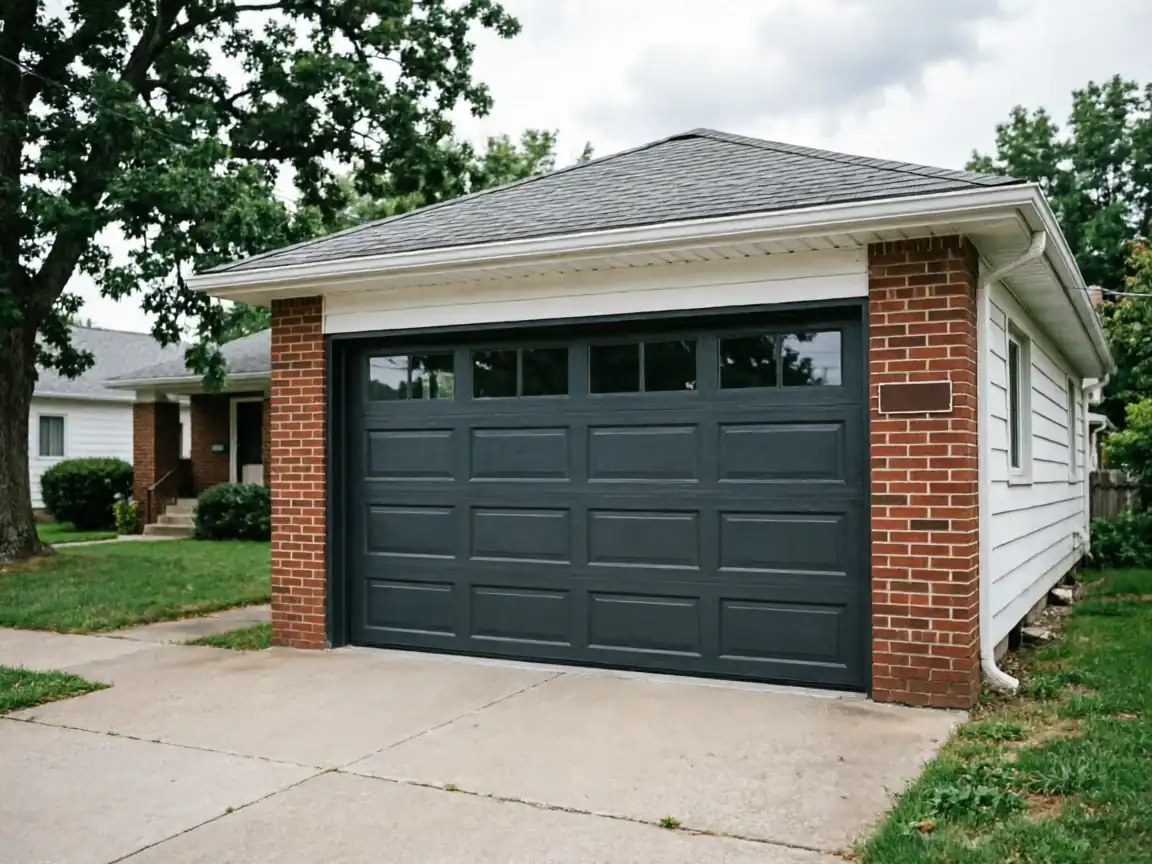
Houses in this area were mostly built between 1938 and 1958
With the broader range running to 2002. A lot of that older stock still has the original jamb framing, which wasn't built to the same tolerance as what goes up today. That means even a brand-new seal can leave a thin gap at the corners on an older frame, because the opening itself isn't perfectly square anymore after sixty-plus years of settling. On these houses, the fix isn't just a new seal - sometimes it's a seal plus a strip of foam or a flush trim piece at the corner to close what the frame won't.
What It Costs
We don't have a flat number to hand you here, and we're not going to make one up. What we can tell you is what moves the price: the length of track that needs new seal, whether the bottom astragal has to come off in one piece or gets cut to fit a settled slab, and whether the jamb itself needs a trim strip to close a corner gap. On a lot of the pre-1960 housing in this area, that last part is the difference between a fifteen-minute job and one where we're also squaring up the frame.
If your door is original to a house built in the 1938-1958 range, expect a slightly longer job than a seal swap on a 1990s build, simply because the hardware and the frame aren't working to the same tolerances. Ask for a number before the work starts, not after, and if someone quotes you over the phone without looking at the door, be skeptical.
The Common Mistake
The mistake we see most in this area is replacing the bottom seal and stopping there. On a house from the 1950s or 60s - which is most of what's around here - the bottom seal is usually not the only leak. The side seals along the track, especially on the side that takes the worst of the wind, have usually hardened at the same rate. Replacing one and leaving the other means you still feel a draft, and the owner assumes the new seal didn't work, when really only half the job got done.
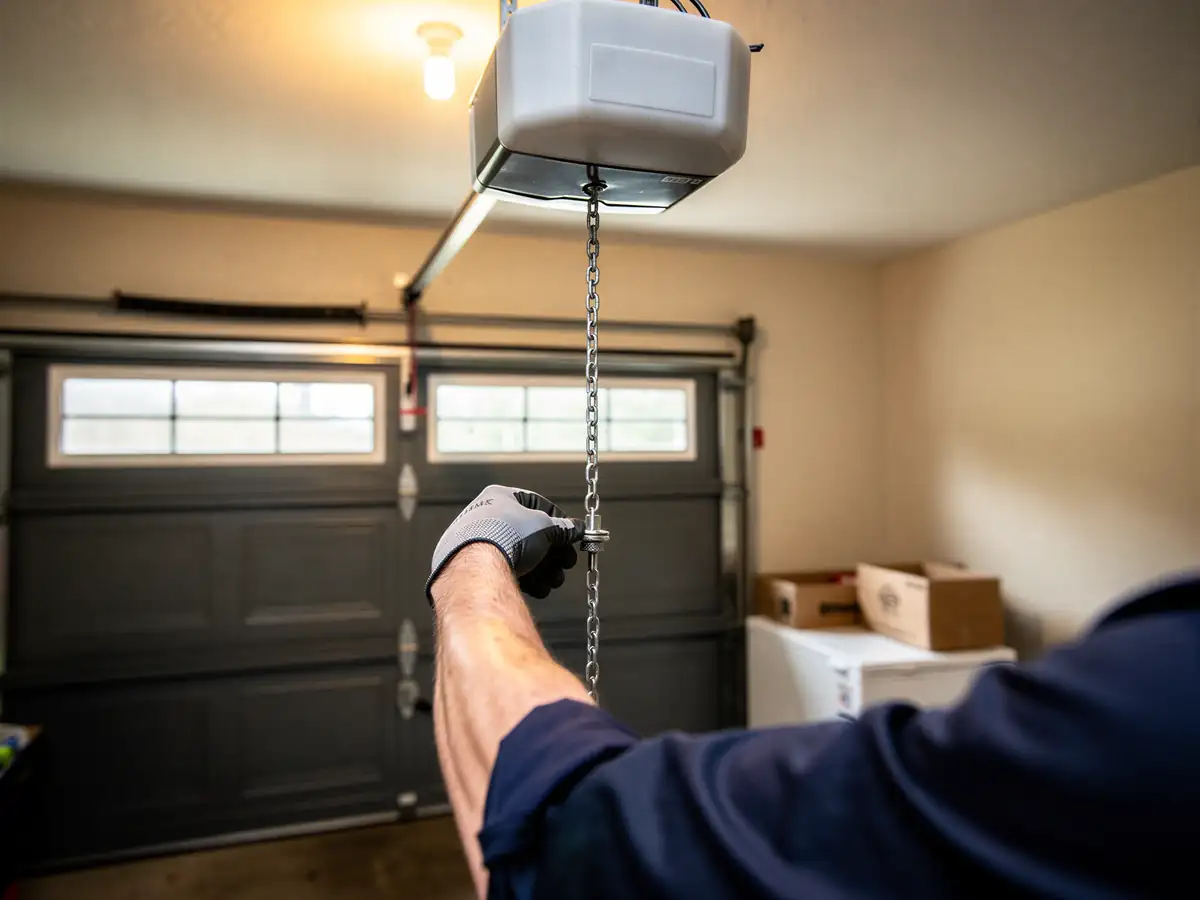
The other version of this mistake is sealing around a door that's already out of square. If the opener struggles or the door doesn't sit flush on one side before you touch the seal, a new strip of rubber won't fix that. It'll just wear unevenly and fail again in a year instead of five.
What Is Going On
Cold-severe winters put real stress on anything rubber
And a garage door seal takes that stress every day for months at a stretch. In Sterling Heights, where a large share of the housing stock dates to the 1938-1960 window, the seals we're called out to replace are often original equipment that nobody has touched in decades. By the time a homeowner notices a draft, the seal has usually been cracked or shrunk for a while - the symptom shows up only once the gap gets wide enough to feel.
We work this area and the towns close by it
Utica, Fraser, Madison Heights, Center Line, and the rest of the near suburbs - and the pattern holds across most of them: older homes, harder winters, seals that give out before the door itself does. If your garage door is original to the house, the seal is worth checking even if nothing feels wrong yet.