Serving Sterling Heights, MI & nearby
(586) 371-2776
Sterling Heights, MI

What That Grinding or Popping Noise Actually Means in Sterling Heights

Sterling Heights homes mostly date to 1958, and cold winters wear differently on that old hardware. Here's what each noise is telling you, and what it actually costs to fix.

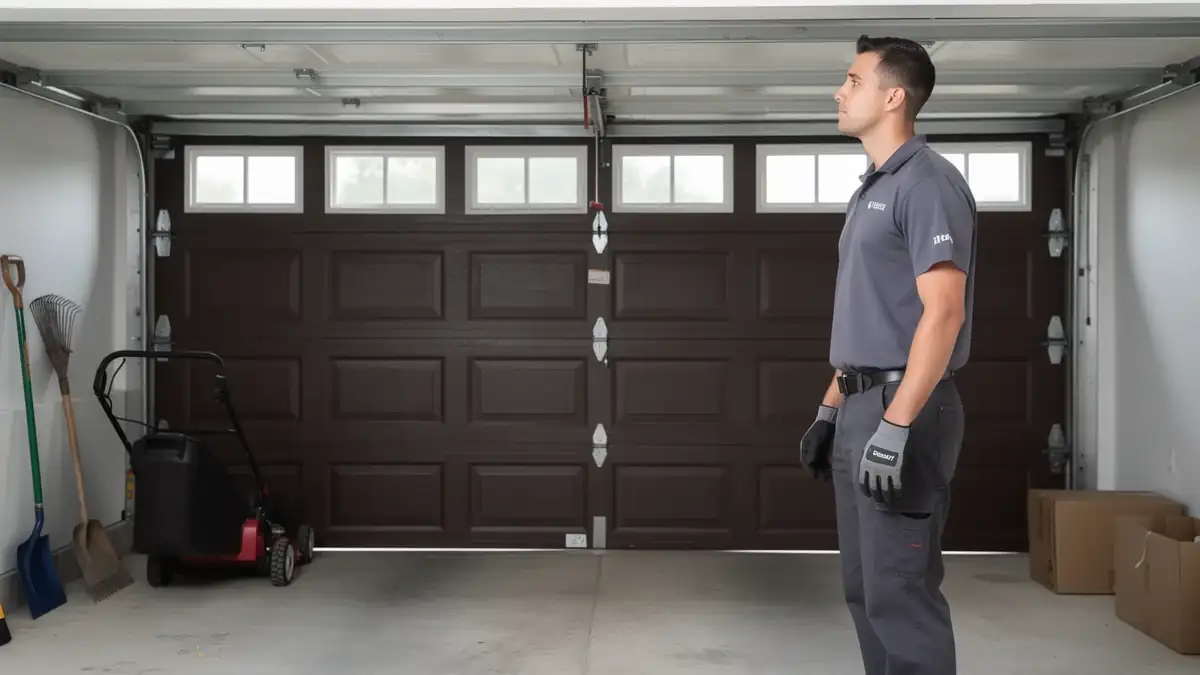
A technician stands in a garage looking at a closed brown garage door.

What the Weather Here Does to It

Sterling Heights sits in a cold climate zone with severe winter swings, and that matters more than most owners think. Steel contracts hard in deep cold, and a torsion spring wound to a certain tension at 70 degrees is wound differently at 10 degrees. The metal doesn't flex the same way, lubricant thickens, and rollers that were quiet in July start barking in January. This isn't a Sterling Heights quirk so much as a Sterling Heights fact: the housing stock here runs mostly 1938 to 2002, with the typical home built around 1958, which means a lot of doors and openers are original or close to it, installed long before anyone built for this kind of temperature swing. Older galvanized track holds moisture that freezes and thaws on a daily cycle through a Michigan winter, and that cycle works grit into the rollers until they announce themselves. If your door has gone quiet-to-loud over one cold snap, that's the hardware telling you the temperature finally found its weak point, not a new problem showing up out of nowhere.

What It Costs

I'm not going to hand you a number here, because the honest answer depends on what's actually making the noise, and I don't have pricing data to put in writing that would hold up town to town. What I can tell you: with median household income at $97,027 across this service area and roughly 156,317 owner-occupied houses, a lot of the calls we'd get involve weighing a repair against a full door replacement on hardware that's decades past its original spec. A worn roller or a dry hinge is a small job. A broken torsion spring on a door with an opener that's also failing is a different conversation, and on a house built in the 1950s, that second failure tends to follow the first by a year or two, not a decade. The honest limitation: if your door and opener are both original to a 1958-era house, patching one part often means you're back out here for the next part within a season. Sometimes the math says replace, not repair.

The Common Mistake

The mistake we see most in this part of Michigan is running a noisy door for months because it still opens. On a house built before 1960, with original hardware, a grinding or popping sound almost never fixes itself, and it almost never stays the same. It gets louder, then it gets a lot more expensive, usually around the first hard freeze when the metal is tightest and the spring is under the most load it'll see all year. Owners in Sterling Heights, and in the pre-1960 pockets common through Utica and Fraser nearby, tend to assume an opener problem when the real issue is a spring or a cable starting to fray. Pushing the remote button again when the door hesitates puts more strain on a part that's already failing. The other version of this mistake is waiting for warm weather to call, on the logic that cold makes everything worse so why deal with it twice. Cold is exactly why you shouldn't wait. A spring under tension in freezing weather is the most likely time for it to let go, and that's not a repair you want to be doing yourself in a driveway in January.
What Is Going On

A rhythmic thump as the door travels usually means a flat spot on a roller, common on original steel rollers from a 1950s-to-70s build. A sharp metallic snap followed by the door refusing to move is almost always a broken torsion spring, and on older doors that spring was sized for a lighter panel than some owners have since swapped in. A grinding sound at the top of the track points to a bearing plate that's dry or worn, more common on doors that have run through forty or fifty Michigan winters without the hardware ever being replaced. A low groan as the opener strains is the motor compensating for something else that's already failing, not an opener problem on its own. None of these are the same fix, and none of them get quieter with time. If you're hearing something new, the age of the hardware and the season both matter to what it actually is.

How it works

From “it’s stuck” to “it’s fixed”

A quick, honest process - no guesswork and no surprises.

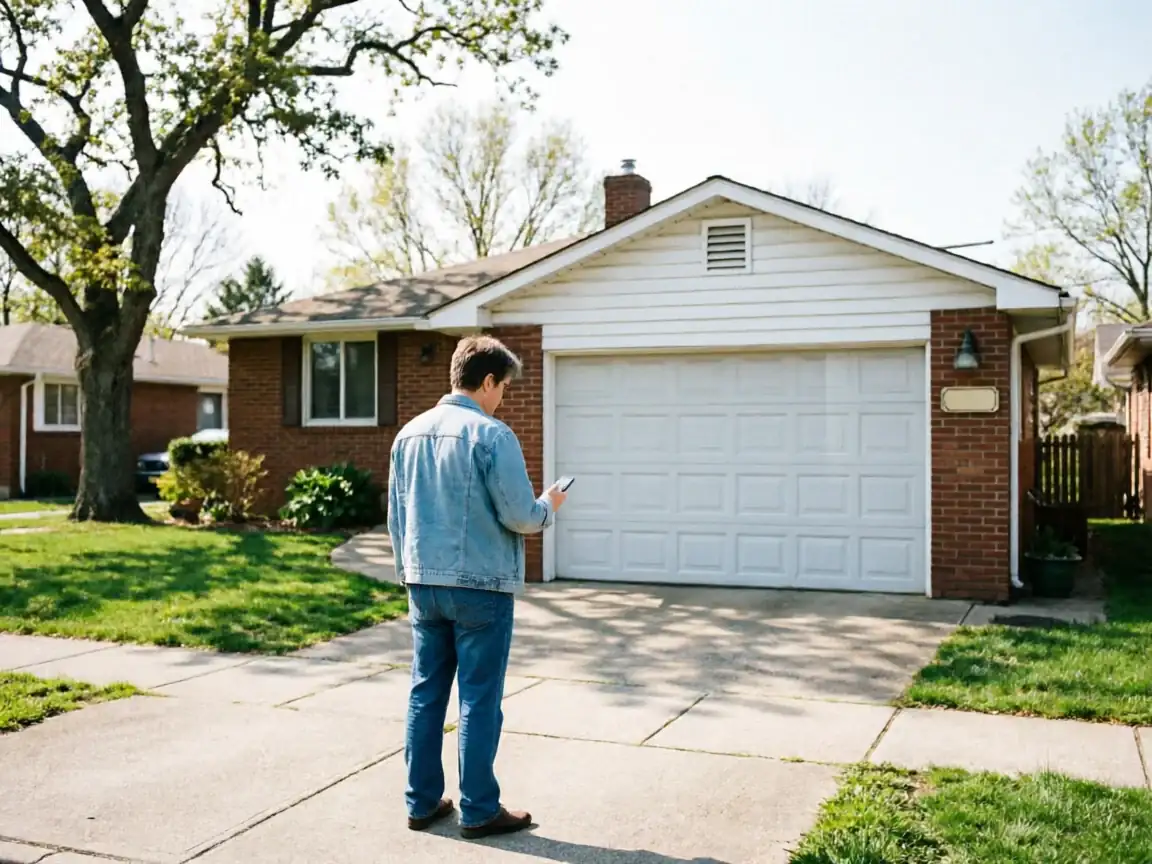
  1. A man in a denim jacket stands in a driveway looking at his phone.
    1

    Tell us what’s wrong

    Describe the symptom - won’t open, loud bang, opener runs but the door won’t move.

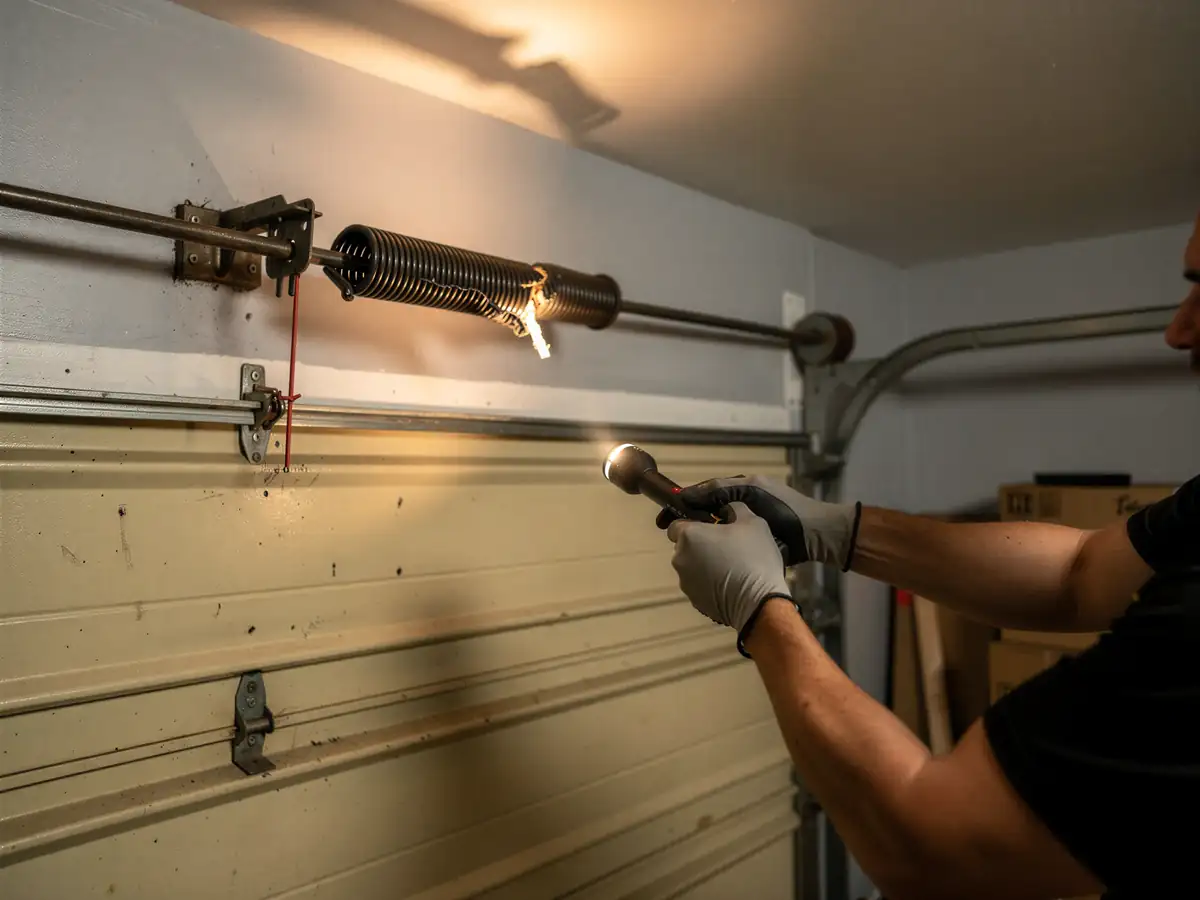
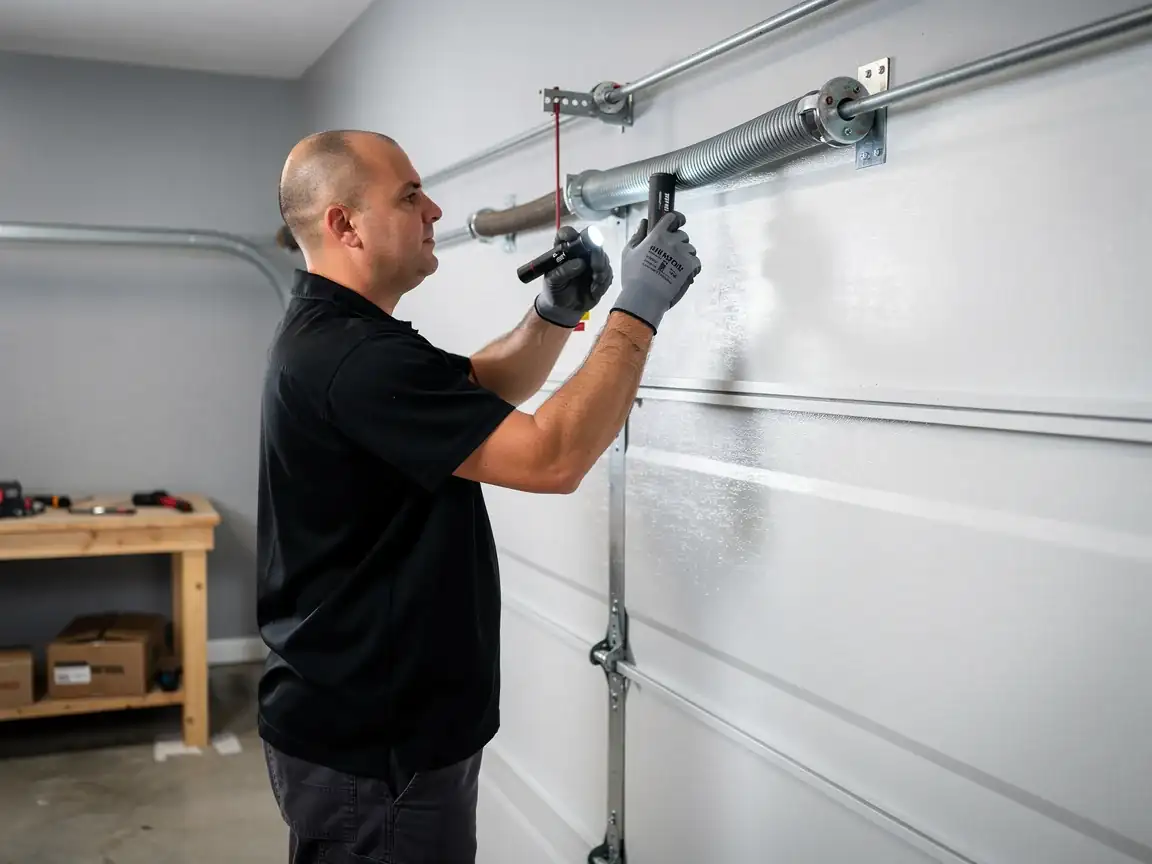
  2. A technician inspects a garage door torsion spring with a flashlight.
    2

    On-site diagnosis

    A technician tests the door under power and by hand and finds what actually failed.

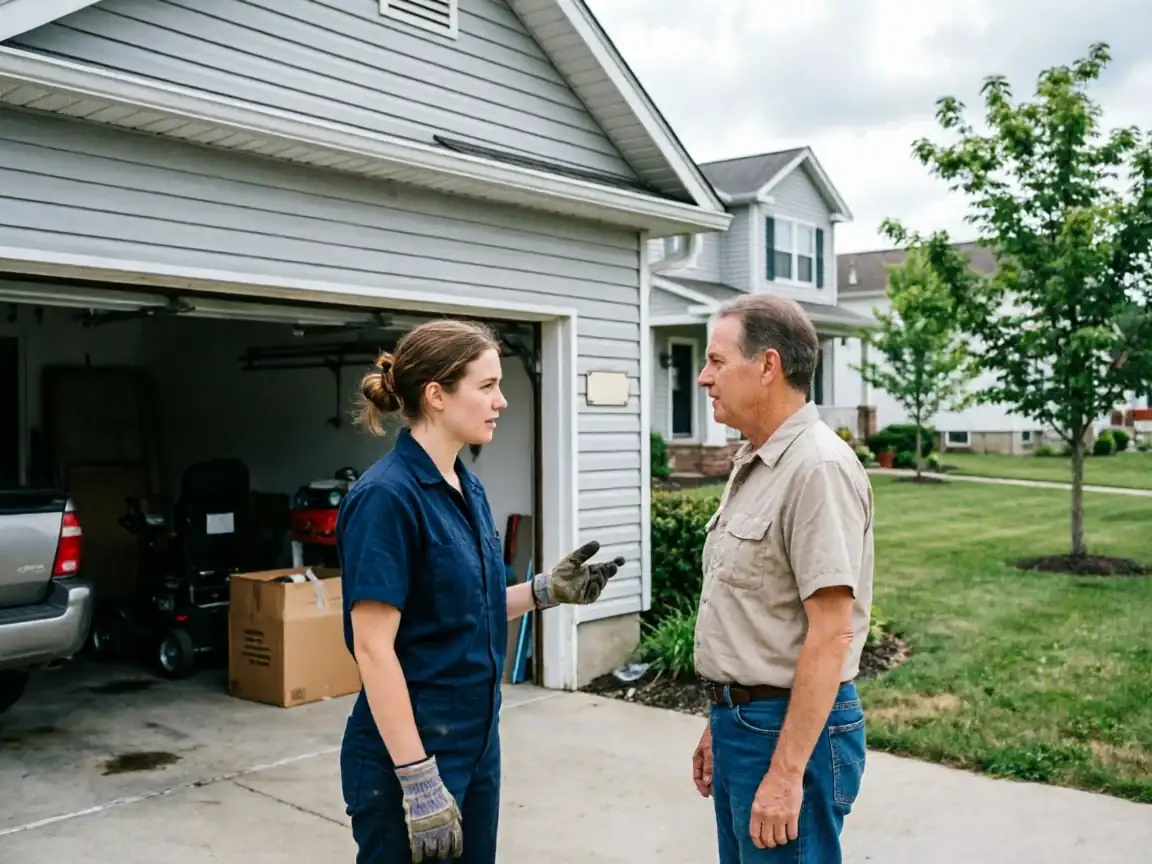
  3. A technician in a blue uniform talks to a man in front of an open garage.
    3

    Clear, up-front plan

    You get the fix that’s needed and what drives the cost - before any work starts.

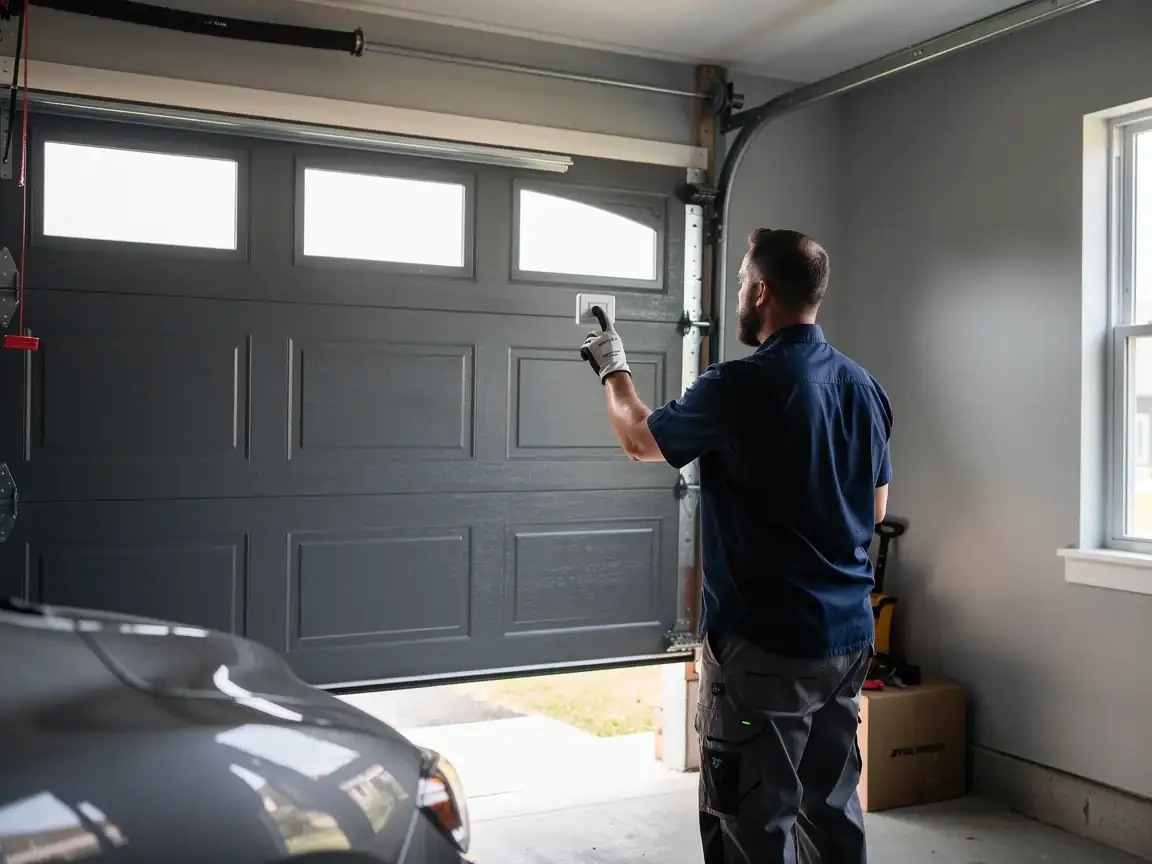
  4. A technician in a blue shirt and gray pants operates a gray garage door.
    4

    Repaired & tested

    The repair is done, the door is set true and tested, and the work area left clean.

Next step

Not sure which repair your door needs in Sterling Heights, MI? Describe what it’s doing - every job starts with a diagnosis.

How we work

What to expect

Diagnosis firstEvery visit starts by finding what actually failed - not a pre-written parts list.
The right part for the doorSprings and openers matched to the door’s weight and age, so the fix holds up.
Straight answersWhen a repair makes more sense than a replacement - or the reverse - you hear it plainly.
Clean, careful workTension released safely, hardware set true, the door tested under power before we leave.
What we do

Garage Door Services

Repair and installation work for Sterling Heights homes and businesses.

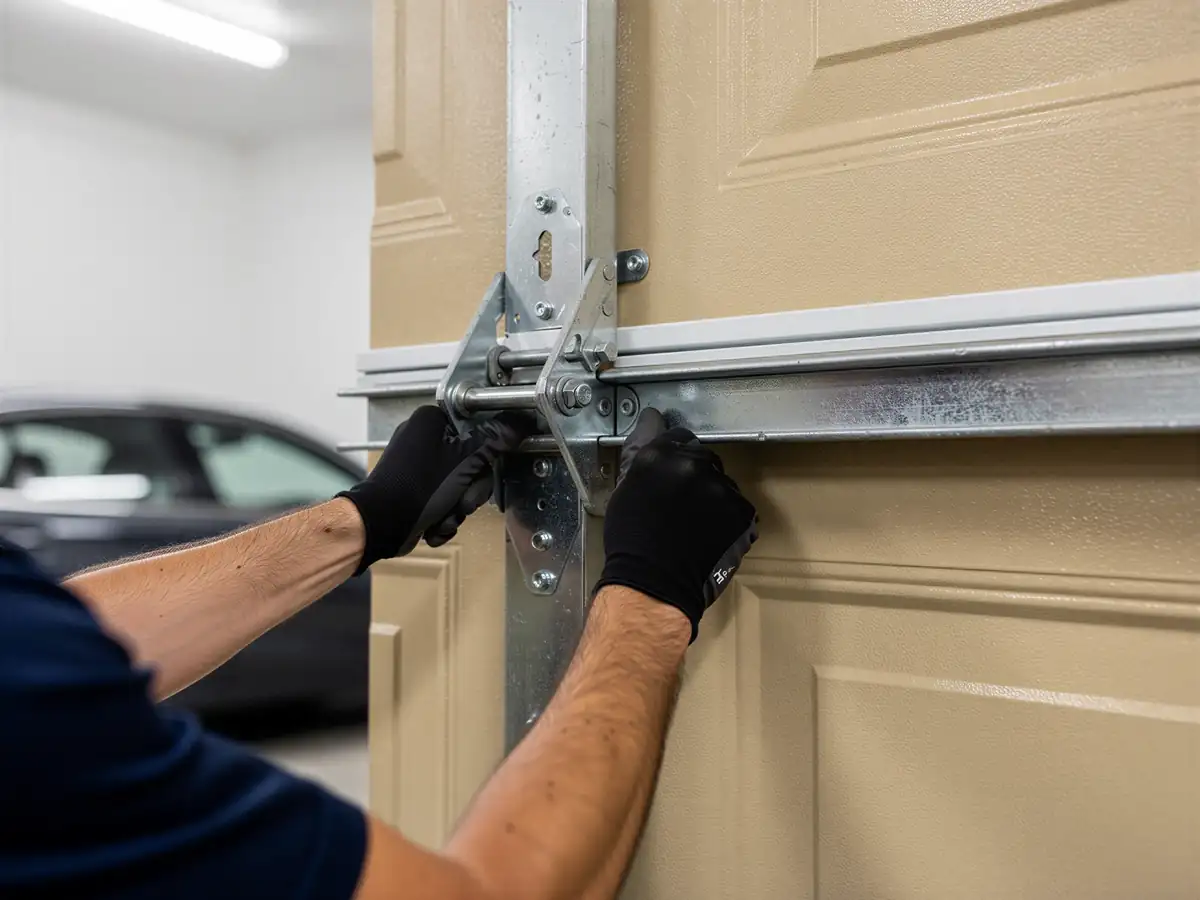
A technician in black gloves adjusts a metal garage door hinge.

Garage Door Repair

Garage door repair for Sterling Heights homes built 1938-2002, where original torsion hardware and Michigan winters wear out springs and openers early. Call for a straight assessment.

Learn more
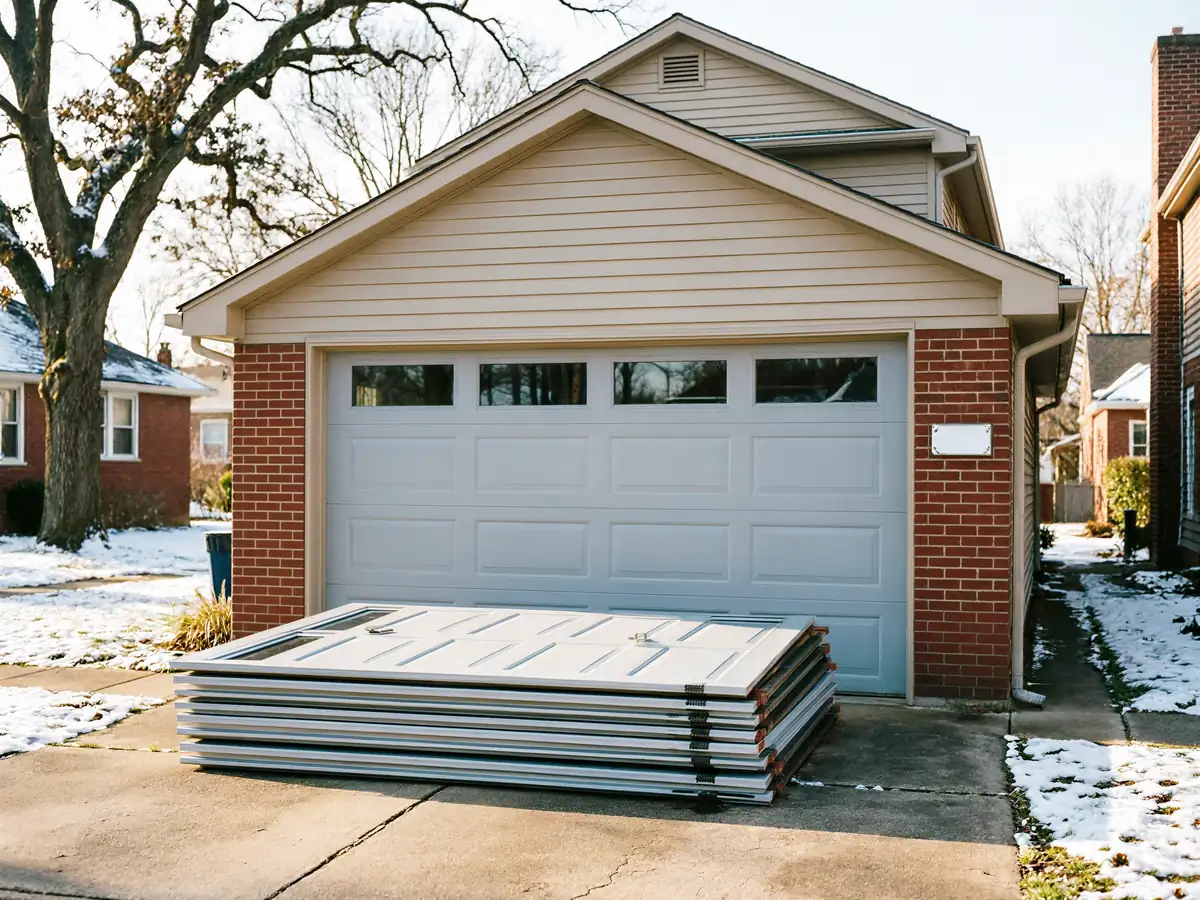
A stack of new garage door panels sits in front of a house with a garage.

Garage Door Installation

New garage door installs sized for Sterling Heights homes built 1938-2002, matched to severe cold winters and the original openings common across this pre-1960 housing stock.

Learn more
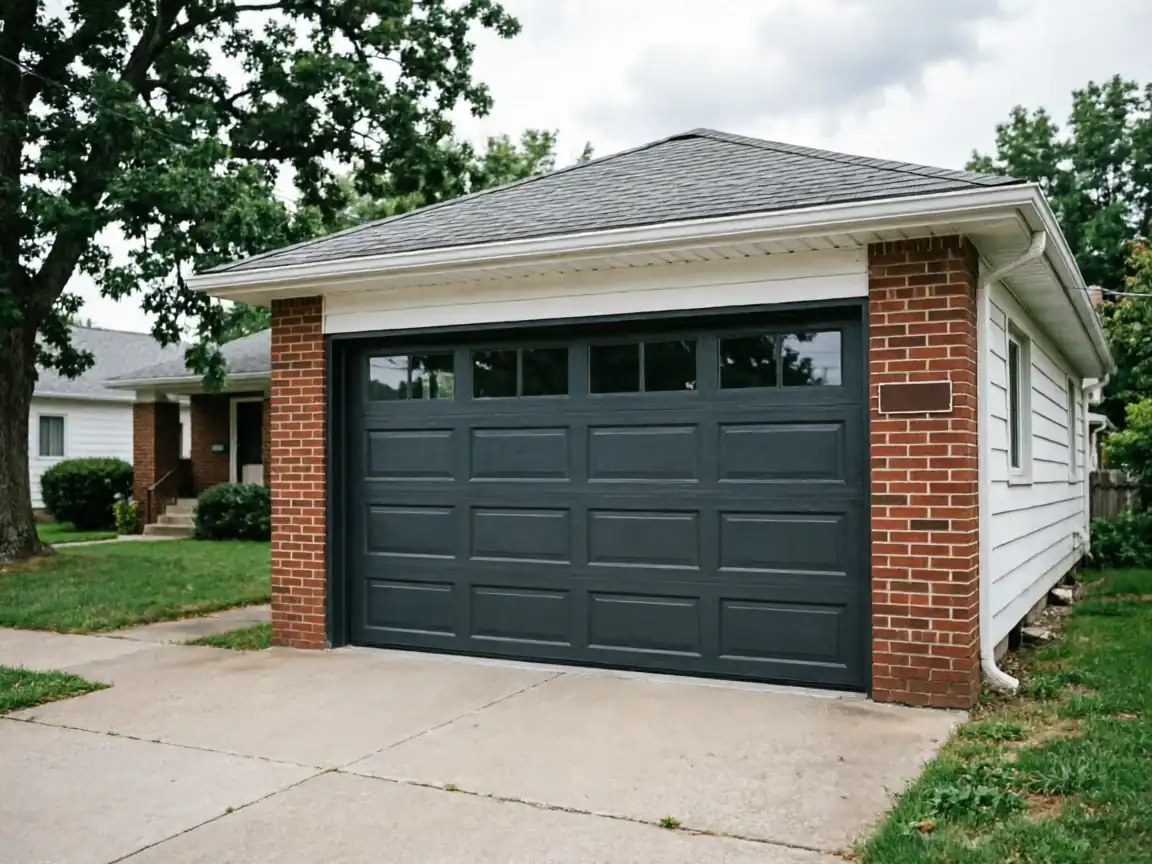
A dark gray garage door with windows is on a brick and white garage.

Garage Door Service

Garage door service for Sterling Heights homes built mostly before 1960, where cold winters and original hardware mean specific spring and track failures.

Learn more
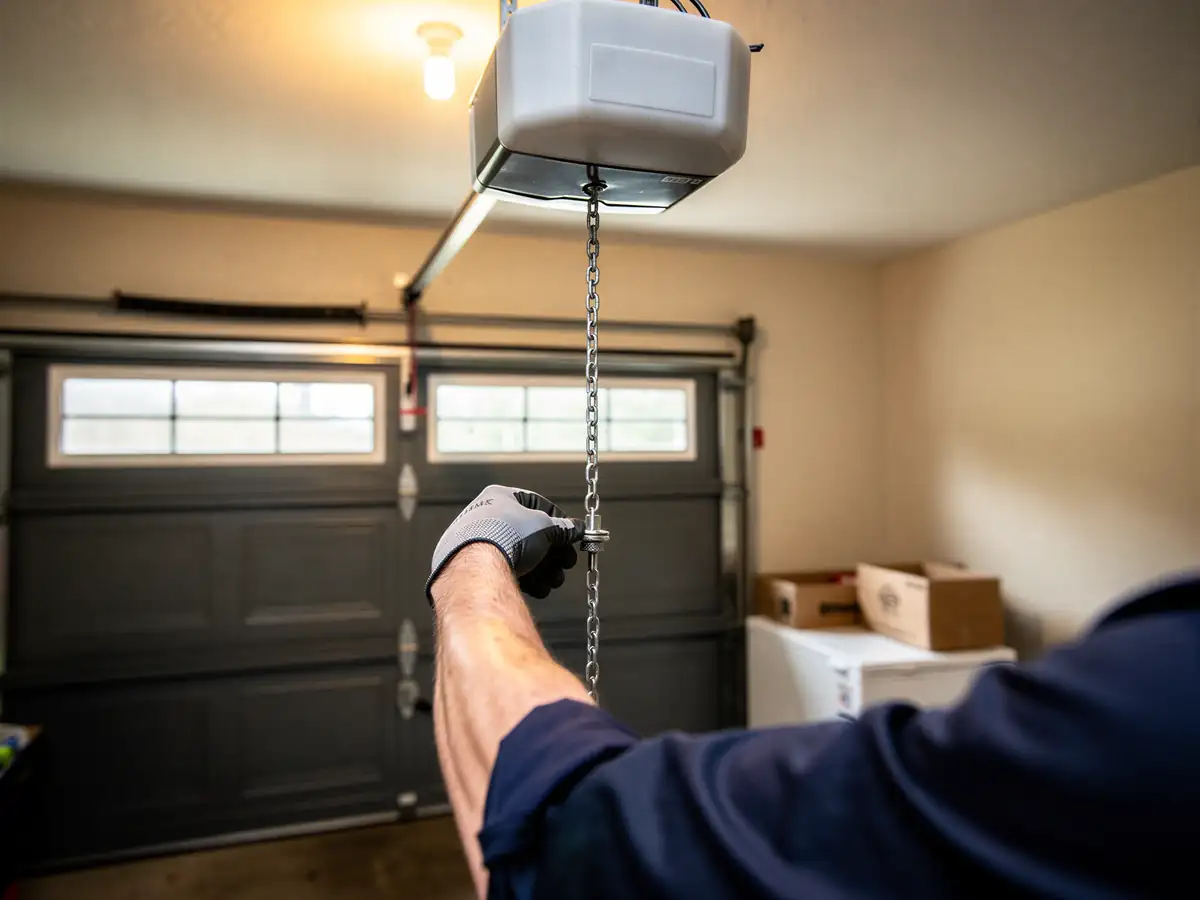
A technician's gloved hand pulls the chain on a garage door opener.

Opener Repair

Opener repair for Sterling Heights homes built 1938-2002, where cold winters and aging circuit boards cause most of the no-start and reversing calls we get.

Learn more
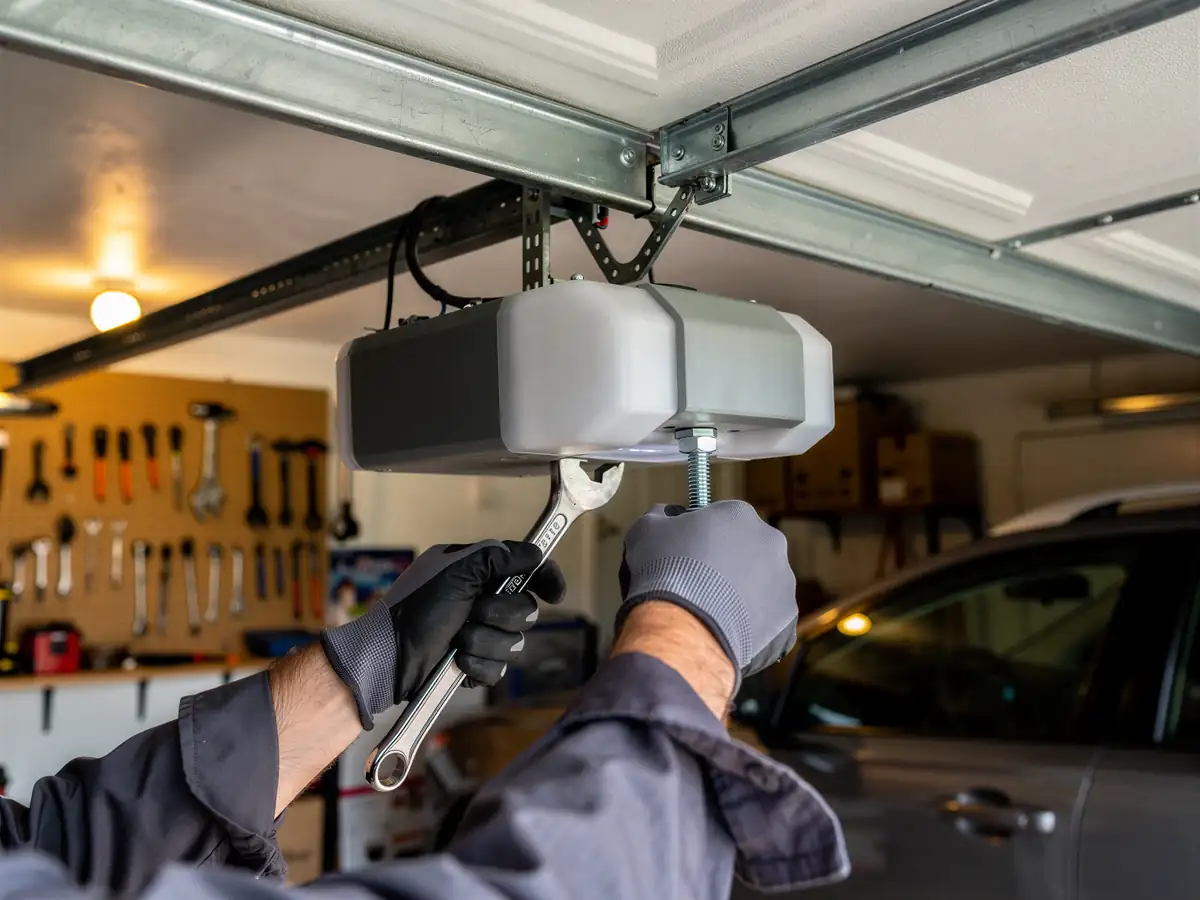
A technician adjusts a garage door opener with a wrench.

Opener Installation

Opener installs for Sterling Heights homes built 1938-2002, matched to original torsion hardware and sized for severe-cold winters. No price invented, straight talk on what drives the job.

Learn more
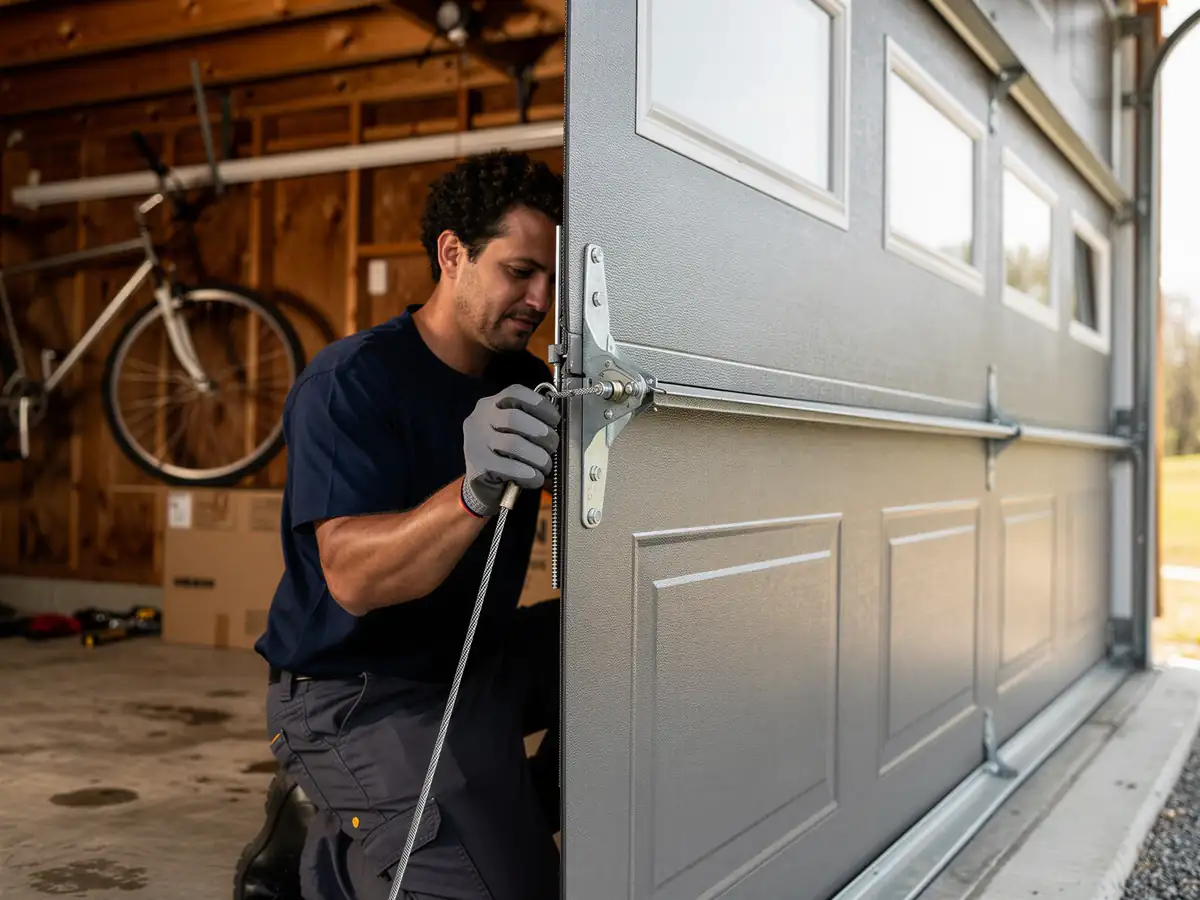
A technician kneels, working on the cable and roller of a gray garage door.

Cable Repair

Broken garage door cable in Sterling Heights, MI? We repair snapped, frayed, and off-track cables on the pre-1960 housing stock found in this service area.

Learn more
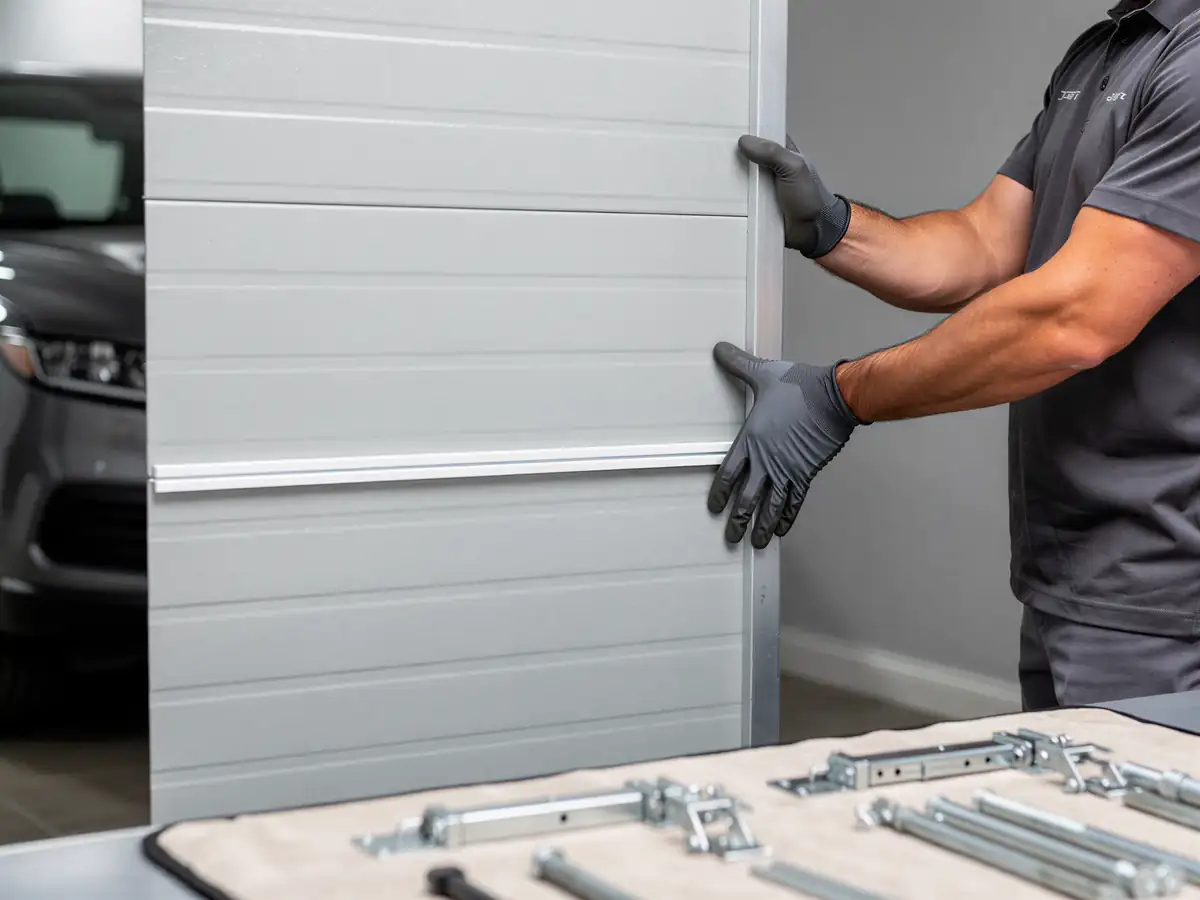
A technician in gloves installs a gray garage door panel next to a car.

Panel Replacement

Panel replacement for the dented, cracked, and rusted-through doors common on Sterling Heights's 1938-2002 housing stock. Honest options, no invented pricing.

Learn more
A technician shines a flashlight on a broken garage door torsion spring.

Emergency Garage Door Repair

Broken spring or dead opener at 10pm? Sterling Heights Garage Door Pros covers emergency repairs across the area, built around this region's pre-1960 housing stock and cold winters.

Learn more
Questions

Frequently asked

Straight answers about garage door repair in Sterling Heights. Still unsure? Ask us directly.

Why does my garage door get louder in the winter?

Cold tightens steel and thickens old lubricant, so hardware that's quiet in summer often isn't in January. On a Sterling Heights house built in the 1950s or 60s, original rollers and spring hardware weren't engineered for today's expectations around noise, so the seasonal swing shows up as a louder door, not a different problem.

Is a loud garage door always a spring problem?

No. A grinding noise is often a dry bearing plate or a worn roller, not the spring itself. A sudden loud snap followed by the door not moving is more likely the spring. The sound and the symptom together tell you more than the sound alone, which is why guessing from noise alone is risky.

Should I replace an old door or keep repairing it?

Depends on what's failing and how often. If you're on a house built well before 1980 and you've replaced two or more parts in the last couple years, repair costs start adding up against the price of a new door built for current hardware. We don't have a blanket number for that line, it depends on the door.

Ready to get your garage door sorted?

Request a QuoteCall