What It Costs
We're not going to put a number here that doesn't hold up once a tech is standing in your driveway
Opener repair costs swing on what's actually wrong - a dead circuit board, a stripped gear inside the motor housing, a bad logic board from a power surge, or just a sensor knocked out of alignment. Some of those are a twenty-minute fix. Others mean ordering a part that doesn't ship overnight anymore, especially on openers that are ten or fifteen years old and sitting on hardware the manufacturer has since redesigned.
What we can tell you is how to think about it
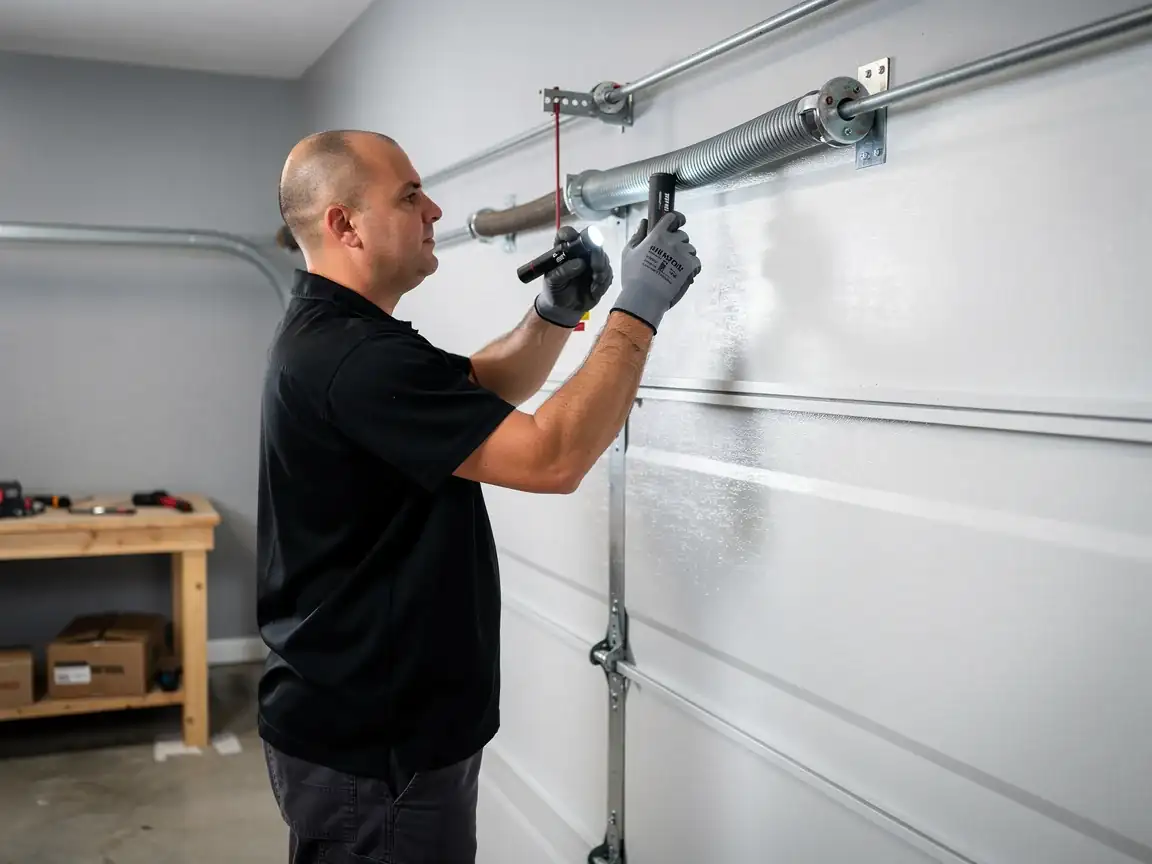
If the motor still runs but the door won't travel the full track, that's usually cheaper than a dead unit that needs a new board. If your opener predates battery backup and rolling-code safety sensors, repair sometimes costs more than a straight swap to a new unit, and we'll say so instead of patching something that'll fail again in a season.
Household income across this service area runs a median of $97,027
Which is part of why most owners here choose a diagnosed repair over guessing with a parts-store kit - the math works out when the tech can tell you in ten minutes whether it's a $40 sensor or a $300 board.
How It Shows Up
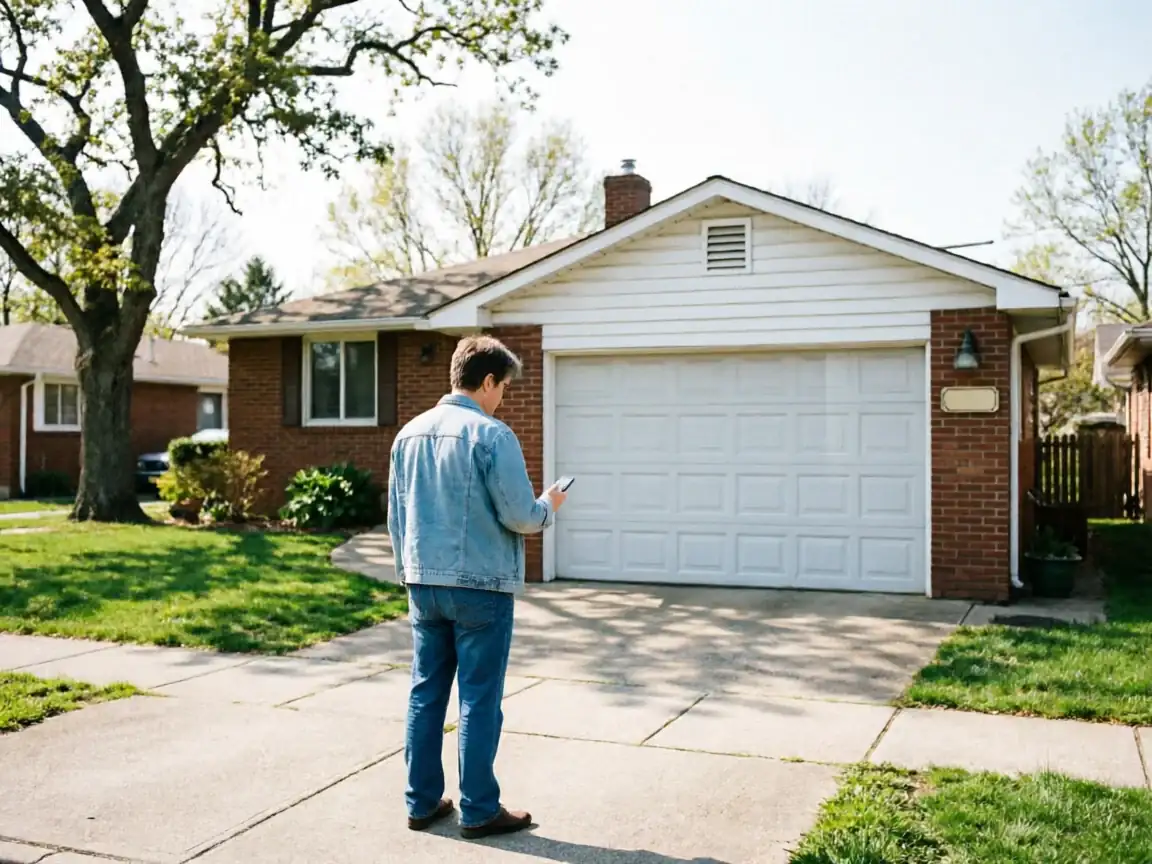
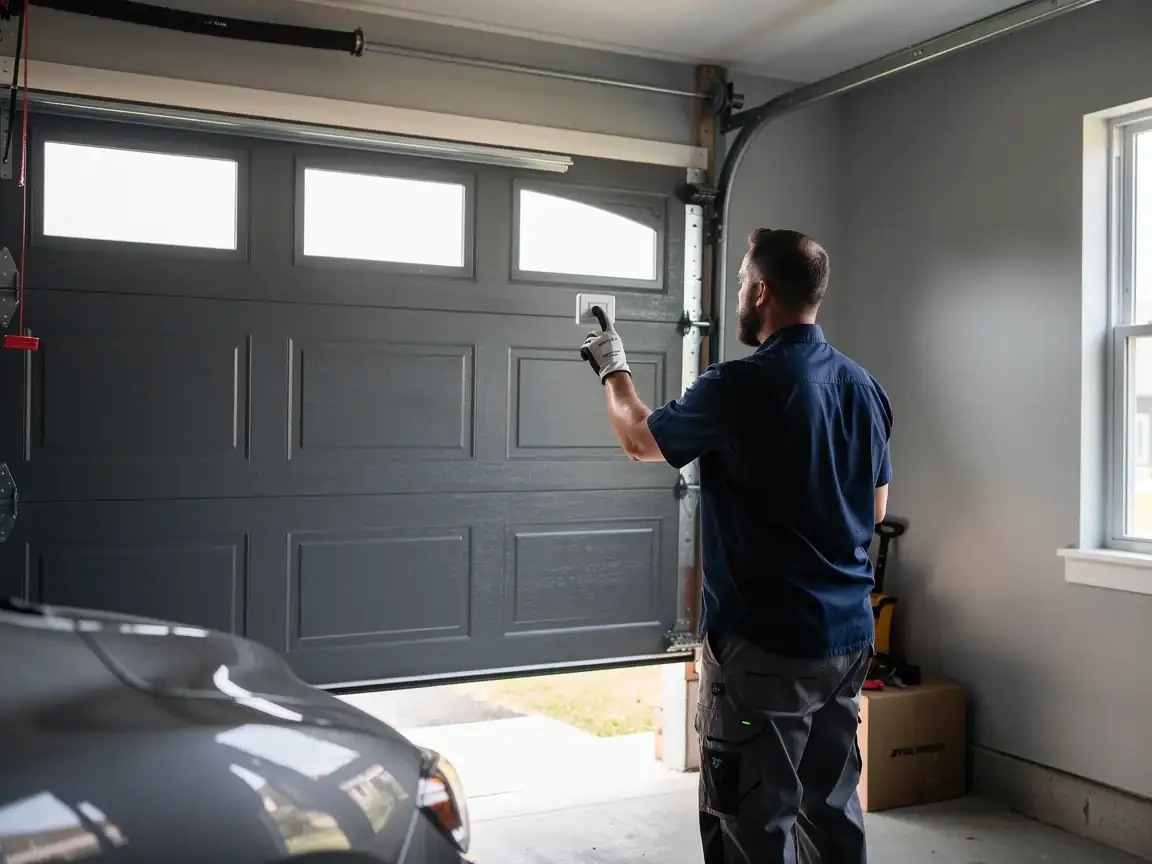
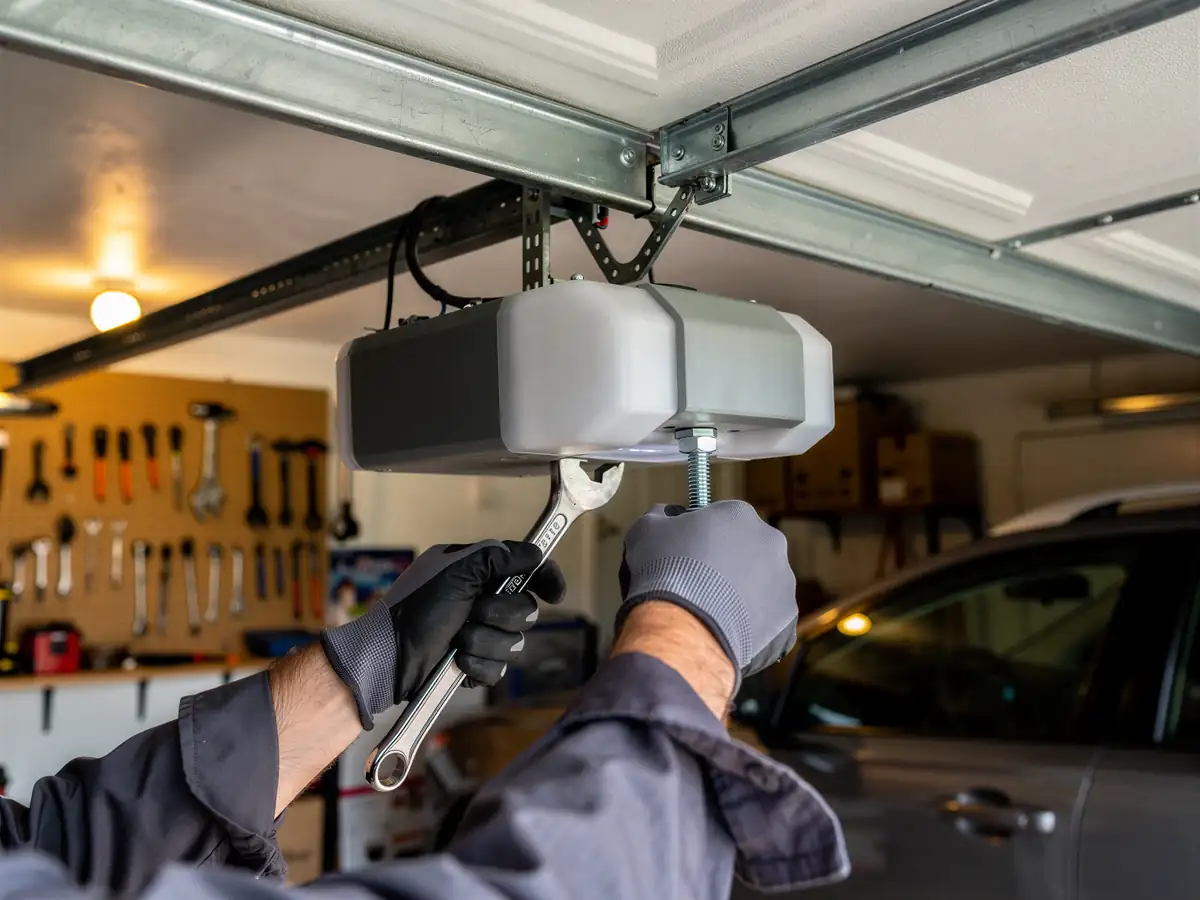
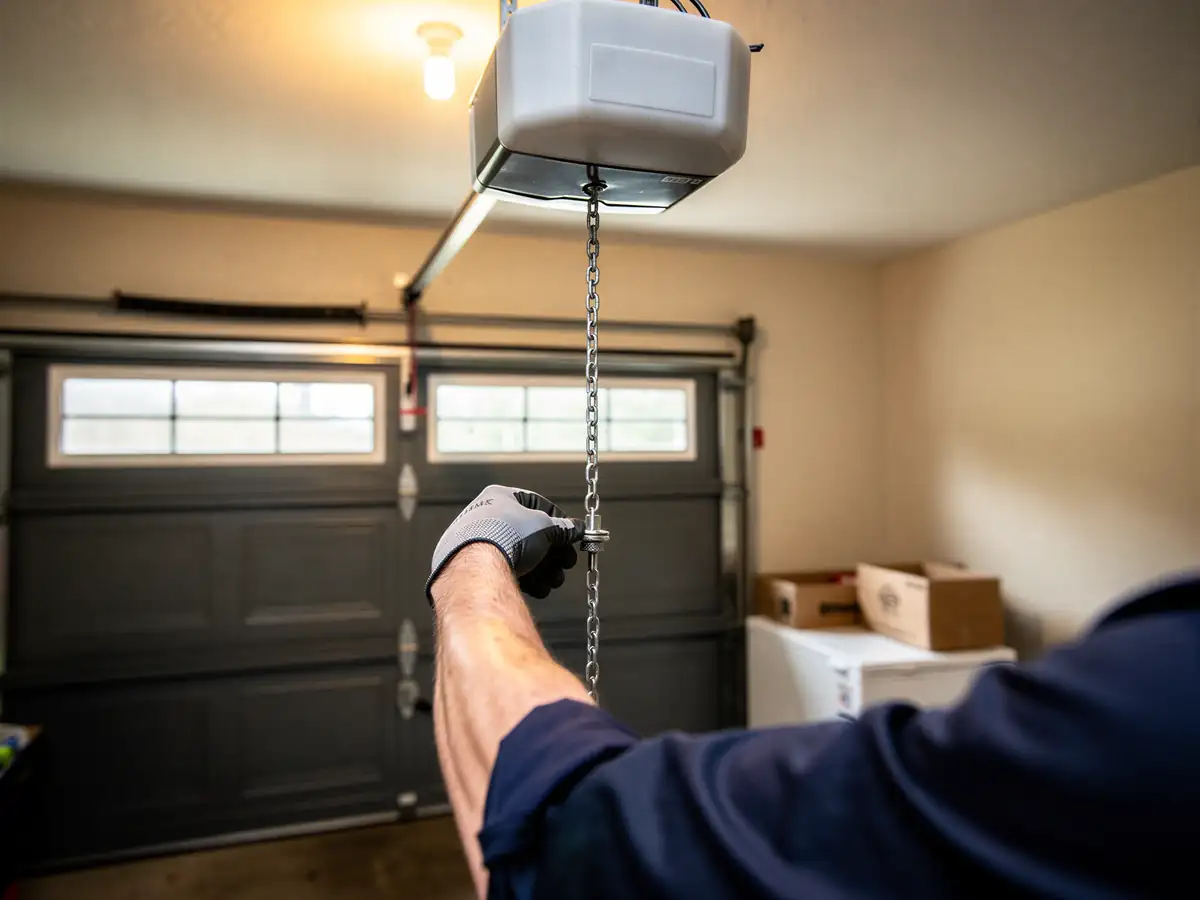
The call usually starts the same way: the door won't respond to the remote, or it starts up and then reverses halfway through. Sometimes the light blinks a code and nobody in the house knows what it means. Other times the motor hums but nothing moves, which almost always points to a stripped internal gear rather than the motor itself.
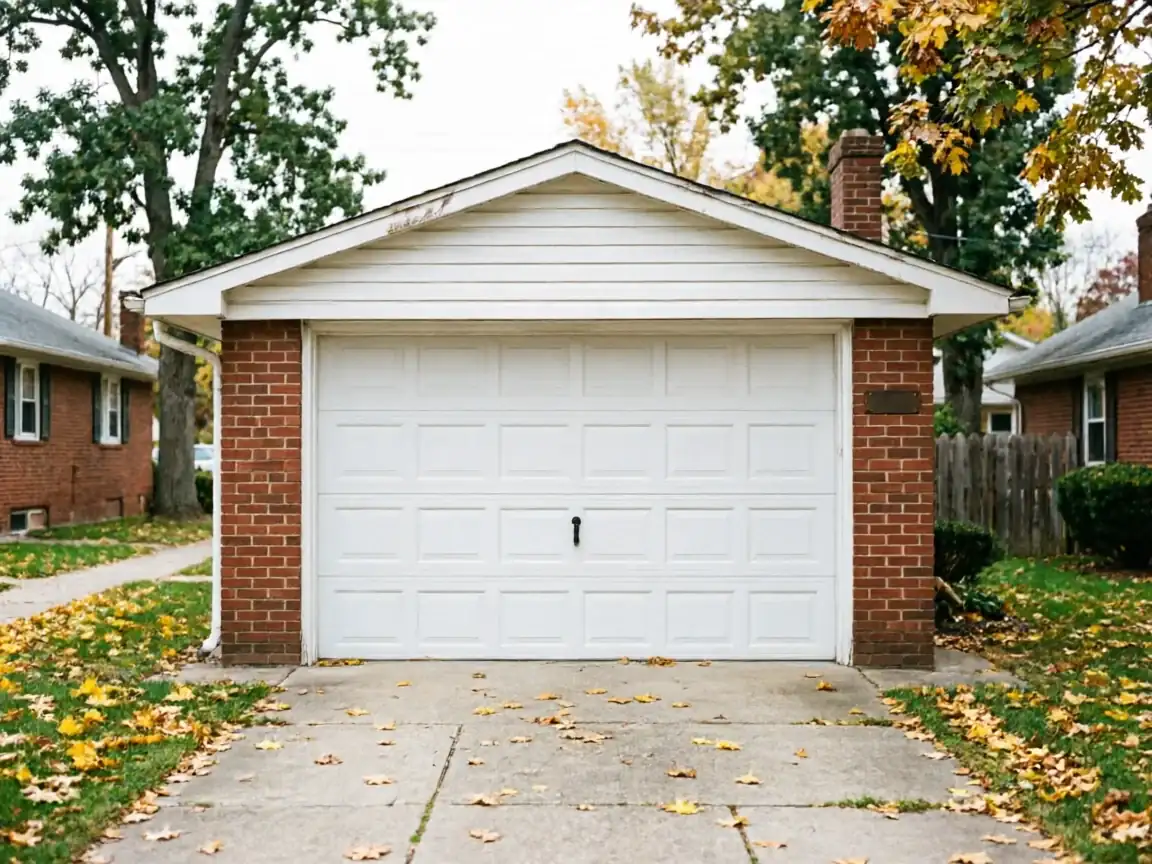
In homes built before 1960 - which covers a large share of the housing stock across this area - we see openers mounted on older trolley rail systems that were retrofitted decades after the house went up. Those retrofits don't always match newer safety-sensor brackets, so the sensors drift out of alignment every time the garage door gets bumped or the slab shifts with frost. That shows up as a door that reverses for no visible reason, which owners often blame on the door itself when it's actually the opener's eye sensors losing their aim.
A circuit board failure tends to announce itself differently - no lights, no hum, nothing. That's a dead board or a blown fuse inside the unit, and it's not something you fix by unplugging and replugging more than once.
Why It Happens Here
Housing across this service area was mostly built between 1938 and 2002, with the median landing around 1958, and across 39 named areas the stock leans even older than that median suggests. Openers installed in those garages - whether original or retrofitted later - sit through a climate band rated cold and severe, which means real freeze-thaw cycling every winter on the garage slab and on any metal gear housing mounted near an unheated wall.
Cold metal contracts. Plastic gears inside older chain-drive openers get brittle faster in a cold-severe band than they would somewhere milder, and that's the single biggest reason we see stripped gears cluster here rather than being spread evenly across all ages of unit. Circuit boards take a different hit: condensation inside an unheated garage during a freeze-thaw swing corrodes contacts slowly, over years, until one cold morning the board just doesn't fire.
With roughly 156,317 owner-occupied houses across this service area, a meaningful share of them are sitting on openers original to a remodel done decades ago, not to the house itself. That mismatch between an old garage and a newer opener bolted into it is where most of the odd failures - the half-travel reversals, the random blinking codes - actually come from.
Doing It Yourself
Some of this is fair to try before you call anyone
If the door won't close, check the sensor lenses at the bottom of each track - wipe them off, make sure nothing's blocking the beam between them, and make sure they're both pointed level at each other. That alone fixes a surprising number of reversing complaints.
If the remote stops working but the wall button still runs the door
It's almost always a battery or a lost code pairing, not a motor problem - reprogram it per the manual before assuming the worst.
What's not worth doing yourself
Opening the motor housing to replace an internal gear, or touching anything on the circuit board. Those parts are specific to the opener's model and age, and guessing wrong on a board swap can fry a new one in seconds. If the opener is original to a house built well before 2000, we'd also just say plainly - sometimes the honest move is replacement, not repair, because parts for units that old aren't always stocked anymore, and we won't charge you for a repair that won't outlast the season.