Why It Happens Here
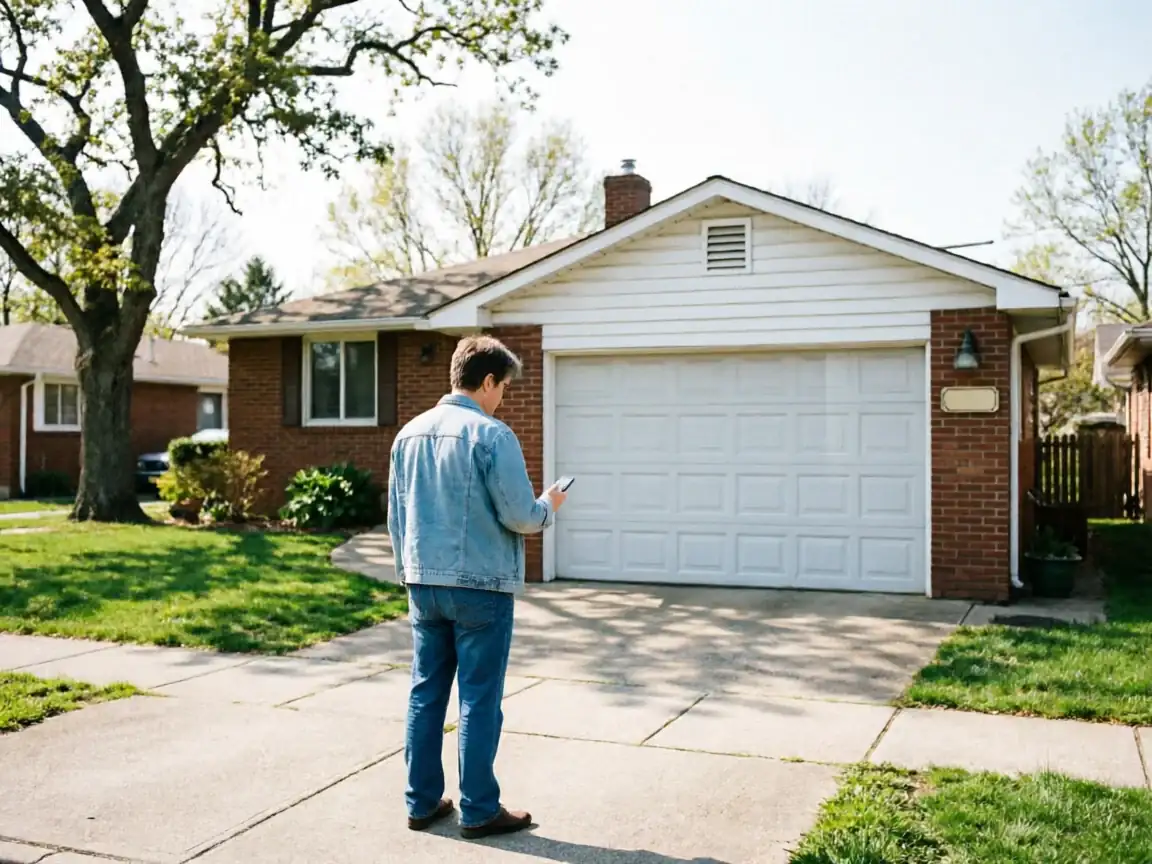
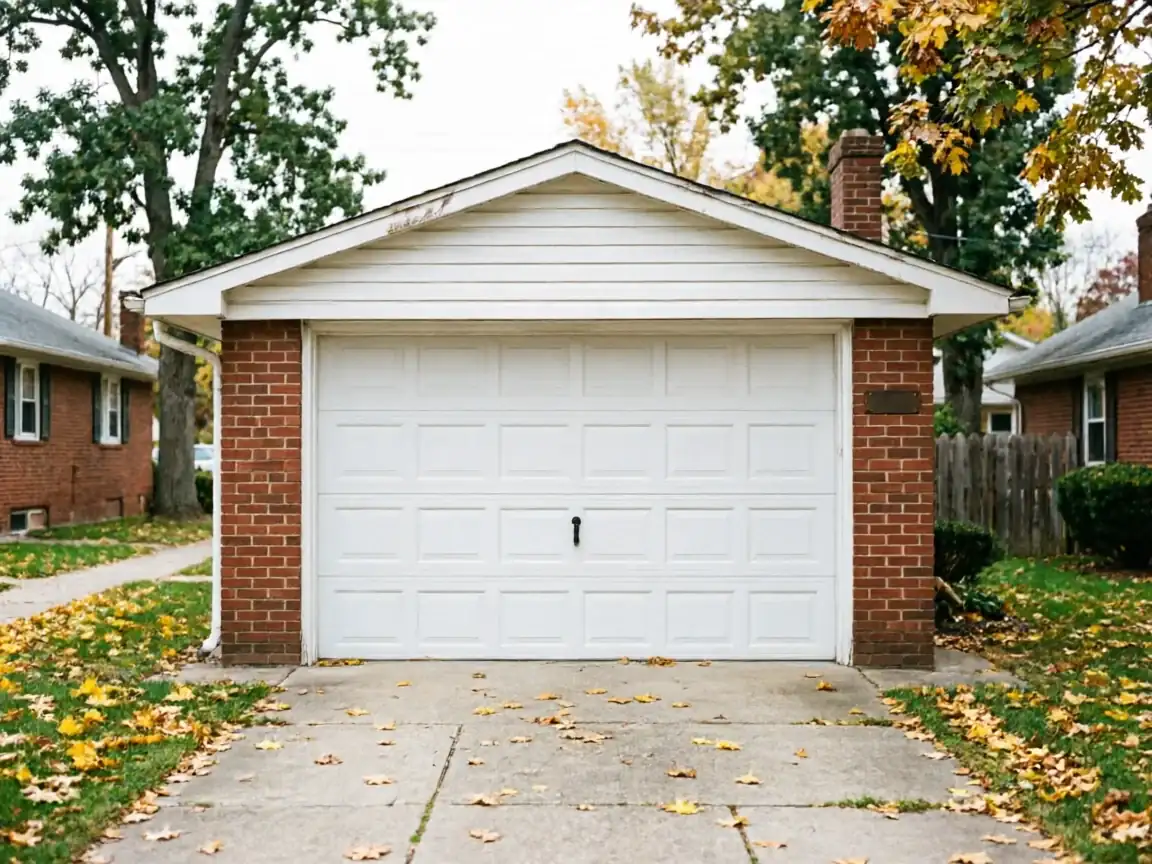
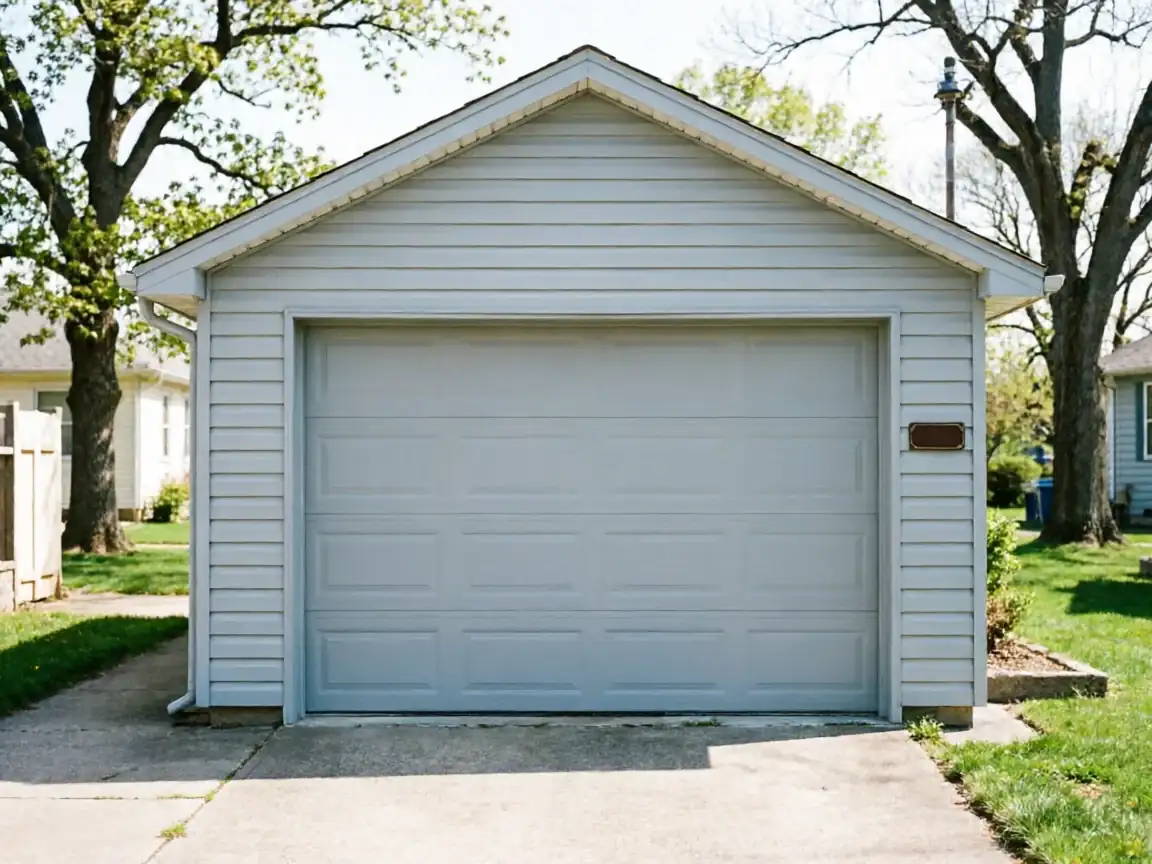
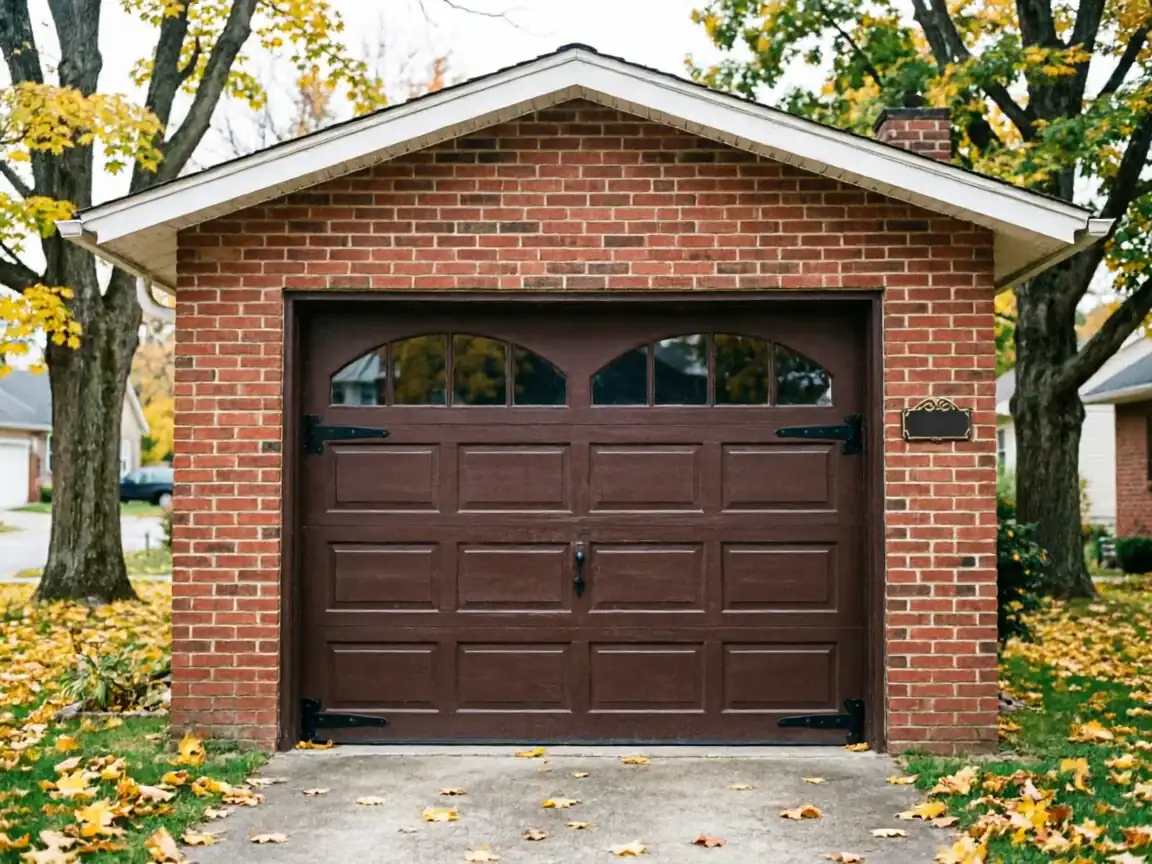
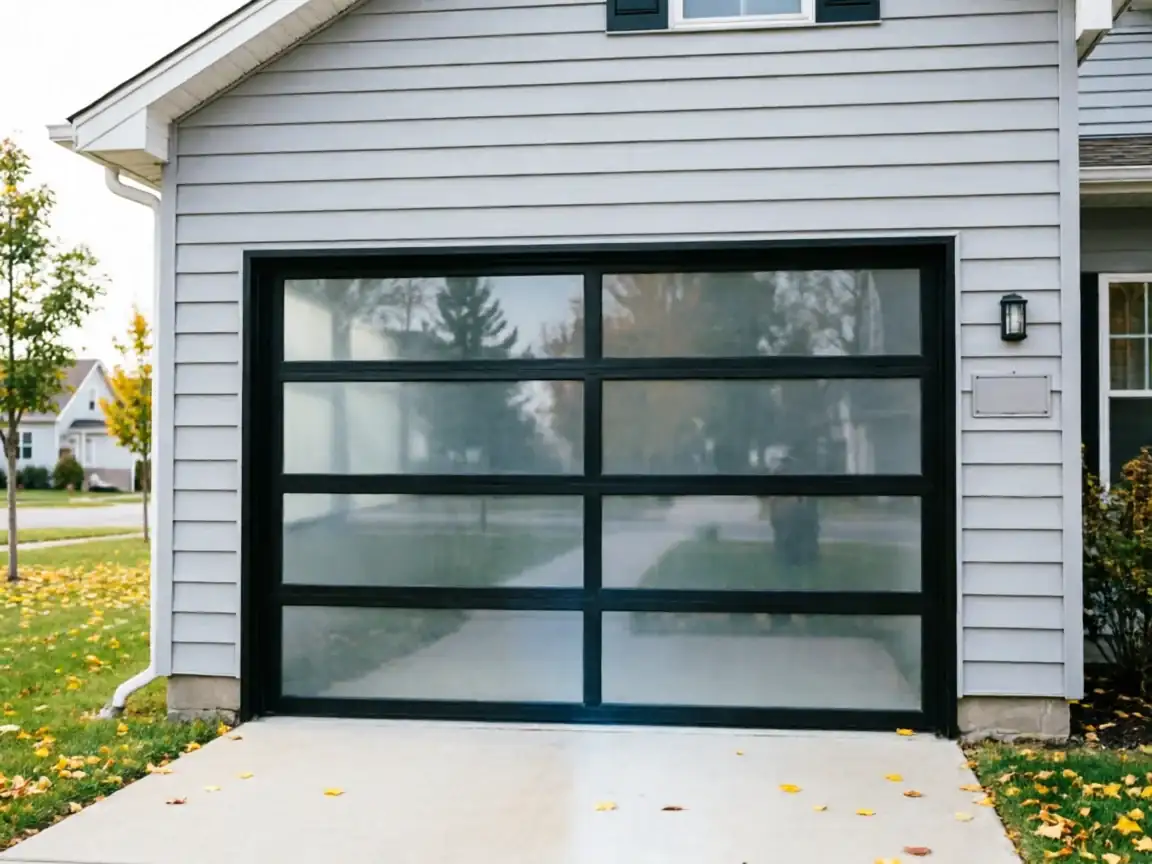
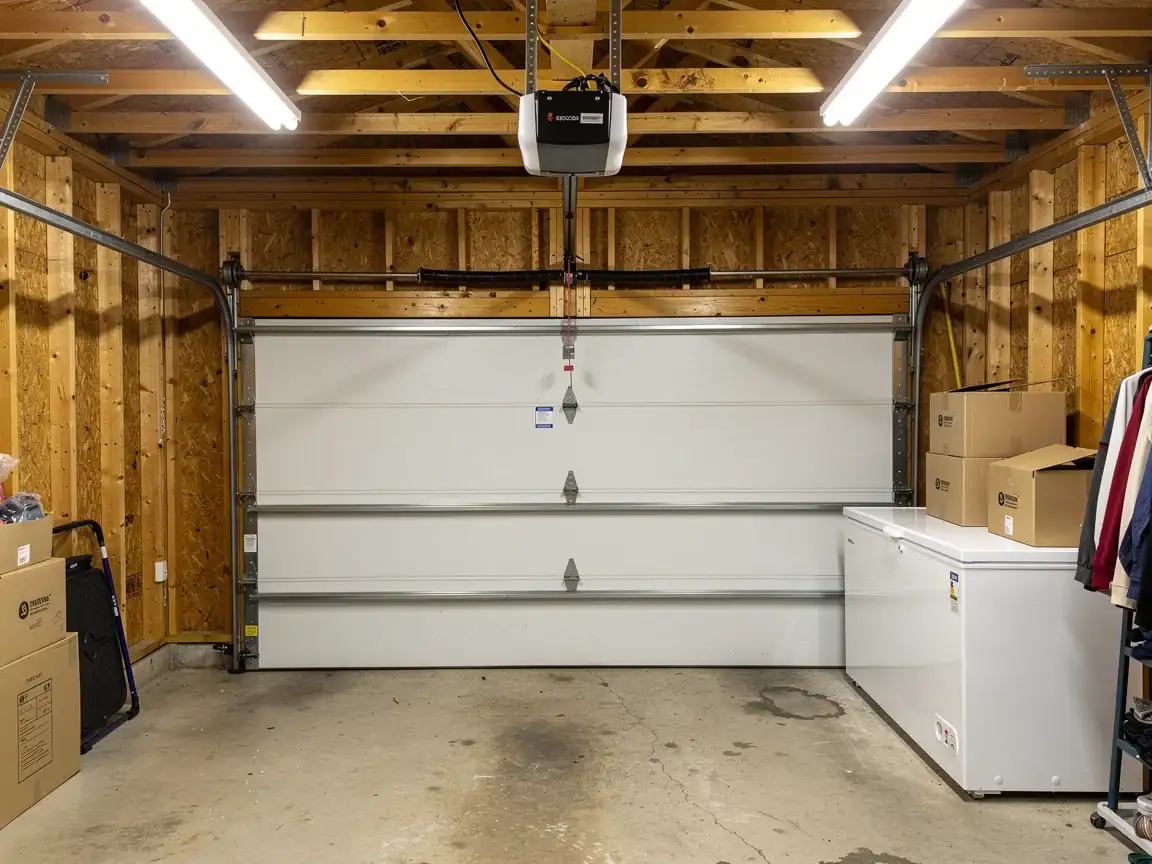
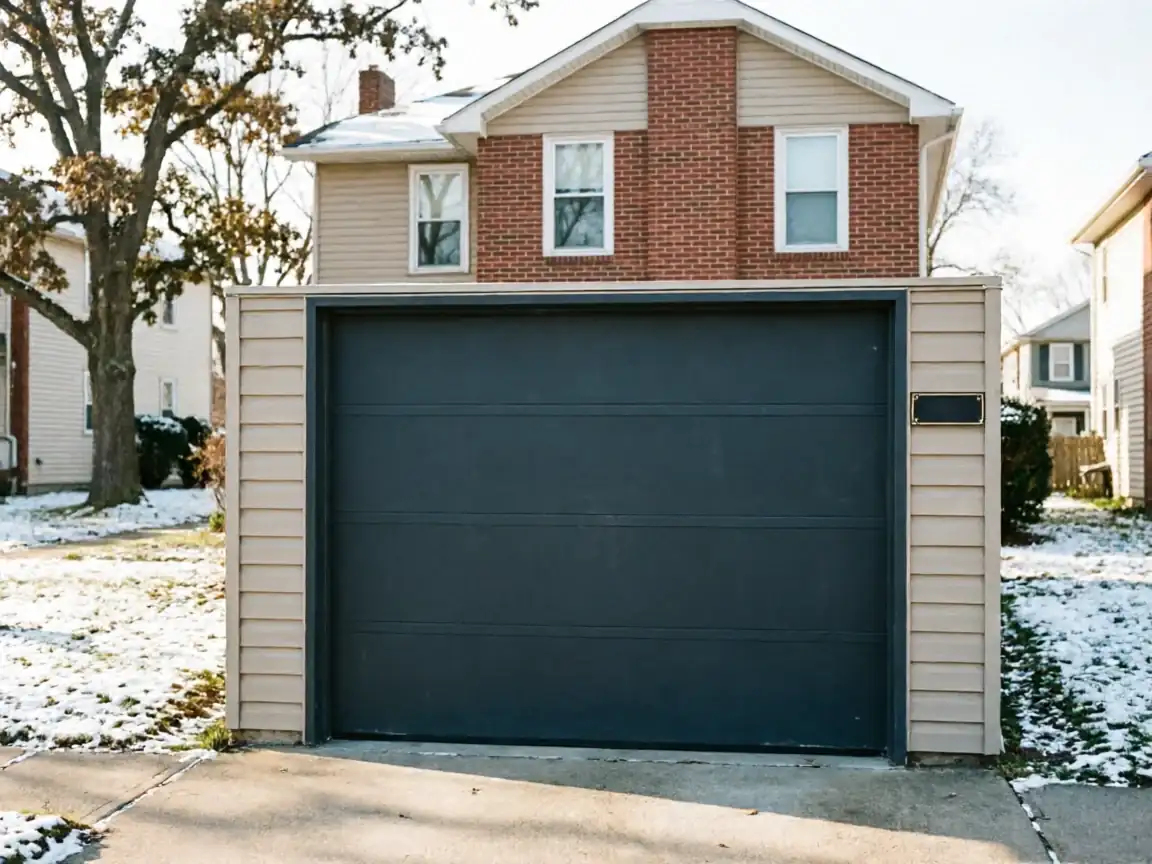
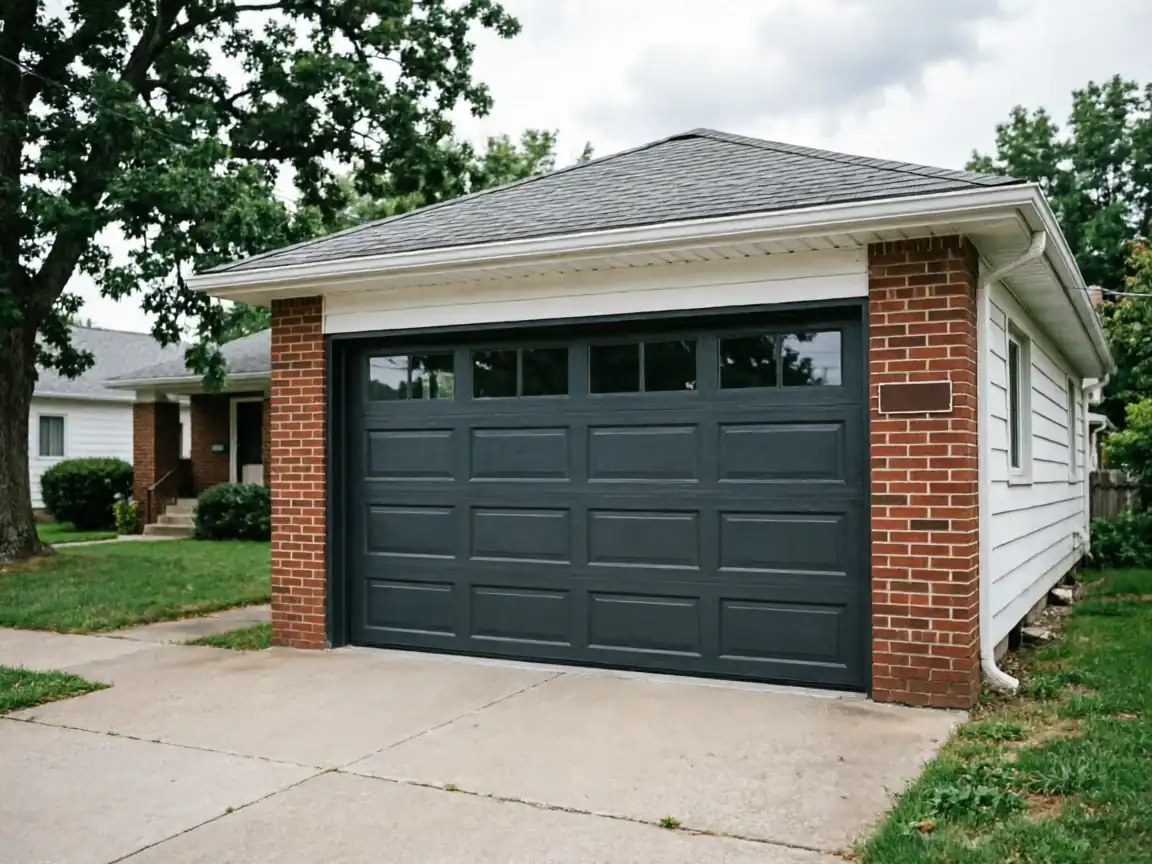
Across the wider service area, the typical house went up around 1958, and a lot of the doors we replace panels on are original one-piece units from that era. Macomb runs younger - the median home here dates closer to 2000, more than forty years newer than that area-wide figure. That matters for panel work because newer construction almost always means factory sectional steel doors with foam-filled panels, not the older flat wood or single-layer steel common on the 1950s stock elsewhere in the territory. The failure points are different too: a 2000-era door is more likely to have a factory-matched panel that's gone out of production than to have hardware that's simply worn out from age. When a panel on a door like this gets dented or cracked, you're often not matching a part off a shelf, you're matching a specific sectional profile that the original builder spec'd two decades ago.
How It Shows Up
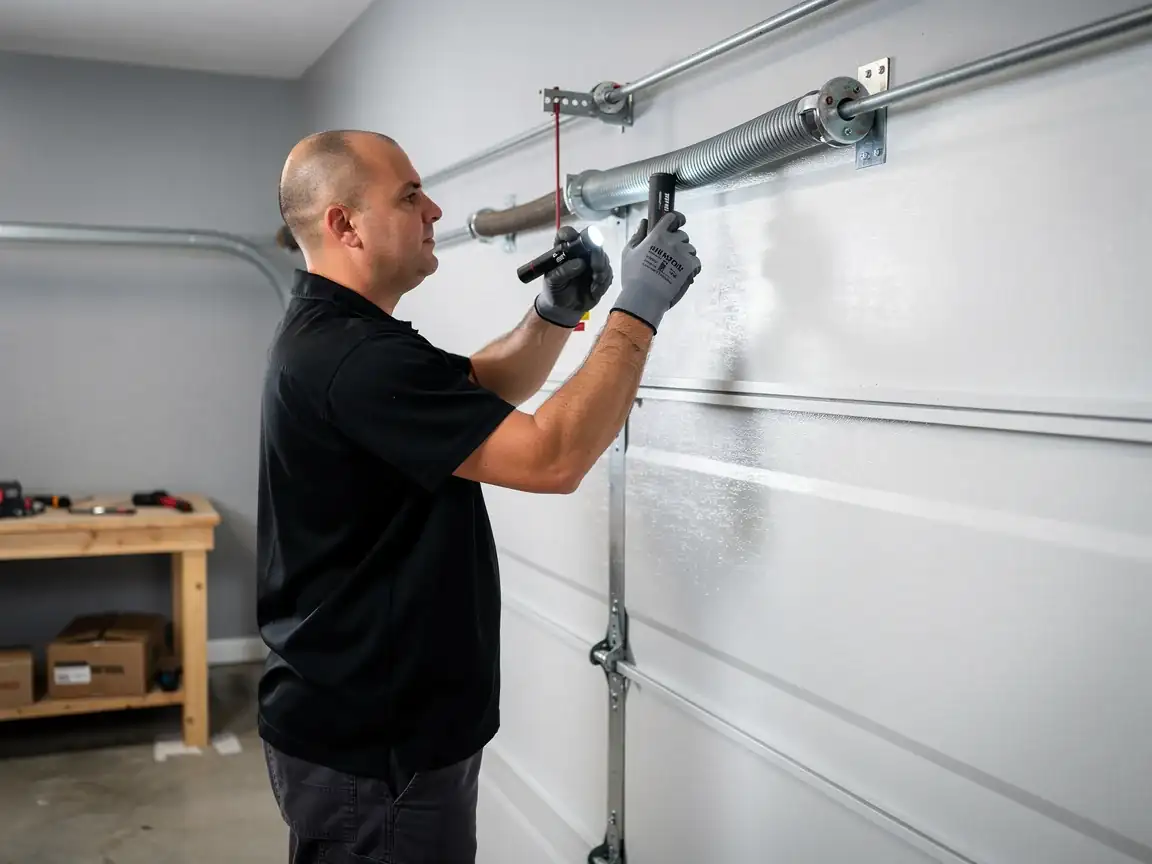
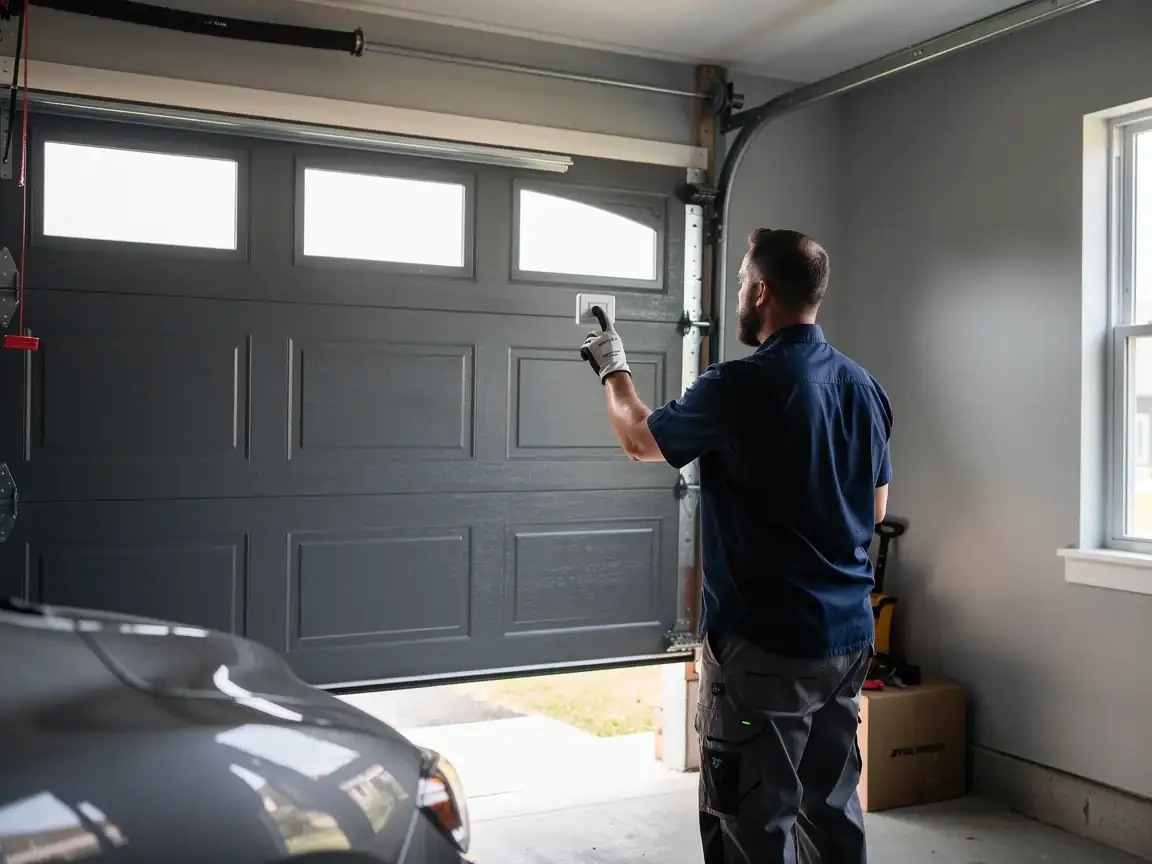
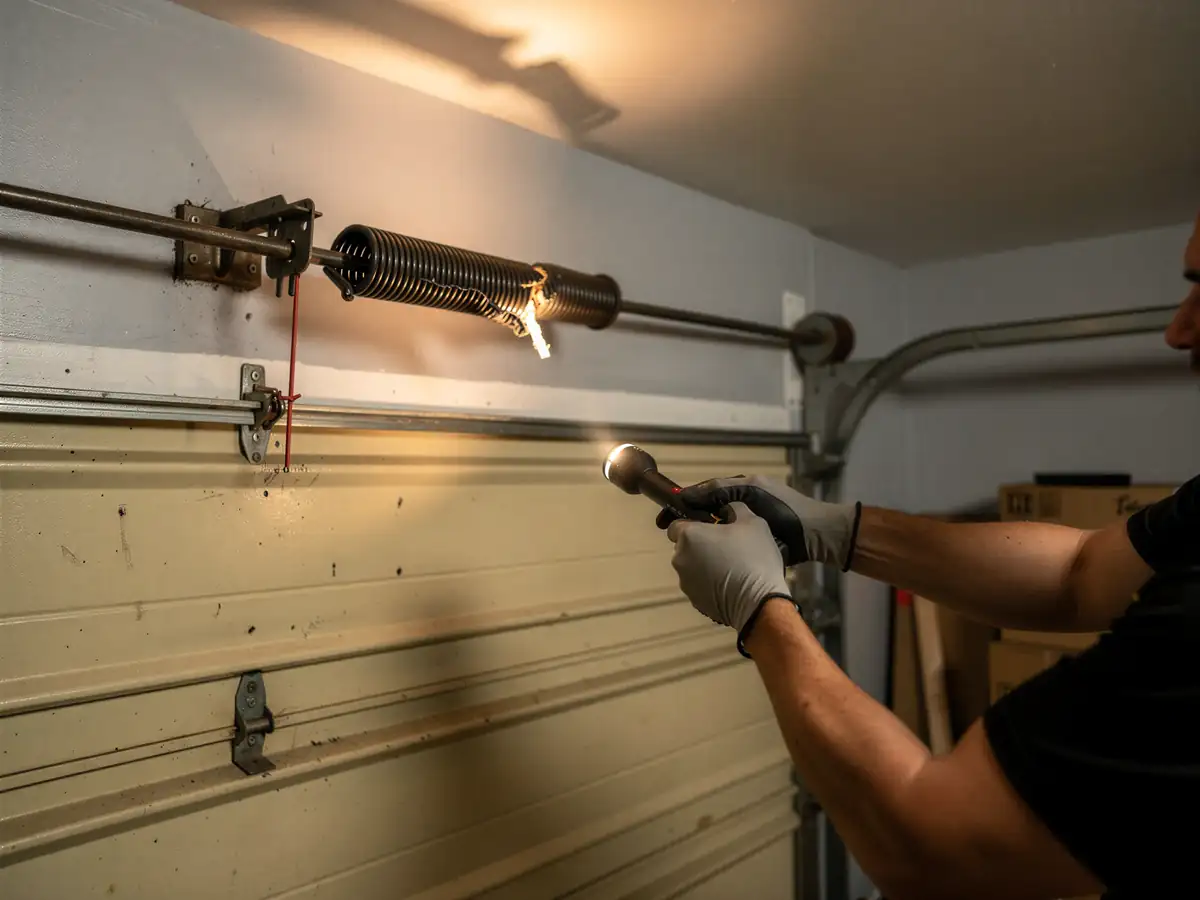
On the newer steel sectional doors common in Macomb, panel damage usually comes from an impact - a car bumper, a dropped ladder, a kid's bike - rather than from age working on the material itself. You'll see a crease or dent that doesn't pop back, sometimes with the foam insulation showing through a crack in the steel skin. Because these are foam-filled panels, a hit hard enough to dent the outer skin can also compress or tear the insulation layer behind it, which you won't see until the panel's off the door. Winters here are cold and get genuinely severe, and steel contracts in the cold - a dent that was tight and quiet in August can rattle or let in a draft once temperatures drop. If a single panel on a multi-panel door is hit, the rest of the door and the opener usually keep running fine, which is actually the trickier case: it looks like a cosmetic fix but it's still a structural panel doing real work in the section.
What Is on the Truck
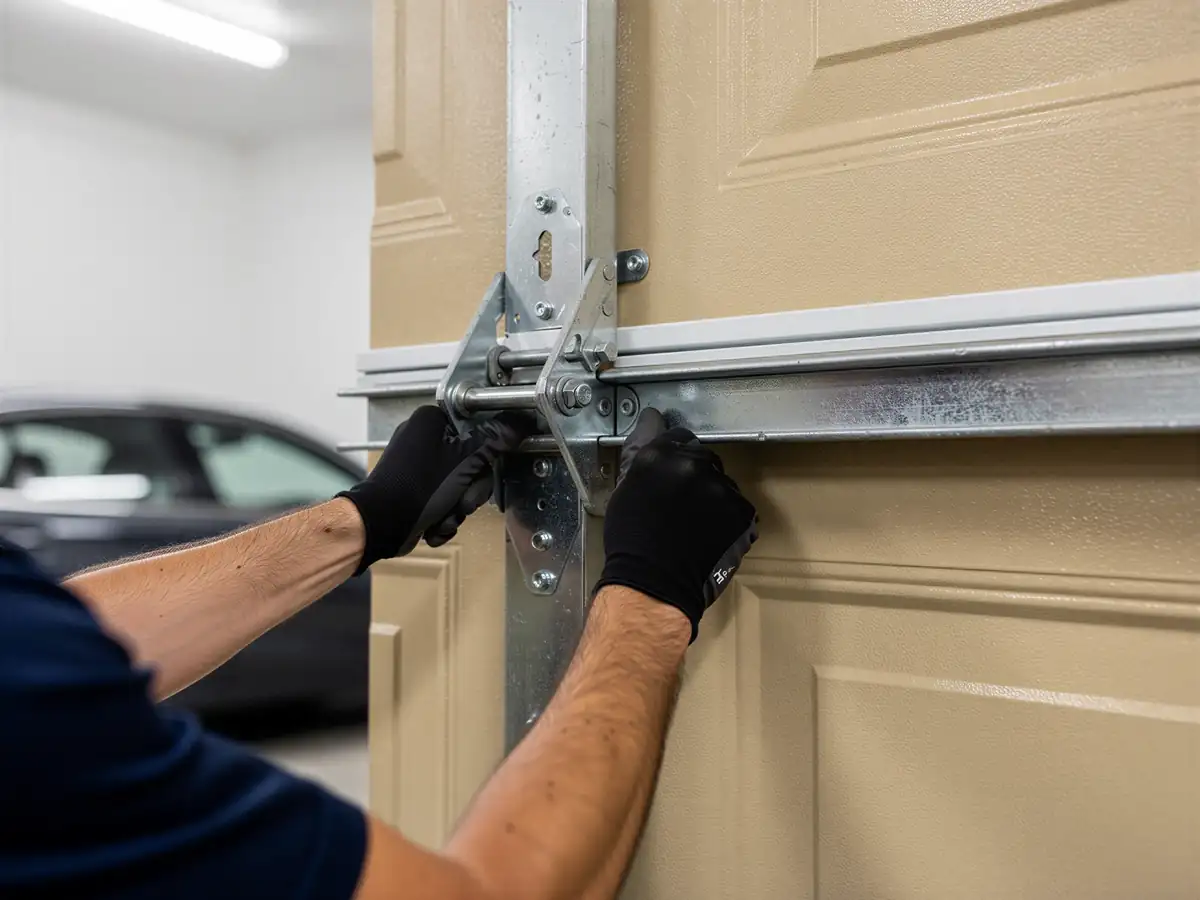
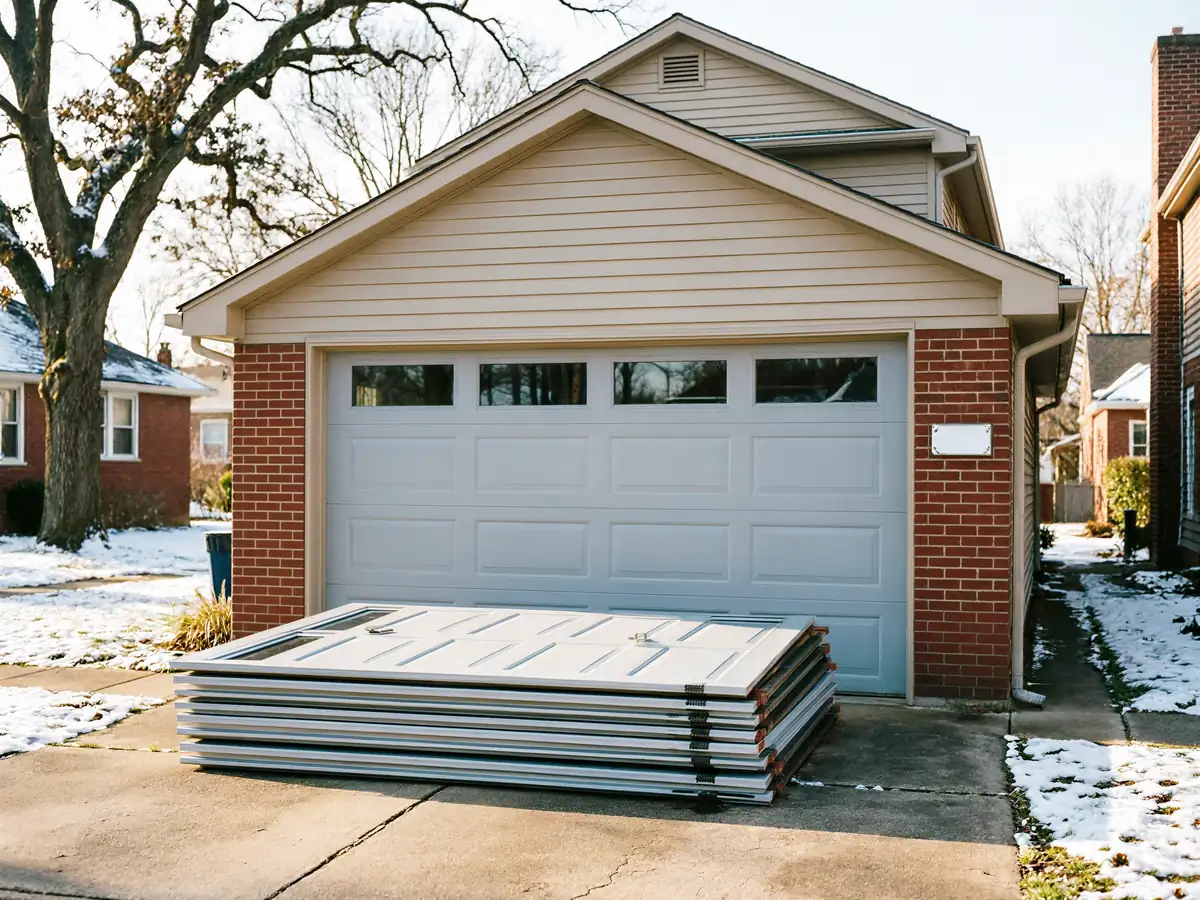
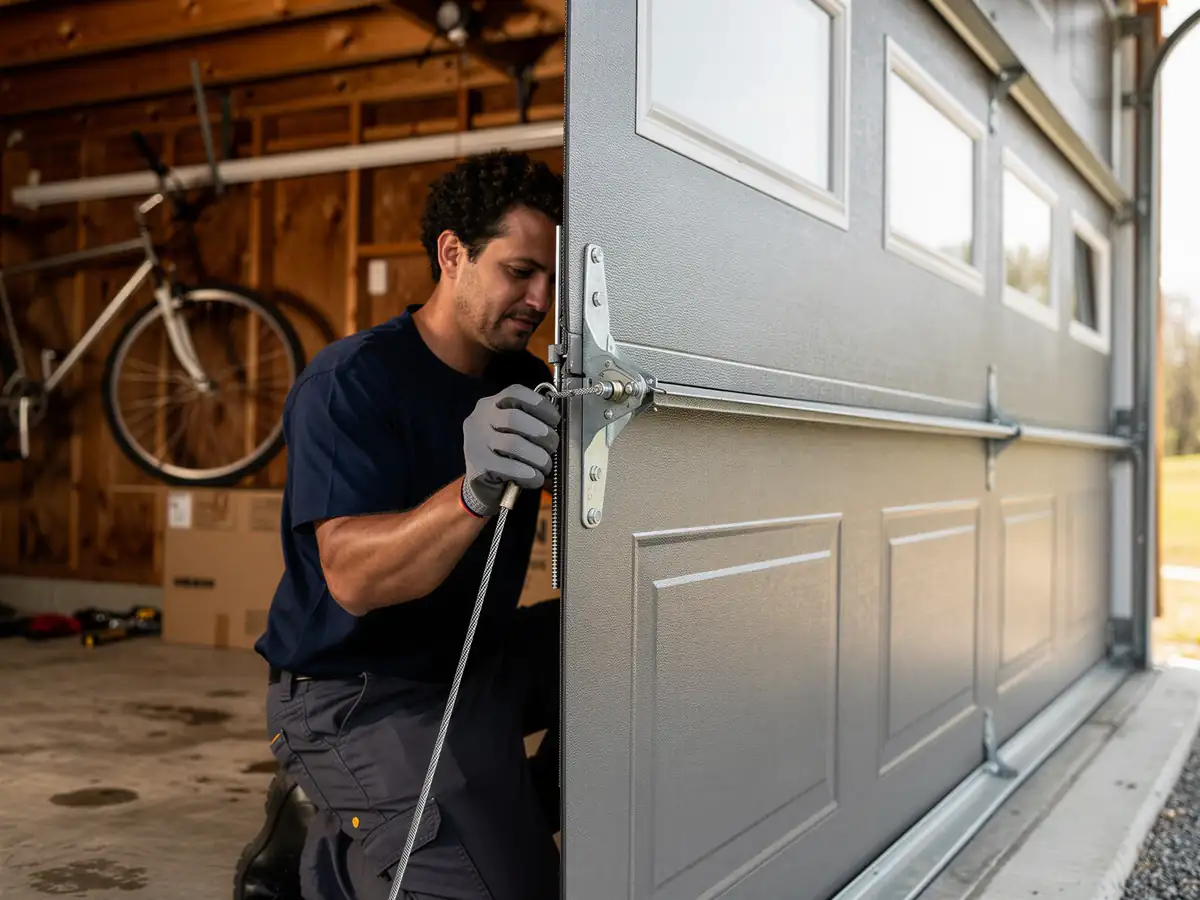
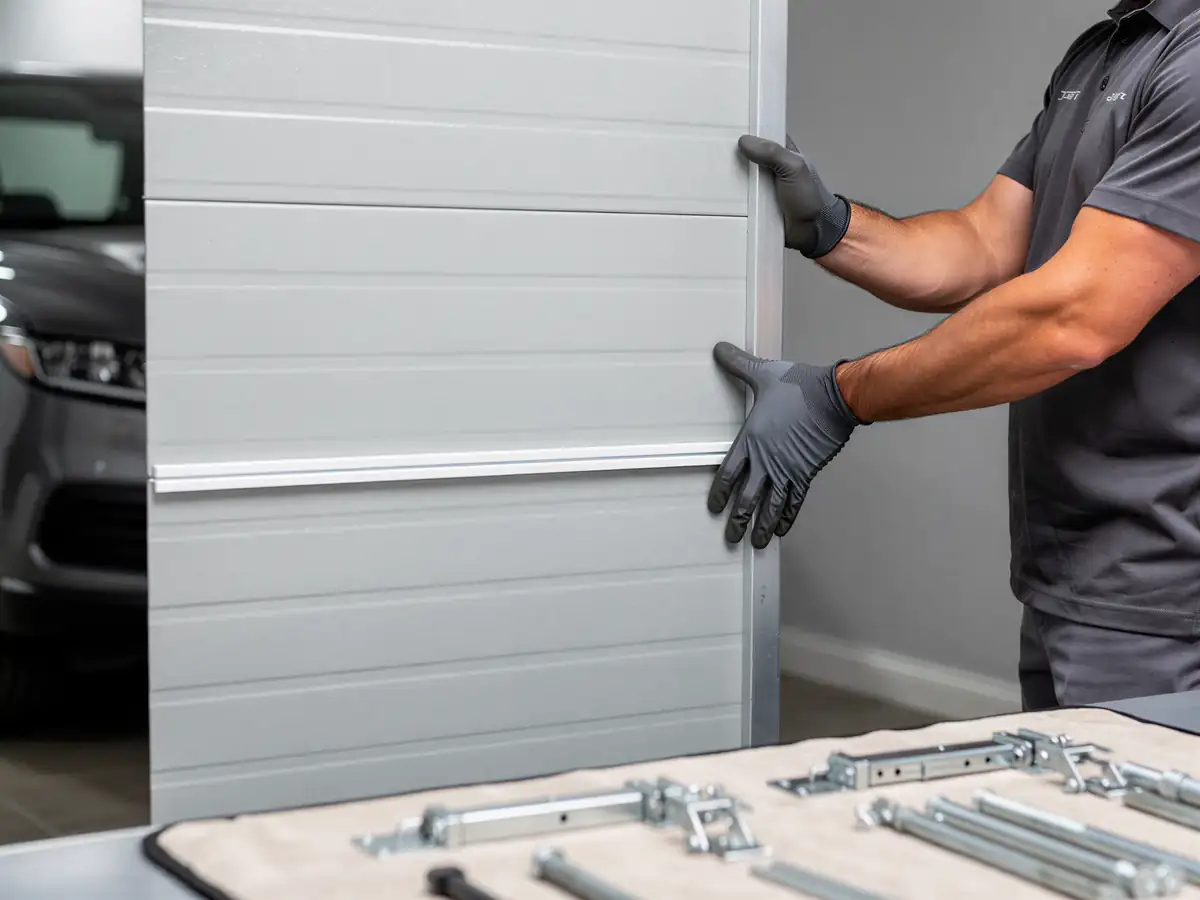
For calls into Macomb we load for sectional steel doors first, since that's what the housing stock out here mostly runs - foam-filled panel sections, roller brackets, and the hinge sets that pair with them, rather than the flat-panel hardware we'd carry for the area's older 1950s stock. We bring a range of panel widths since sectional doors aren't one standard size, plus the fasteners and seal strip that go with a panel swap. What we don't carry on spec is an exact color or texture match for every manufacturer's discontinued line - if your door needs that, we confirm it before cutting anything, which sometimes means a second trip once the part's sourced. Given the distance out here, we'd rather be straight about a two-trip job up front than pretend we can match a twenty-year-old profile off the truck every time.